


In these two posts, I want to look at the Baroque tradition of sacred art: where it came from, why it looks the way it does, and what makes it distinctively Christian. Part 2, next week, examines how the tradition spread across Europe and the two main tendencies that developed within it. Subsequent posts in this series will look at Baroque secular art, the portraiture, landscape, and still life that emerged as the same habits of perception flowed out from the liturgy into every corner of cultural life.
Pope Benedict XVI, in The Spirit of the Liturgy, identified three authentic traditions of Christian liturgical art: the iconographic, the Gothic, and the Baroque. The iconographic tradition, which dominated Christian art in both East and West until the 12th century, portrays man as he will be in heaven, transfigured, luminous, outside ordinary space and time. The Gothic, which I examined in earlier posts, straddles the divide between heaven and earth and is best understood, I argue, as the art of the Christian pilgrim, partially transformed by grace yet still journeying. The Baroque is the most naturalistic of the three. It portrays fallen, historical man, in this life, in the full drama of suffering and grace. That drama, and the Christian hope that transcends it, is what Baroque sacred art is fundamentally about.
The Baroque is also the most influential of the three traditions on art more broadly. As the naturalism of late Gothic painting increased, artists began applying the same visual principles to secular subjects, but the Baroque fully established this tendency, creating a tradition in which the habits of observation and perception formed by creating art for the altar extended naturally into wider contemporary culture. A painter skilled in depicting the light of Christ on the face of a saint would bring the same level of skill and insight to a landscape, a portrait, or a still life, not as an overtly religious act, but in the recognition that the beauty of Creation speaks of its Creator.
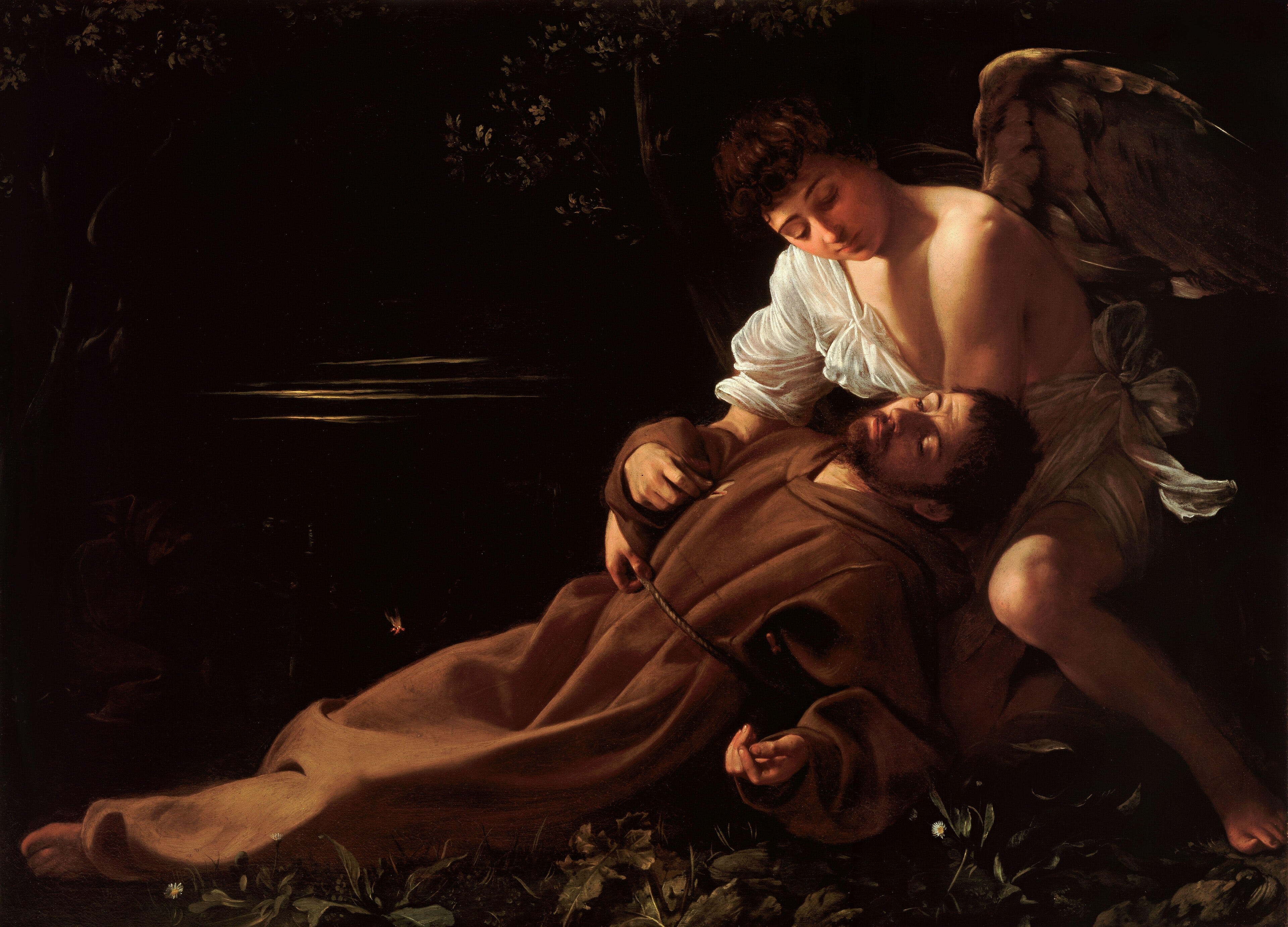
The Council of Trent and the Origins of the Style
The Baroque style in art emerged in the late 16th and 17th centuries as a powerful artistic response to the Catholic Church’s Counter-Reformation efforts, particularly the Council of Trent’s directives on sacred images issued at its closing session in 1563. Building on the precedent set by the Seventh Ecumenical Council, which closed in 787 and which defended the veneration of religious images, Trent reaffirmed the importance of art as a vehicle for faith while addressing Protestant criticisms. Concerned that some religious imagery had grown overly complex, indecorous, or inaccessible to ordinary believers, the Council instructed artists to portray the mysteries of the Faith, the lives of saints, and the truths of redemption with clarity, emotional directness, and devotional effectiveness, avoiding lasciviousness (that is, the promotion of disordered sexual desire), doctrinal error, superstition, and anything that might confuse or mislead the uneducated, thereby fostering a more immediate and edifying visual language that helped define the Baroque aesthetic.
It took time for these general directives to be absorbed and manifested successfully by the artistic community. By the end of the century, approximately thirty years later, a coherent tradition was emerging that built upon the finest stylistic achievements of the 16th century.
The origin of the name ‘Baroque’ is not known with certainty. Commentators speculate that it is a pejorative term derived from the Portuguese word for an imperfect pearl, barocco, a description that art historians later applied to the more extravagant examples of the style. I offer another suggestion below by connecting it to the work of one of the tradition’s pioneers, the Italian artist Federico Barocci.
While the primary impetus for this new style was the desire to create a form of sacred art, it very quickly became the standard for all secular art as part of the broader Catholic cultural response to the Reformation. On seeing the beauty of this style, even Protestants decided they wanted to paint in this Catholic manner, and they copied and adapted it to their own needs, developing parallel theological justifications for its use, as happened notably in Holland. The Protestant Dutch artists of the period, among them Rembrandt, painted portraiture, landscape, and still life in this new style.
The power of Baroque beauty was noticed in Protestant England too. Anthony Van Dyck, a Flemish Catholic and student of Rubens, was invited by the Protestant Charles I of England to serve as his court portrait painter and was elevated to the title of Sir Anthony. He was so successful and influential that the English school of portraiture was inspired by him and sustained itself for 250 years after his death. Figures such as Gainsborough and Reynolds were the most celebrated painters of this school. Americans will be familiar with the portraits of the founding fathers, particularly of George Washington by the American artist Gilbert Stuart, which were executed in the style of the English portrait school.
The Origins of the Baroque Style: Federico Barocci
The Italian artist Caravaggio is credited with popularizing the style at the end of the 16th century, but perhaps the clearest early articulation of what became the Baroque was achieved slightly earlier by another Italian, Federico Barocci. Consider this painting of St Jerome by Barocci, painted in 1598.
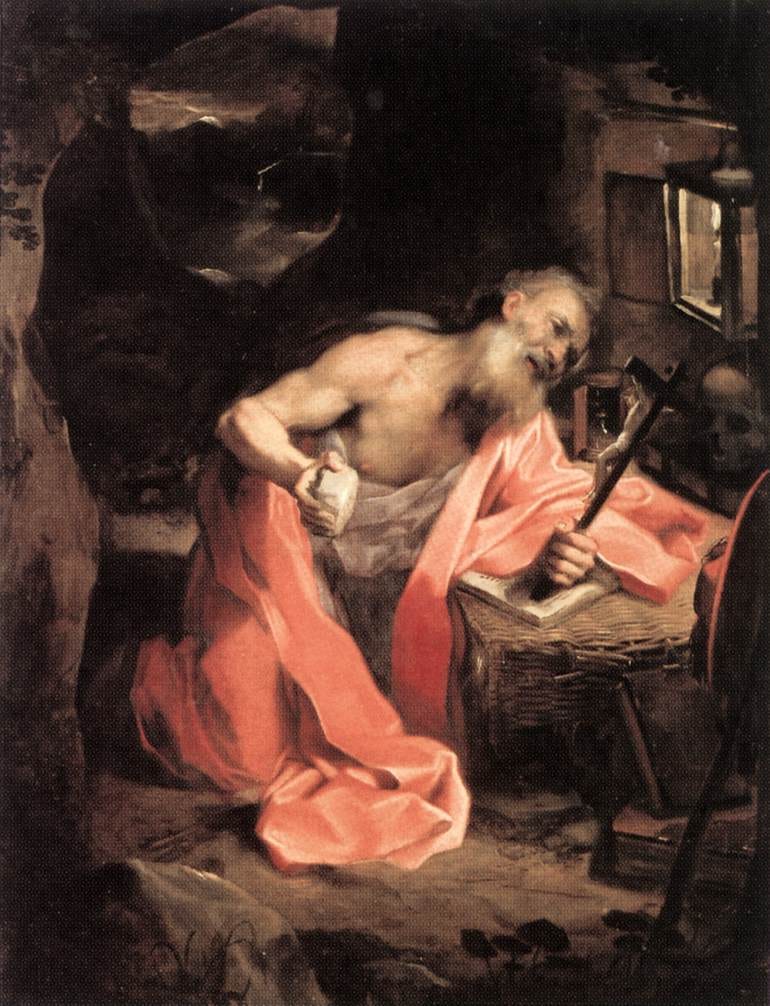
I have never read a historical account that confirms this, but I have long wondered whether the term ‘Baroque’ is, in part, a play on his name. Barocci’s work from this period certainly bears all the hallmarks of the tradition he was pioneering.
Several features immediately direct the eye to the figure of St Jerome. He is painted with the most naturalistic coloration, is the most brightly lit, and is the most precisely rendered and sharply focused element of the composition. Barocci reinforces this by setting the figure against a background of deliberately restricted tonal range: a single color, sepia, varied only in its tonal values and given almost no detail. The brightest colors in the composition are concentrated in the cloth immediately surrounding the saint. The sharpest tonal contrast runs along the edge of his right elbow, tracing upward along his shoulder to a sharp point just below the right ear, leading the eye steadily toward the face. This contrast is further intensified by darkening the background immediately adjacent to that edge.
The sharpness and clarity of rendering also vary across the painting. The least precisely handled areas are on the periphery; the most detailed are the saint’s face and hands, the two elements through which expression and gesture communicate the person’s interior life. It is through these that the artist portrays the man as a living being with a soul.
Compare Barocci’s painting with this work on the same subject, painted nearly fifty years later by the Spanish artist José de Ribera in 1646. Ribera spent most of his professional life in Italy.
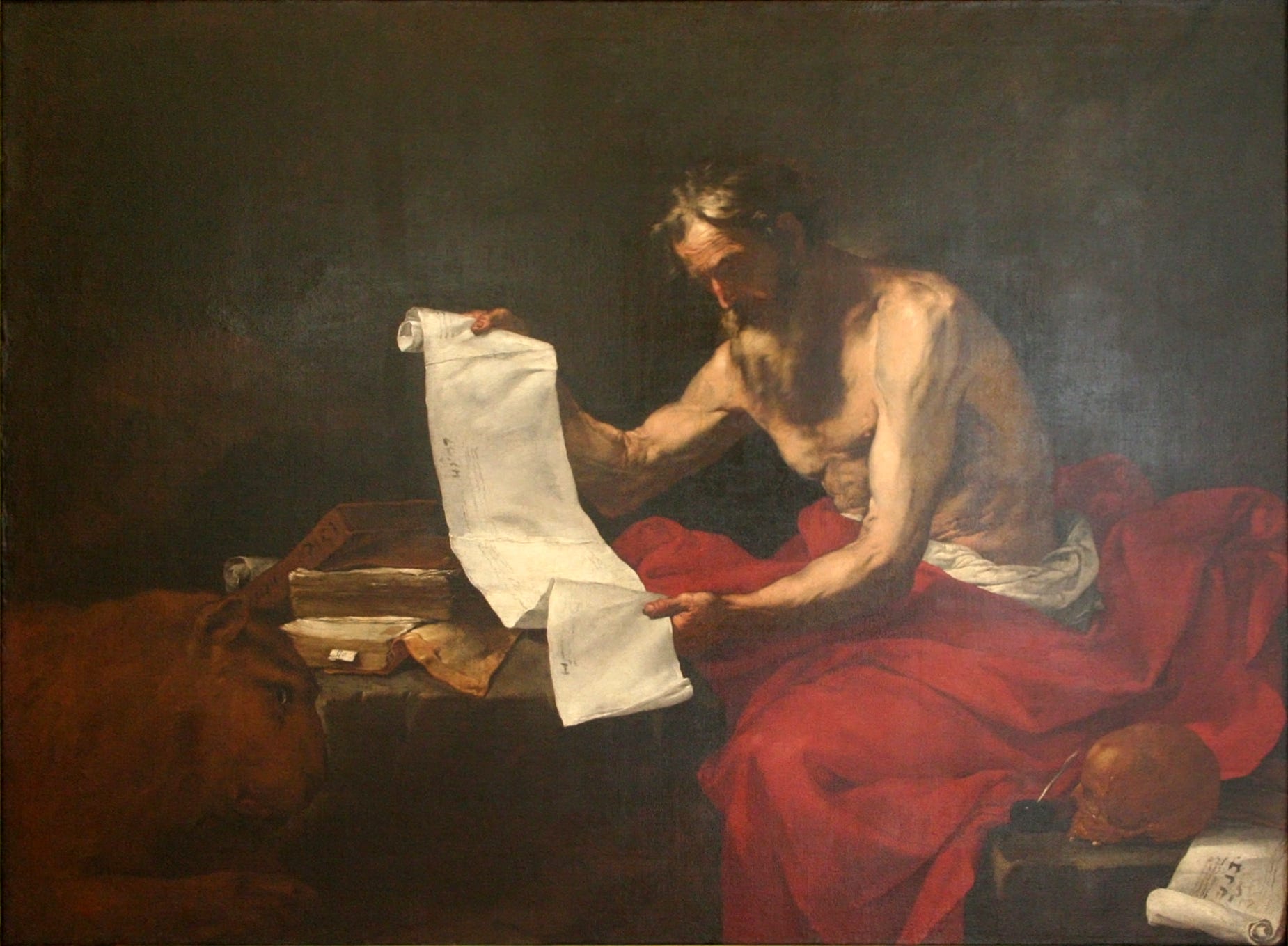
We can see the same stylistic features at work, except that St Jerome’s face is no longer the primary focus. Ribera directs us instead toward the Word, as exemplified by the scroll. St Jerome produced the Latin Vulgate translation of the Bible, and it is to this that Ribera draws our attention, perhaps underscoring that Catholics hold Scripture in the highest regard, directly countering Protestant accusations to the contrary.
The sharp contrast between light and dark throughout Baroque painting symbolizes both the darkness of evil and suffering in this fallen world and the Light that overcomes it. This visual device embodies Christian hope, which transcends suffering.
Within a few decades, this style of idealized naturalism had become the standard model for new sacred art across Catholic Europe. As with any living tradition, artists retained room for personal variation within its boundaries; some, for instance, incorporated lighter ochres or cool grays alongside sepia in their tonal work. Broadly speaking, however, the style remained remarkably consistent throughout the 17th century, before gradually and subtly declining in the 18th as the rising influences of Neoclassicism and Romanticism began to transform artistic priorities.
Why This Style Works: The Optics of Baroque Painting
The stylistic vocabulary of the Baroque, its variation of tone, color, and focus, is not an arbitrary invention. It takes into account the way we actually look at the world and process visual information in the mind. The image cast onto our retinas is not evenly colored or uniformly focused. It is sharply focused and richly colored at the center, where the cone cells respond to color; it is blurred and effectively monochrome at the periphery, where the rod cells respond only to tonal information. We are not ordinarily aware of seeing in this way, because the eye moves constantly across the scene before it, collecting information. The picture we are actually conscious of is an aggregate of this information, assembled from memory. As we observe the world, we tend to notice sharp tonal contrast and strong color first, and we spend the most time examining these and any other points of greatest interest to gather more visual information about them.
A painting is a snapshot in time, but the mind naturally supplements it with information from memory, drawing on recollections of similar scenes encountered in the past. What we see in our mind’s eye at any moment when engaging with a Baroque painting is therefore more natural to us than what we would experience when looking at an image in which every detail, from border to center, is rendered with equal precision, as in photorealism or some 19th-century naturalism.
The effect on the viewer is to direct the imagination toward God by employing a dynamic similar to that experienced when we respond to Creation with awe and wonder. God made us to look at the world in a particular way so that we might see the Creator in his Creation and delight in both. By delivering visual information in a way that stimulates the same dynamic process of observation, the artist who paints well makes his painting speak of Christ as powerfully through its beauty and style, regardless of the content, just as the cosmos itself does.
Next week, in Part 2, I turn to how the Baroque tradition spread organically across Europe and examine the two great tendencies that developed within it: Baroque Classicism, which sought a more idealized, classical look, and Baroque Naturalism, which insisted on direct observation from life. I will also look at a question that matters practically for any artist working in sacred art today: how does sacred art differ from portraiture, and why does the distinction matter?