


Last week, in Part 1, I introduced the Baroque sacred tradition: its origins in the Counter-Reformation directives of the Council of Trent, its founding principles as illustrated in the work of Federico Barocci and José de Ribera, and the visual logic that makes the style work in harmony with how we actually perceive the world. This week I turn to how the tradition spread across Europe, to the two main tendencies that developed within it, and to the important practical question of how sacred art differs from portraiture.
The Organic Spread of the Tradition
The works discussed in these posts were selected to illustrate the tradition’s principles. Artists of the time did not subscribe to a Baroque manifesto requiring conformity to a particular style; the word ‘Baroque’ did not come into use until much later. The adoption of this style, which spread across Europe, was an organic process driven by the striking beauty of the new form. Patrons saw the art being produced and wanted more. In the context of the time, artists sought not to establish a distinctive personal style but to show patrons their ability to work within whatever was considered the highest and most noble form. The descriptions of a general pattern offered here are, inevitably, generalizations; there are always exceptions, whether artists who consciously resisted the norms or those who lacked the skill to follow the prototype. Even so, when we look back at this period and try to discern a pattern, the degree of conformity to the principles described in Part 1 is striking.
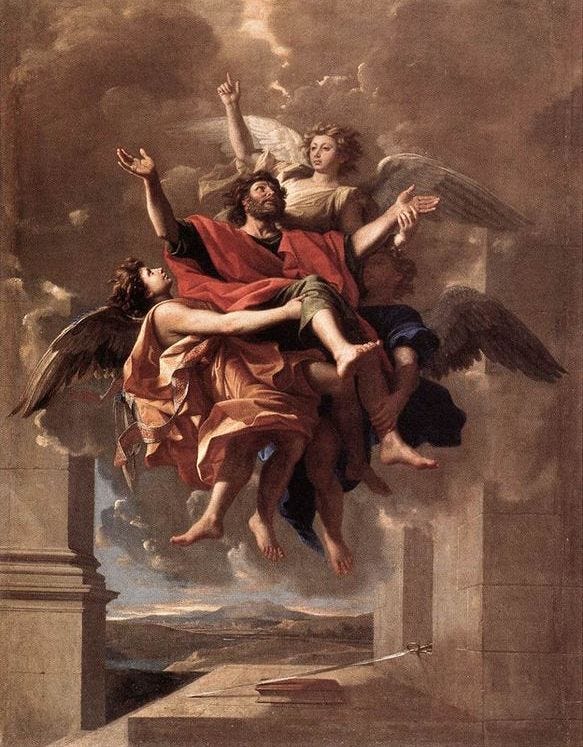
Within this broad conformity, different influences produced distinct tendencies among master artists. Some proponents of what is called Baroque Classicism, including Nicolas Poussin and Annibale Carracci, sought a more classical look, closer to the High Renaissance, which in turn looked to the styles of ancient Greece and Rome for inspiration. They produced composite paintings from drawings of models or from Greek and Roman statuary, sometimes presenting biblical scenes anachronistically, with figures in classical dress and hairstyles. These artists also painted scenes from Greek and Roman history and mythology, often intending them to be interpreted as Christian allegories.
Here is an example by Carracci: the Pietà, in which the Mother of God embraces Christ after he is taken down from the cross. The name comes from the Italian word for piety.
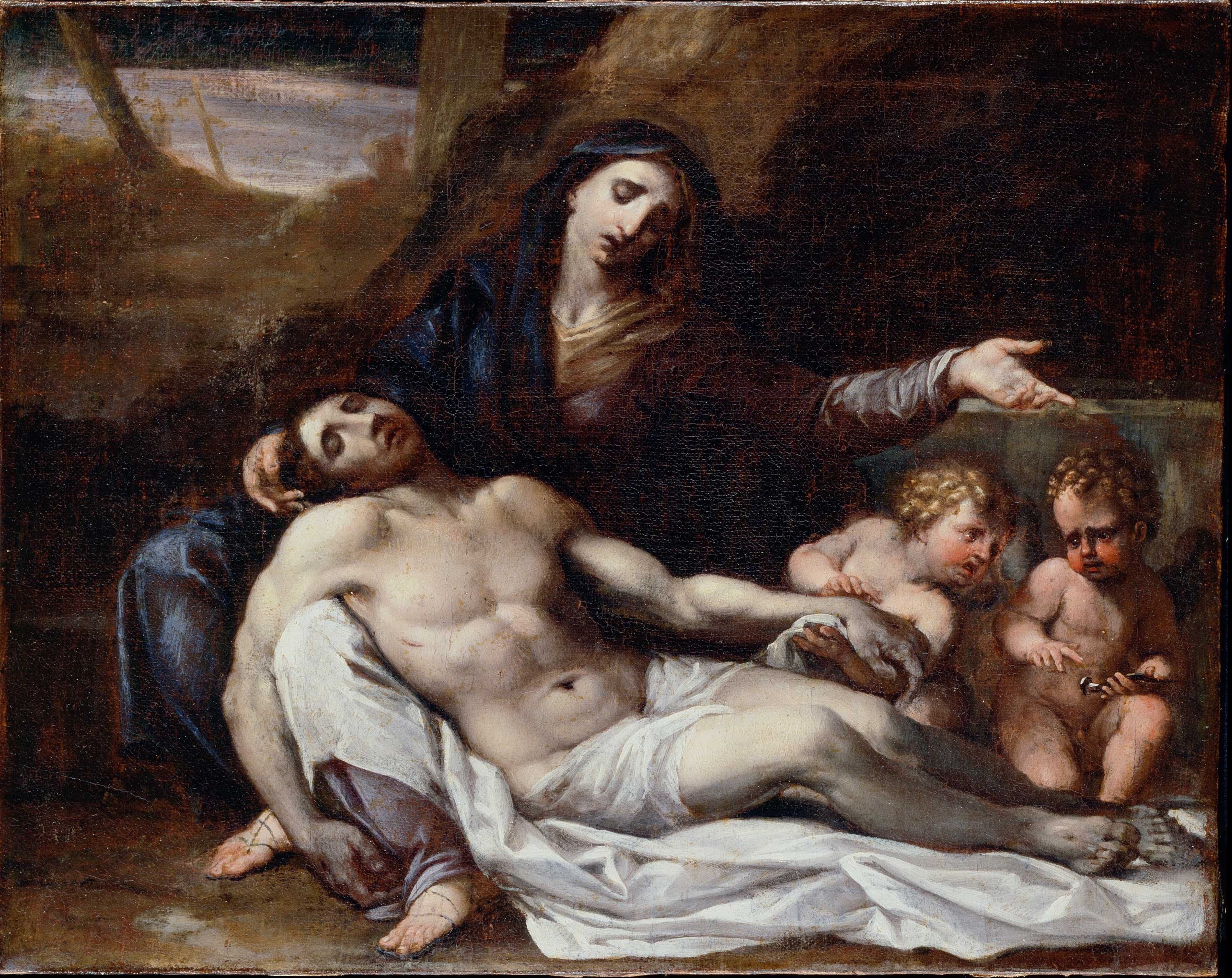
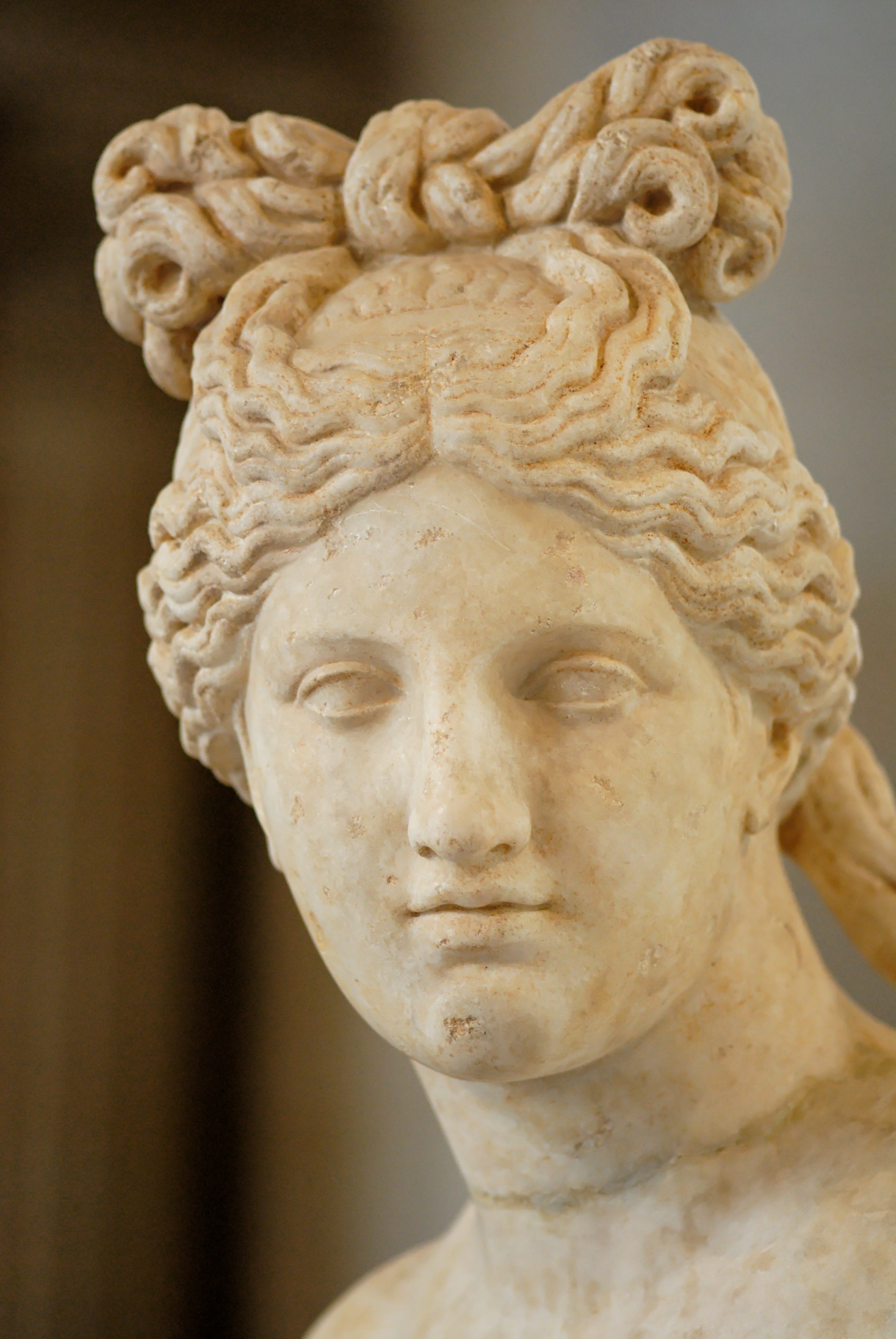
Carracci’s work includes the stylistic elements described in Part 1, but he has also consciously drawn on the classical tradition. The classical influence is clearly visible in the putti, the playful, chubby infant figures derived from ancient Greek and Roman sculpture. From the 16th century onward, artists widely adopted these motifs in Christian sacred art to represent cherubs, as in the angels described in Scripture, and occasionally to symbolize God’s omnipresence. This convention also gave rise to the modern use of ‘cherubic’ to describe a beautiful, plump baby. The classical influence is also visible in the facial features of both Christ and Our Lady, which are informed by the idealized forms used by ancient Greek sculptors for their gods and goddesses and subsequently by High Renaissance artists for their saints. For comparison, here is the Venus of the Louvre, a Roman copy of an earlier Greek original dating from the 2nd century BC.
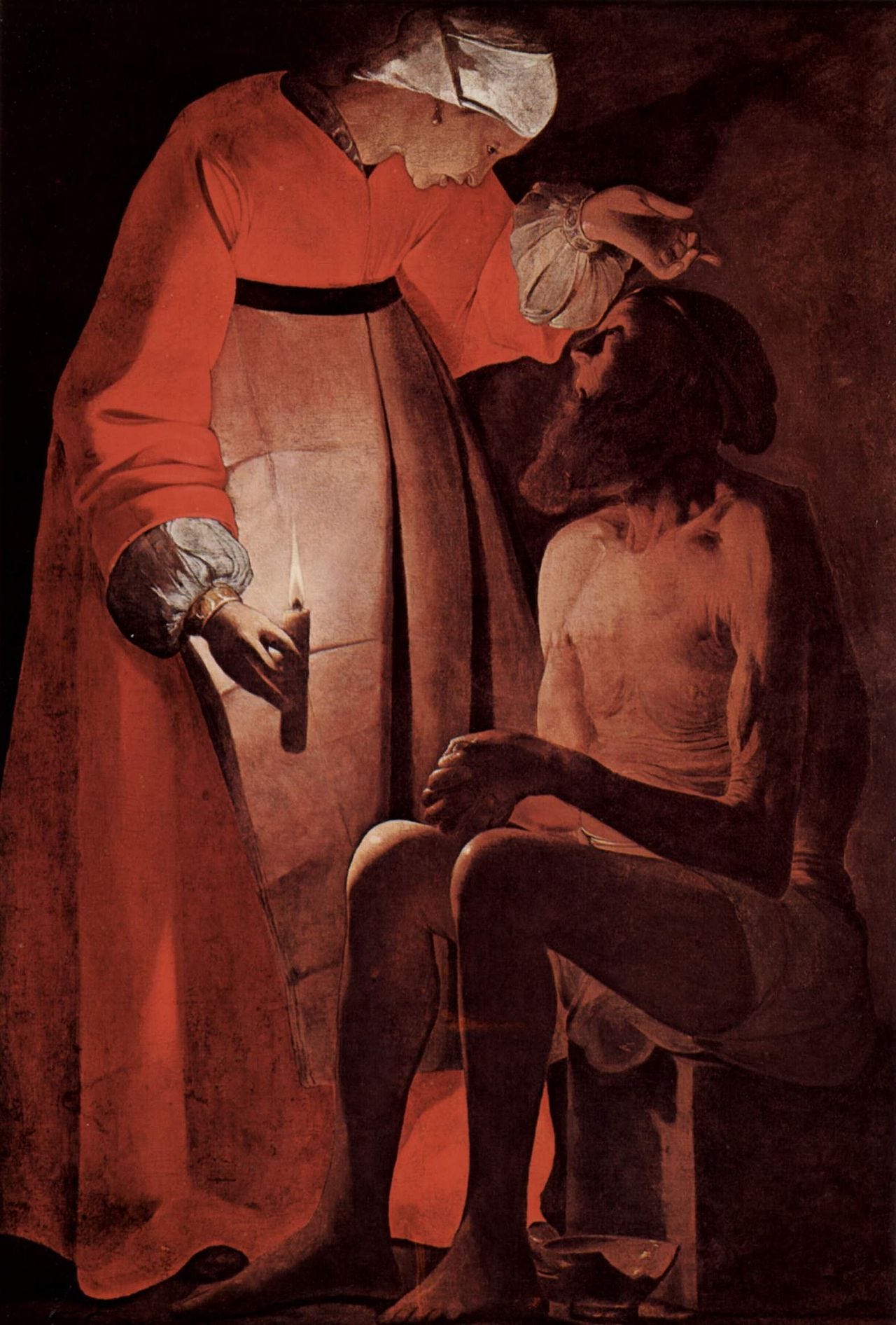
Other artists pushed back against Carracci’s method of synthesizing composite designs from numerous preparatory drawings and studies. Instead, they championed a more rigorously naturalistic approach, emphasizing direct observation from life and, where possible, painting straight onto the canvas with minimal preliminary work. Caravaggio became the most radical and influential figure in this tendency, inspiring artists such as the French painter Georges de La Tour and the Spanish school of Baroque Naturalism, whose leading representative was Diego Velázquez. José Ribera, whose work we examined in Part 1, also belongs firmly to this current. While the contrast between the two approaches should not be overstated, both stood within the Baroque tradition, valuing both drawing from nature and selectively modifying appearances to draw out invisible truths; the Caravaggesque painters prioritized raw immediacy and dramatic lighting over classical harmony and compositional refinement. Here is one of Velázquez’s most celebrated religious paintings: his Crucifixion.
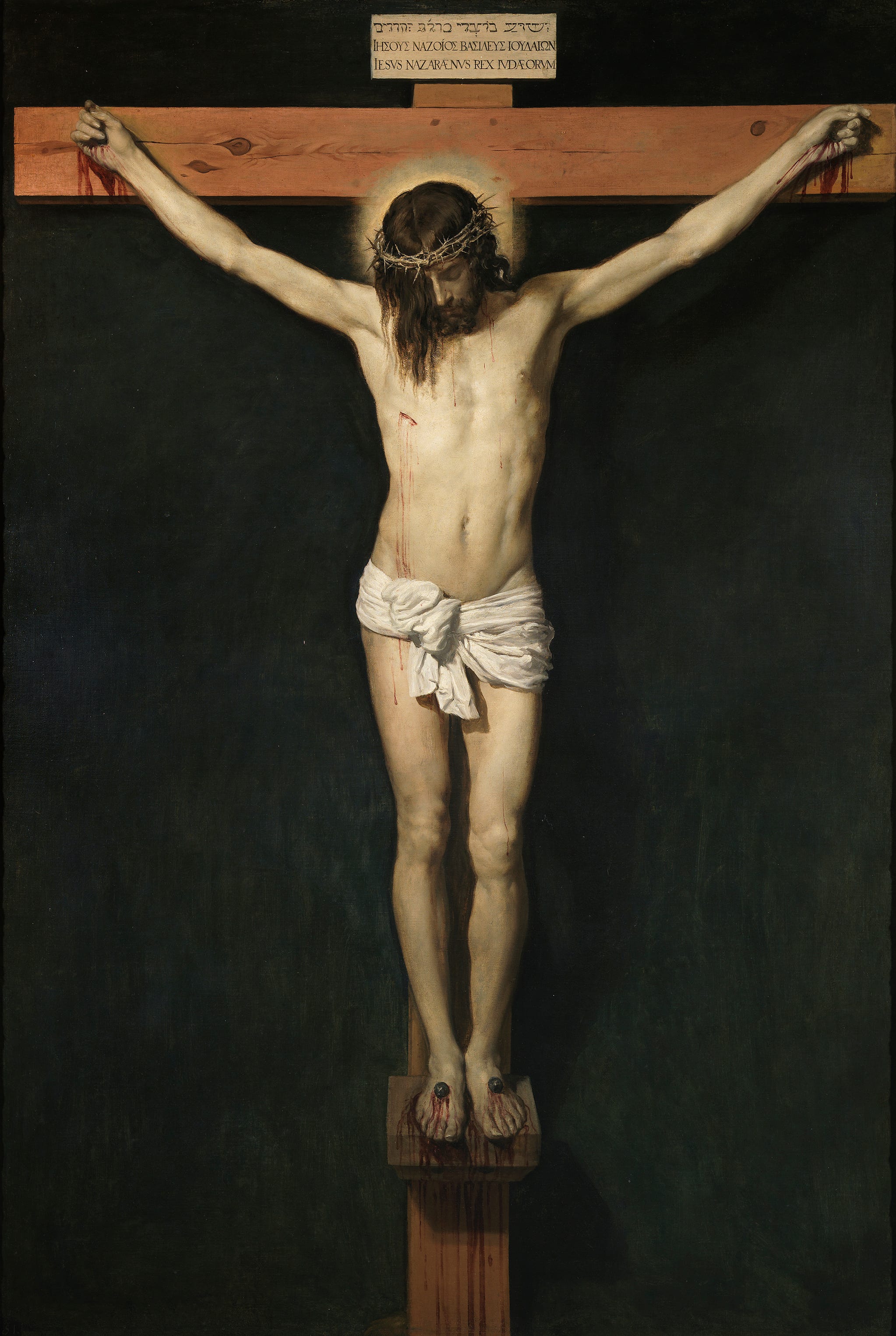
Notice that Christ’s face is largely in shadow. In paintings of Christ or the saints, the artist must depict the figure as a distinct individual while also emphasizing the universal human qualities that viewers can emulate. After all, we cannot imitate what is uniquely personal to a saint or to Christ; we can only strive to imitate those virtues we share through our common humanity. For this reason, sacred art tends to place less emphasis on the face alone and instead highlights the whole person. This poses a challenge: how does the artist convey the subject’s inner spiritual state when we typically read emotion and mood primarily through facial expressions? Baroque painters addressed this by using more pronounced gestures, prioritizing what we would today call body language. This accounts for the dramatic style of many Baroque paintings. That is not to say that Baroque artists sought only to convey drama. In this painting, in which a peace that transcends suffering is conveyed, Velázquez gives the stationary torso far greater prominence than he would in a conventional portrait, where the face would dominate.
Sacred Art and Portraiture: An Important Distinction
A common flaw in the work of contemporary artists who attempt sacred art in naturalistic styles is to dress a model in biblical clothing and then paint a portrait. The facial expression becomes the dominant element, and the result, however skillfully rendered as portraiture, looks exactly like what it is: the girl or boy from next door dressed up as Jesus or the Virgin Mary. The effect is closer to a staged Victorian tableau vivant than to authentic sacred art.
Sacred art differs from portraiture in that its primary goal is to emphasize the universal aspects of the human person, so that the way a saint incarnates those qualities in his life can serve as a model for us. Portraiture, by contrast, emphasizes what is unique to the individual. Those qualities, precisely because they are unique, cannot be emulated by anyone else. That is not to say that what is unique to the person is ignored altogether in sacred art; we always access the universal through the particular, and so the saint must retain the characteristics that identify and distinguish him from all others. It is a matter of differing emphasis.
The Middle Ground: Rubens and Reni
The two poles of Baroque style, Classicism and Naturalism, do not look strikingly different to most modern eyes. To the artists and connoisseurs of the period, however, they appeared hugely distinct, and artists in each camp argued, sometimes bitterly, over which represented the most authentically Christian approach. Between the two extremes, a broad spectrum included naturalism and classicism in varying degrees.
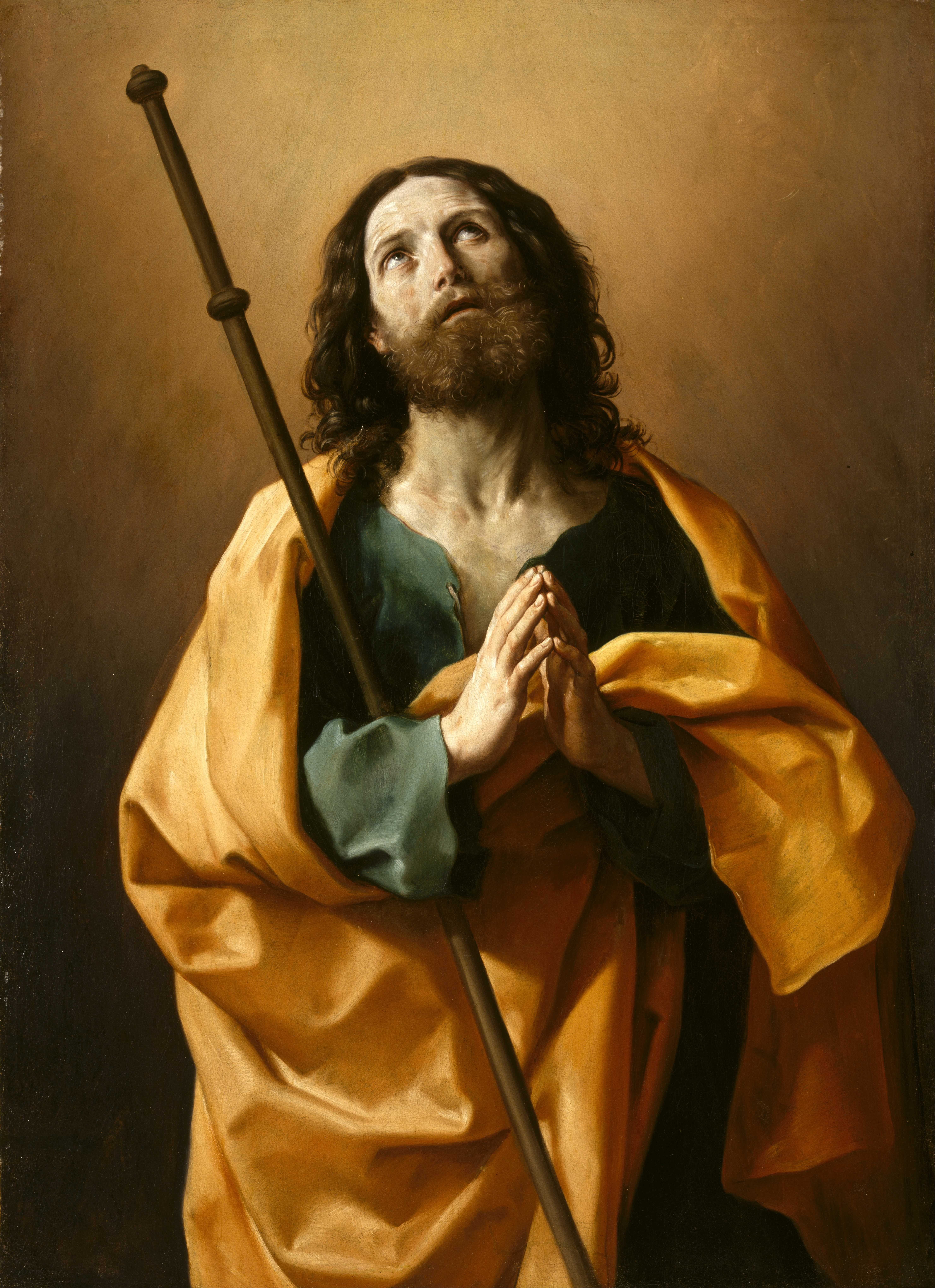
Artists generally considered to occupy the middle ground between Baroque Naturalism and Baroque Classicism include Rubens and the Italian painter Guido Reni. The painting below, St James the Greater by Reni, was painted between 1636 and 1638 and represents this balance: the idealization characteristic of the classical tendency is present, but the warmth and directness of feeling are firmly Baroque in spirit.
The Baroque sacred tradition, whether in its classical or naturalistic tendency, produced a body of work of extraordinary range and beauty. It was from this wellspring that the secular art to be explored in future posts would flow, as the same visual principles and habits of perception, formed in the service of the liturgy, found their natural extension into every aspect of the visible world.