


Scripture presents powerful examples of righteous anger—from Jesus cleansing the Temple to Mattathias defending God’s altar—but we know also that anger is one of the seven deadly sins. How do we distinguish between them? The difference lies not in the intensity of feeling or even in whether we’ve suffered genuine injustice, but in our interior motivation. Even when facing real injustice and acting to oppose it, our response becomes sinful if driven by self-centered resentment rather than love. Understanding this distinction is crucial to our personal happiness and helps us build a just society rooted in love, rather than indulging in destructive rage. Scala Foundation’s Way of Beauty shows us how to choose the right path, the via pulchritudinis!
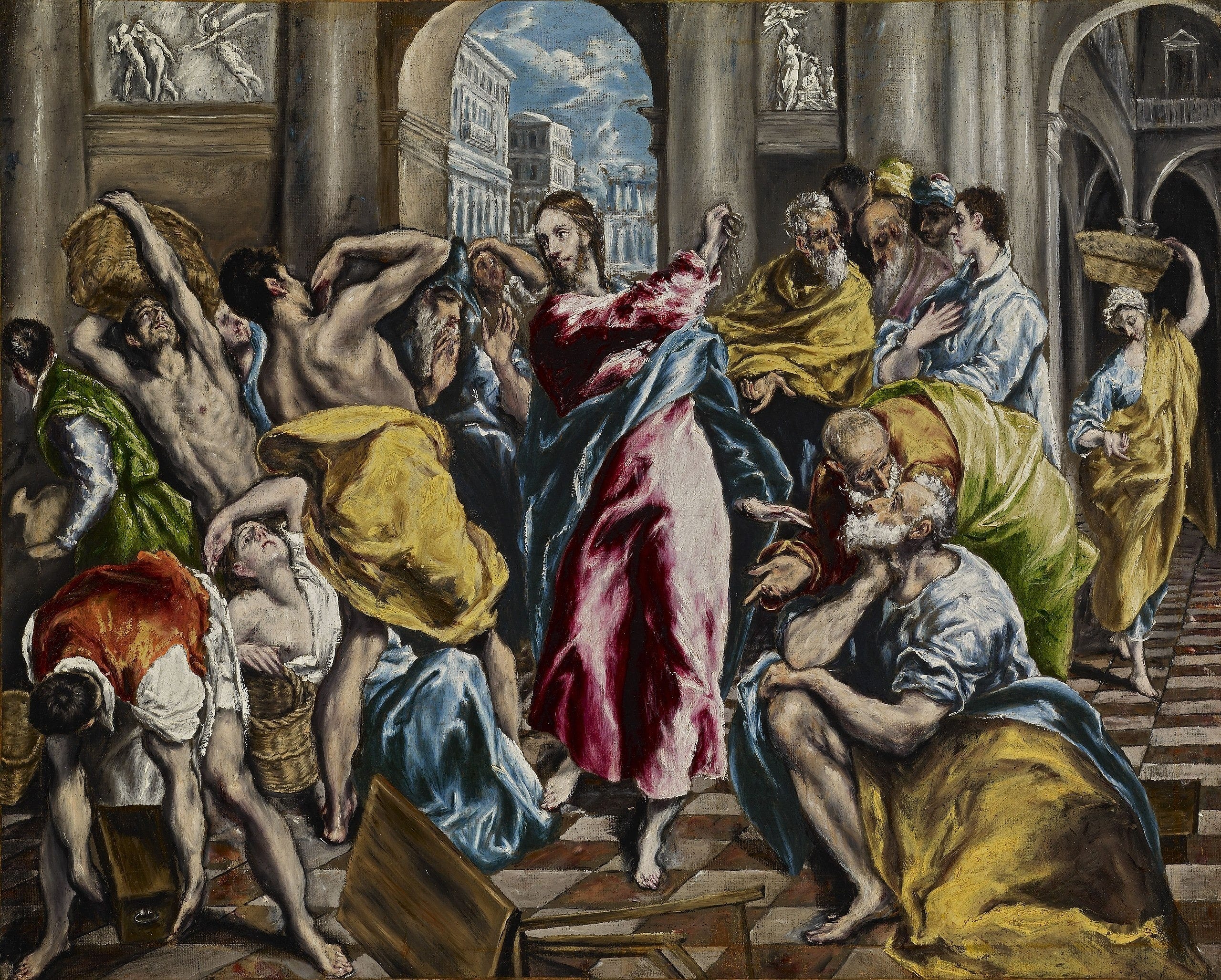
‘When Mattathias saw this, he was fired with zeal; stirred to the depth of his being, he gave vent to his righteous anger, threw himself on the man and slaughtered him on the altar.’ 1 Maccabees 2:24
The time of the Jewish Passover was near, and Jesus went up to Jerusalem. In the Temple, he found people selling cattle and sheep and doves, and the money changers sitting there. Making a whip out of cords, he began to drive them all out of the Temple, both sheep and cattle, scattered the money changers’ coin, overturned their tables and said to the dove sellers, take all of this away from here and stop making my Father’s house a market house.’ Then his disciples remembered that it had been written: “zeal for your house consumes me.” John 2:17
“Zeal for your house consumes me, and taunts against you fall on me.” Psalm 68(69):9

Anger is considered one of the seven deadly sins, yet there are instances in which anger can be deemed righteous. The challenge lies in distinguishing between the two. The passage in John 2:17 of the New Jerusalem Bible, which refers to Psalm 68 (69):9, states, “zeal for your house consumes me, and taunts against you fall on me.” This passage highlights the concept of righteous anger or zeal for what is good. The passage from Maccabees quoted above equates righteous anger with zeal, even as he kills a man.
But how would we be able to differentiate the two?
To differentiate between righteous and sinful anger, one must first consider the context in which it arises. A necessary condition for righteous anger is the presence of injustice. Righteous anger can only occur when we are responding to something that is objectively wrong and bad. However, while this condition is necessary, it is not sufficient for us to make the distinction. The individual’s response to that injustice must also be taken into consideration. For in the face of injustice, my response might be good or bad; it might be either righteous anger or sinful anger.
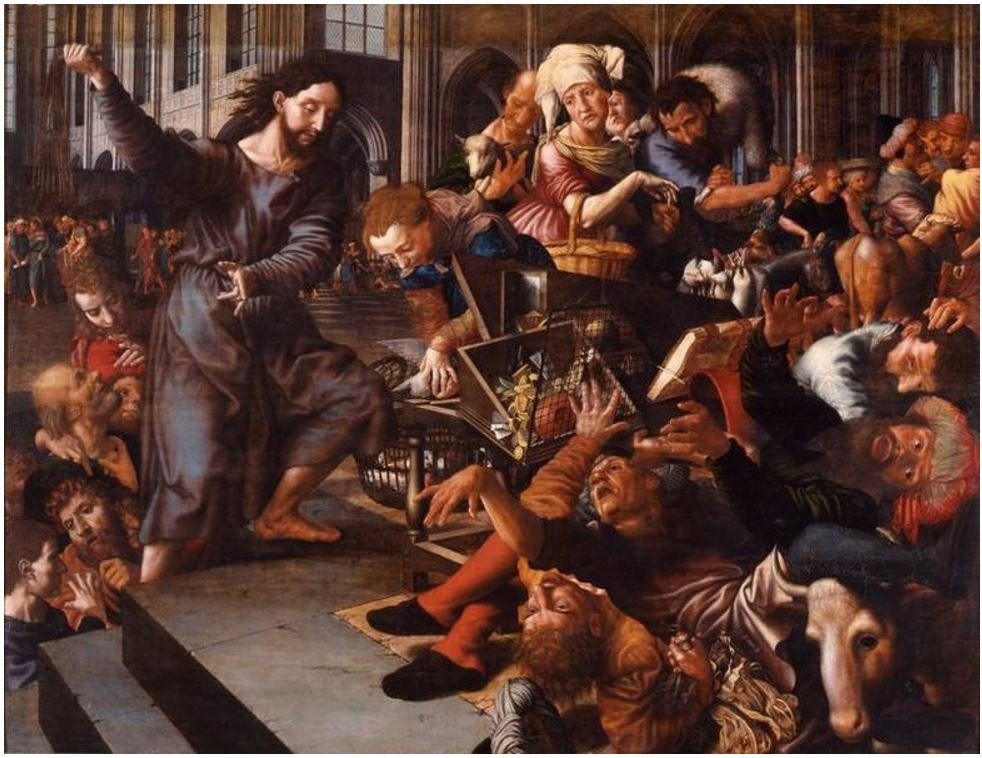
Sinful anger arises from a self-centred and resentful response to injustice. Feelings of personal hurt or indignation, along with a desire for revenge against the perpetrators, characterise this type of anger. In essence, the problem here is that we hate both the sinner and the sins of others, which falls short of the ideal response, which is to hate the sin but to love the sinner. The person experiencing sinful anger is always unhappy because, as a sin, it separates us from God. This is true even if it drives us subsequently to take actions that, when viewed objectively, are morally good —doing the right thing —but for the wrong reasons.
In contrast, righteous anger stems from a genuine passion for the good and a desire to see evil eradicated. This anger is rooted in a love for God and a desire to uphold what is good. Scripture describes this as zeal for what is good. Although righteous anger can be as passionate and intense as sinful anger, it is rightly ordered by the rational will. Individuals experiencing righteous anger feel good because they are driven by the love of God and neighbour, and not by a desire for revenge or resentment against the perpetrator of the injustice.
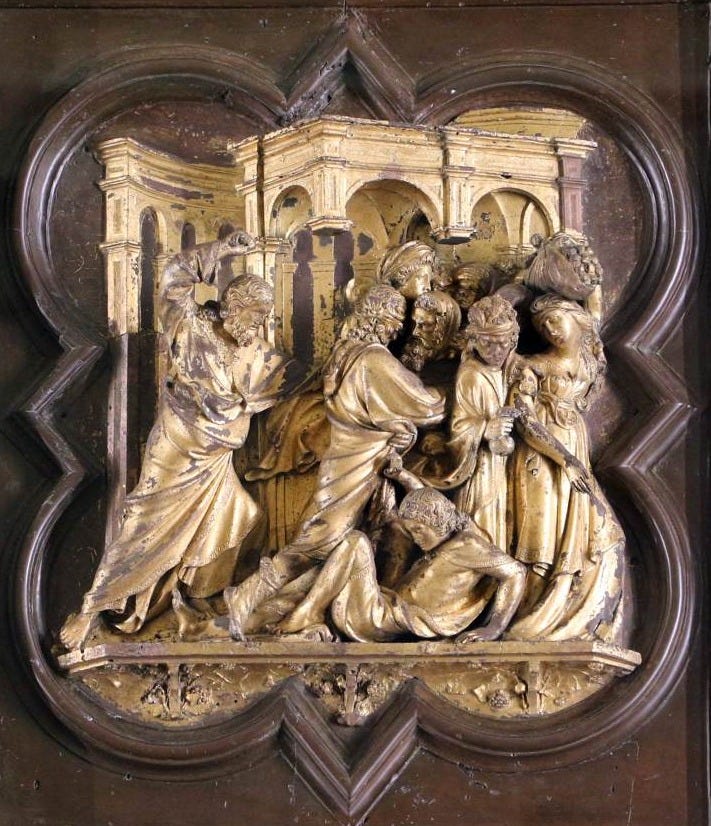
From an outside perspective, distinguishing between righteous and sinful anger can be challenging, as both can be intensely felt and passionate responses and may even lead to the same action. For example, in the passage from Maccabees above, a bystander watching Matathias kill in the temple would struggle to know whether this action was driven by desire for revenge - sinful anger - or zeal for God and for the Common Good - righteous anger - or a combination of both, even while judging his action to be morally good in the context of the time. In this case, of course, we know that he was driven by righteous anger because scripture tells us so. The result for the man at the altar would be the same regardless of Matathias’ motive, but the effect on Matathias himself would be different depending on which form of anger motivated him, for when the motive is love, it leads him close to God rather than away from HIm.
Applying this principle in our own lives, we can conclude that to achieve happiness and be in harmony with God’s will, we should strive to purge ourselves of sinful anger so that in the face of injustice, we are always motivated by zeal for what is good. To the extent that we can do so, we will be more likely to act rationally and decisively and in harmony with the will of God. When we do so, we are exhilarated and happy, experiencing an intense emotion of love for Him.

The Catechism of the Catholic Church (2302) makes this distinction as follows, quoting St Thomas (STh II-II, 158, 1 ad 3):
“By recalling the commandment, ‘You shall not kill,’ our Lord asked for peace of heart and denounced murderous anger and hatred as immoral. Anger is a desire for revenge. ‘To desire vengeance in order to do evil to someone who should be punished is illicit’, but it is praiseworthy to impose restitution ‘to correct vices and maintain justice.’ “
In the heat of the moment, in responding to injustice, it is almost impossible for most of us to eliminate sinful anger, so we should, as far as possible,develop the habit of acting in accordance with justice regardless of how we feel. However, if we have time to reflect, we can use the technique to analyze resentments offered by the Way of Beauty process to dissipate, with God’s help, any self-centred anger. In this way, we can strive for the ideal, that is, that our passions be ordered by love of God, love of neighbour and the desire for the Common Good.

Even with this technique, distinguishing between sinful and righteous anger in ourselves in the face of injustice is not always easy. It takes much self-awareness and a readiness to put ourselves into God’s hands. The temptation to justify sinful anger and hide a bad motive behind a good is real. I would say that perhaps 99% of the time, what I initially believe to be righteous anger is, in fact, sinful anger seeking to justify itself. By nature, I am given to self-righteousness, which is sinful anger masquerading as a zeal for justice.
Only God can lead me out of this self-imposed trap of self-righteousness, and He will do so if I let Him. I must first ask God to help me recognise my fault in my sinful response to the injustice inflicted upon me, then ask for his mercy and for the grace to forgive my enemies, praying for their well-being as Our Lord has instructed us.
Note that this does not deny the existence of injustice when it is real, nor does it necessarily imply that I have somehow brought injustice upon myself. That is the whole point about injustice…it is unjust! It is undeserved.
Once I am purged of sin, however, only then am I fully free to decide what to do about the injustice. This might mean that I am bound to take strident action in order to maintain justice, as Matathias Maccabeus and Jesus did in the temple. Or I might judge that I am not in a position to do anything about it, and so bear the injustice gracefully.
In his first Letter, St Peter (2:19-24) helps us to face injustice:
For this brings grace if, in awareness of God, you put up with pain while suffering unjustly. What glory is there in putting up with a beating for doing something wrong? The merit in the sight of God is in putting up with it patiently when you are punished for doing good. For you were called to this because Christ also suffered for you and left an example for you to follow in his steps. He had done nothing wrong, and no deceit was found in his mouth. When he was insulted, he did not return the insult, when he suffered, he made no threats but put his trust in him who judges justly.
And in 1 Peter, 4:13:
But insofar as you share in the sufferings of Christ, be glad, so that you may be glad and rejoice when his glory is revealed.
What Peter is describing is an ideal attitude of mind that is desirable regardless of whether prudence dictates that we should do nothing or take action as Matathias Maccabeus and Jesus Christ did in the Temple. We cannot attain such an ideal without the grace of God, which is offered to all of us.
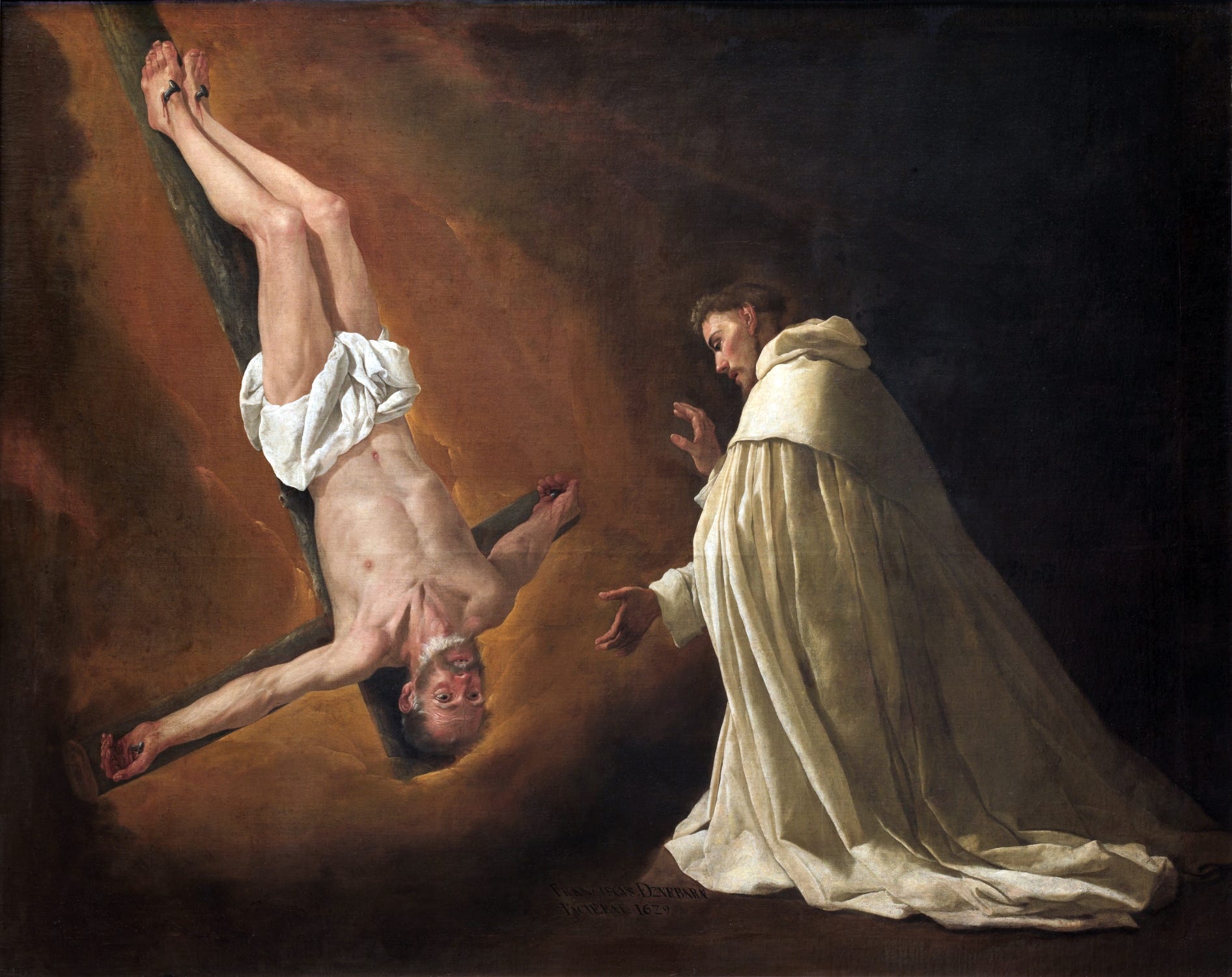
This is important. One of the great evils of Marxist ideology is that, even when it opposes injustice, it views sinful anger as a virtue. It wants to encourage all people to be passionately angry so that it can be harnessed as a destructive force. Marxism tells us we are right to be angry and should rise and destroy all aspects of contemporary society.
In contrast, the Christian principles that operate in the same situation are forgiveness and love. Christianity tells us to forgive our enemies, to pray for them and to love them, even while opposing them. Only God’s love, and our love of God and neighbour, which direct our actions to the Common Good, can build a just society. This is what establishes all that is good in society, even one that isn’t predominantly Christian. Any philosophy or ideology that seeks to exclude the love of God from society and our lives inevitably contributes to the growth of fracture, chaos and disorder.
Let us pray to God to help us be free from sinful anger and self-righteousness, and in the face of injustice to give us the grace to respond to injustice with zeal for the good, looking to Jesus, St Peter and Matathias Maccabeus as models of virtue.
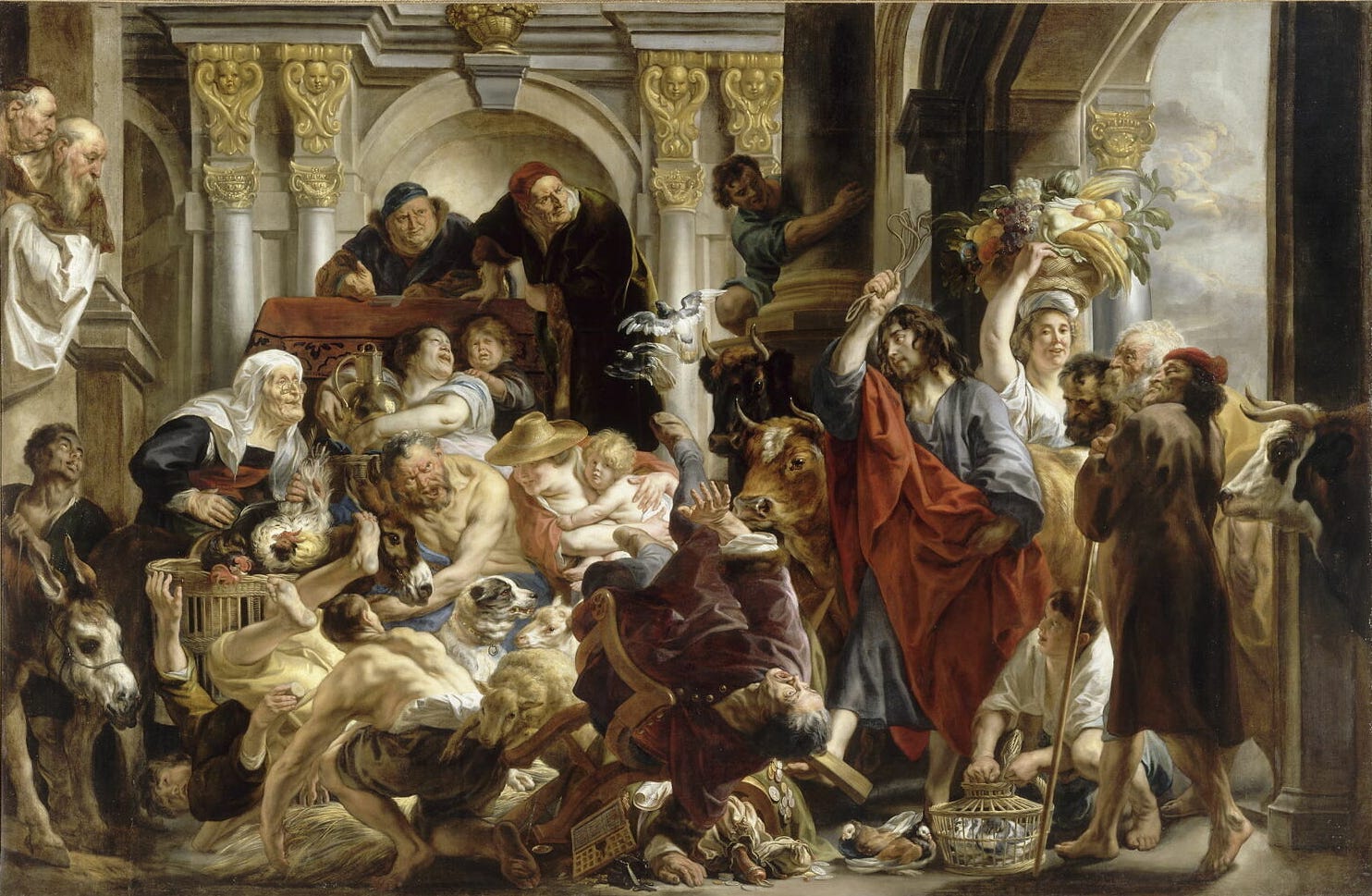
As a tangential post-script, this past week I viewed the spectacular collection at the newly reopened Frick Museum in NYC. It is small compared to, say, the Met, but practically every piece there is A-list (e.g., there were three Vermeers, to my recollection). The painting by El Greco at the top of this post, showing him ejecting the money-changers from the temple, was there! It was smaller than I imagined... perhaps 12"x18". It's worth making the effort to go if you are able.