Introduction
This is the second of two articles responding to the Catholic theoretical particle physicist Stephen M. Barr on the philosophical implications of quantum mechanics. The first article set out what I take to be the more easily understood (for someone whole does not have a deep knowledge of quantum mechanics) part of his argument: that quantum mechanics rules out physical determinism and is incompatible with a purely materialist account of mind, and that this opens a genuine space for free will understood as a non-physical cause acting in the physical world. I added my own suggestion that, since quantum indeterminacy is universal rather than confined to the human brain, God, as First Cause, is the natural candidate for the agency that selects quantum outcomes throughout all of creation.
[To read that first article, follow this link to go to the “Science” tab on the toolbar at the top of the homepage.]
This article takes up more speculative questions. I find Barr’s arguments compelling and will try to summarise them here, but I want to add three arguments of my own. It should be said that my arguments rest on an acceptance of both the Copenhagen interpretation of quantum mechanics and of Barr’s “traveling minds” hypothesis, which is proposed in his essay Does Quantum Physics Imply that Materialism is False?, published in 2025 to coincide with the hundredth anniversary of the discovery of quantum mechanics. I should point out also that I am at the limit of my understanding of both the science and the theology that underpin this, and I offer these thoughts in that spirit – not as conclusions but more as questions.
My thesis, held tentatively, is this: Barr’s Traveling Minds Hypothesis provides a coherent alternative to the materialist Many-Worlds Interpretation of quantum mechanics, and the difficulties it raises about objective reality find a natural resolution in the Catholic understanding of divine omniscience. Moreover, the same conclusion – that God is the universal observer on whom the definiteness of reality depends – is reached independently by a quite different route: the Thomistic account of beauty. Quantum mechanics, Thomistic philosophy, and classical aesthetics, while approaching the question from entirely different directions, appear to point in the same direction.
This article also contains the fuller explanation of the physics that the first article deliberately kept brief. In particular, I explain the Schrödinger equation, the Born rule, and the Many-Worlds Interpretation – all of which are needed to understand Barr’s Traveling Minds Hypothesis – and I discuss the notable fact that Heisenberg himself reached for Aristotle’s concept of potency and act as the most accurate philosophical description of the quantum state before measurement.
The Physics in More Detail
The first article described the central strangeness of quantum mechanics: that at the level of individual particles, physics can tell us only the probability of an outcome, never the outcome itself, whereas at the scale of everyday objects, classical Newtonian physics holds, and outcomes are in principle fully predictable. This section looks more closely at how quantum mechanics actually works, because these details matter for the discussion that follows.
Quantum mechanics describes physical systems through mathematical equations called wave functions. A wave function encodes all the possible states a physical system might be in, together with a quantity associated with each – not a probability directly, but something from which a probability can be calculated. These wave functions evolve over time in a continuous, orderly, and perfectly deterministic manner, governed by the Schrödinger equation, named after the Austrian physicist Erwin Schrödinger, one of the founders of quantum mechanics. There is no randomness in the Schrödinger equation, no jumps or unpredictability. If you know the wave function at one moment, the equation tells you with perfect precision what it will be at any future moment – as smooth and predictable as Newton’s equations for planetary motion.
The difficulty is that the wave function, for all its mathematical precision and predictability, cannot tell you what you will actually observe in an experiment, only what you might observe as governed by statistical probability. What the wave function gives you are quantities called amplitudes – attached to each possible outcome. To get from an amplitude to an actual probability, you apply a separate rule: you take the amplitude for a given outcome and square its absolute value. This procedure is called the Born rule, after the physicist Max Born, who proposed it in 1926. If the wave function gives an electron an amplitude of 0.6 for being in one place and 0.8 for being in another, the Born rule says the probability of finding it in the first place is 36 percent and in the second is 64 percent. All the probabilities must add up to 100 percent, and that is what scientists compare with laboratory results.
The Schrödinger equation and the Born rule belong to entirely different logical categories. One describes how the wave function changes continuously over time between measurements; the other is a separate rule for extracting probabilities at the moment of measurement. Crucially, no one has yet succeeded in deriving the Born rule from the Schrödinger equation. Physicists have tried for a century and failed. They are two independent postulates, and quantum mechanics comes into contact with observable reality only when both are used together. The significance of this independence will become clear when we come to Barr’s argument.
Before the Schrödinger equation produces a definite outcome – that is, before the Born rule is applied and a measurement is made – the system exists in what physicists call superposition: all possible outcomes are simultaneously encoded in the wave function. It is worth pausing on what this actually means. I do not use the phrase ‘simultaneously encoded’ to mean that the particle has literally adopted all outcomes at once, as that would be a straightforward logical contradiction – a thing cannot both be and not be in the same respect simultaneously. The particle is not secretly in one state while we remain ignorant of it, but neither is it literally in all states. It is in a condition of genuine unresolved possibility – or, to use classical terminology, of potency rather than act.
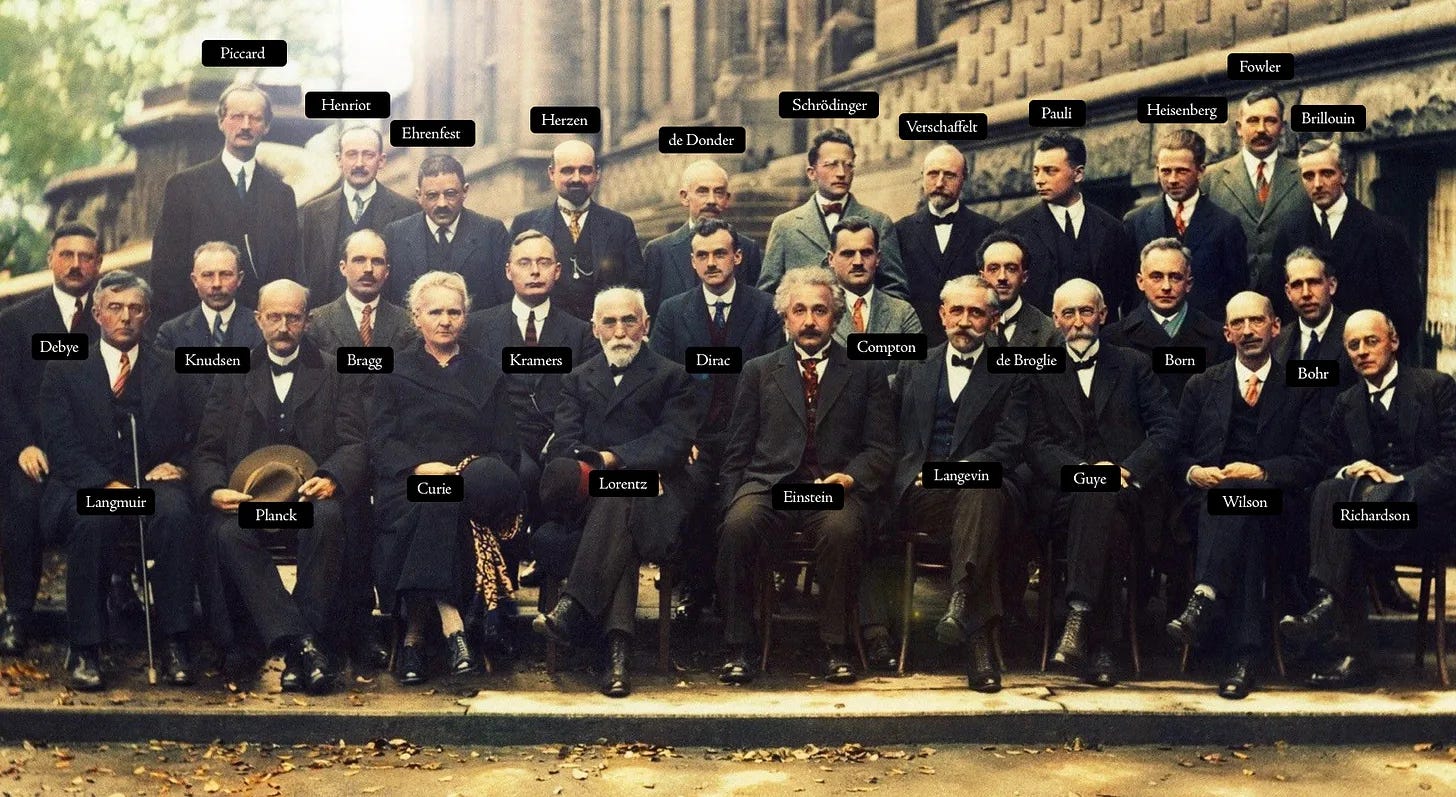
I am not the first to use this language, and I should acknowledge that perhaps the most distinguished scientist to have done so was Heisenberg himself — one of the principal architects of quantum mechanics. In his 1958 book, Physics and Philosophy, he explicitly used Aristotle’s concept of potentia to describe the pre-measurement quantum state, finding in it the closest available philosophical equivalent to the wave function. Heisenberg was not a Catholic philosopher trying to fit modern physics into a medieval framework to bolster traditional metaphysics; he was a theoretical physicist seeking the most precise language he could find to describe what he thought his own equations were saying. That he found it in Aristotle is, I think, striking.
The Measurement Problem: Why a Knowing Mind Cannot Be Avoided
The indeterminacy of quantum mechanics raises a question that goes beyond physics into philosophy: what actually fixes the outcome when an observation is made? Before anyone checks on our radioactive atom, its decay is genuinely undetermined. The moment a physicist looks and finds that it has – or has not – decayed, the range of possibilities collapses to a single definite fact. Something has resolved the indeterminacy. But what?
The traditional answer in quantum mechanics – associated with what is called the Copenhagen interpretation – is that it is the act of observation by a conscious observer. At the moment the observer learns the result, the indeterminate possibilities resolve into a single definite outcome. As Barr puts it, quoting the great physicist Sir Rudolf Peierls: the quantum-mechanical description is a description of knowledge, and knowledge requires someone who knows.
This is where the materialist – the person who holds that everything in the universe, including the human mind, is ultimately just physical matter – runs into serious trouble. If everything is physical, then the observer himself – his instruments, his sensory organs, his brain – is itself a physical system subject to the same quantum indeterminacy. Then, including the observer in the physical description does not resolve the indeterminacy; it merely extends it. You are back where you started, with all outcomes still in play and no definite fact emerging.
But for an event to actually happen – to become a settled fact rather than a range of probabilities – requires someone who knows that it has happened: a genuine knower, not merely another physical object caught up in the same indeterminacy. This is a problem for the materialist who does not acknowledge that thought and knowledge are not physical phenomena, unlike the Christian.
It is worth noting here that, in my experience, many scientists who are materialists have little interest in the philosophical implications of what they do. If challenged on these points, they are as likely to refuse to engage as to answer. That is their right, of course – there is nothing that says scientists are bound to be philosophers concerned with metaphysics as well as physics, no matter how much I think they ought to be. But it should be said that this category of scientist is, in effect, a materialist by blind faith – one who simply adopts and asserts the belief with no apparent interest in justifying it further.
The Many-Worlds Interpretation and Its Difficulties
Materialists who accept the force of the measurement problem but who are unwilling to accept a non-physical observer have a limited number of options if they wish to account for it. The most widely discussed is the Many-Worlds Interpretation, first proposed by Hugh Everett in 1957.
The Many-Worlds Interpretation (MWI) holds that the wave function never collapses. Instead, every time a quantum event occurs, the universe branches into parallel versions of itself, one for each possible outcome. All outcomes actually happen, but in separate branches of reality that can never interact with one another. There are branches where Schrödinger’s cat is alive, others where it is dead (to draw on the hypothetical case developed by the famous physicist); branches where you are reading this article, others where you are doing something else entirely. All are equally real in this Interpretation. Because these branches lose the ability to interfere with each other very rapidly, we never experience more than one of them, which is why the world appears to us as though definite outcomes occur.
Barr’s objection to the MWI relates to the fact that it insists that everything – including the act of observation – is governed solely by the Schrödinger equation. But as we have seen, the Born rule cannot be derived from the Schrödinger equation. The Many-Worlds Interpretation, therefore, has no coherent place for the Born rule and no mechanism for converting probability amplitudes into actual probabilities. A theory that cannot generate probabilities cannot predict anything, and as a consequence, has lost all contact with experimental reality. I have heard another objection, in a talk by philosopher Robert Koons, who argued that if every possibility occurs, then every possibility is 100% certain to happen, which seems to undermine the fact that the math assigns probabilities to each event, all of which are less than 100%.
Barr’s Traveling Minds Hypothesis
Barr’s response, offered in his paper, is his Traveling Minds Hypothesis. He agrees that the wave function of the universe continues to branch perpetually, without ever collapsing. Every possible outcome of every quantum event continues to exist in the world of mathematics. But he argues that the Born rule is not a law about the physics of these branches. It is a law that governs which branch the conscious mind travels down. All consciousness in the universe travels together down one branch, and the Born rule gives the probability for which branch it will be. The rule of probability, says Barr, governs minds, not matter.
This reconciliation offered by Barr preserves the understanding of a knowing mind that is nonphysical, thereby undermining the philosophy of physical materialism. The branches that consciousness does not travel down are real in a mathematical sense, but have no mind associated with them and therefore no one to experience them. They exist, to borrow Aristotle’s (and Heisenberg’s) language, as potentials that are never actualized.
God as the Ground of Objective Reality
There is a further difficulty with the Copenhagen interpretation that Barr acknowledges but, to me, does not fully resolve. If wave functions represent the knowledge of particular observers, and different observers have different wave functions that collapse at different moments, what becomes of objective reality? One seems to be left with a patchwork of partial perspectives rather than a single world that is what it is, independently of who is looking at it. Barr quotes Sir Rudolph Peierls, another physicist who contributed greatly to the field of quantum mechanics, who, when pressed on this, said simply: “I do not know what reality is.” This is an uncomfortable place to end up for anyone who, like me, believes that the cosmos is an objective reality, and it has led some philosophers and physicists who do not hold to a materialist view to doubt the Copenhagen interpretation, without necessarily offering a viable alternative.
Before proposing a solution, it is worth being precise about what we mean by saying that a quantum event requires an observer. There is a popular way of putting this that slides into something philosophically untenable – the suggestion that things do not exist at all until someone looks at them, as though the human observer were conjuring reality out of nothing. That is not the argument. A quantum system in superposition is already real – it genuinely exists, it is not nothing. But it exists in the mode of potency (picking up from Heisenberg), as a range of genuine possibilities, none of which has yet been settled. When an observer makes a measurement, the system does not leap from non-existence into existence. Rather, it moves from being real but in a state of potential, what one might call indeterminately real, to being determinately actual: fixed as this outcome rather than that one. The observer does not create the thing. He brings it from potency to act, in classical terms. The argument I make is that God, as First Cause, is the one who continuously brings every potential in creation into existence, and then into actuality – who, at every moment and in every corner of the universe, completes the movement from the indeterminate to the definite that physics itself tells us cannot be completed from within physics alone.
What occurs to me here is that perhaps the solution to the problem of objective reality comes from theology rather than from physics. If divine consciousness is taken to be the primary and ultimate observer – omniscient, not dependent on making discrete measurements, knowing all things wholly and simultaneously rather than partially and successively – then the objective state of the world at every moment is simply what God knows it to be. Reality is mind-dependent and fully objective at the same time, because the mind on which it depends is infinite.
The objectivity of the single real branch – the one actually experienced – is not guaranteed by any finite observer, but by the omniscience of a God who knows all things without limitation. This resolves the worry, raised by various critics whom Barr discusses, that the Copenhagen interpretation slides into subjectivism – the view that reality is merely what individual minds make of it. It also coheres naturally with Catholic thought: God does not know things because they exist, as we do; things exist because God knows them. His knowledge is not a response to reality but constitutive of it – one of the ingredients that form and compose reality, not a reaction to something that would be fully determinate without him.
The human observer is not, therefore, observing anything in isolation, but is accorded the privilege of co-observation with God, and in so doing acts as a co-creator who participates in one aspect, at least, of the creative work of God.
There are other beings possessed of intellect and will who may participate in this co-observation, too, and perhaps to a greater degree. The angels, whose knowledge is not discursive and successive as ours is but more immediate, would on this account be co-observers of a higher order, present to the quantum level of creation in a way that surpasses human perception. The saints in heaven, who participate in the divine nature through the beatific vision, would share in this still more fully — drawn into God’s own knowing, and so into his continuous act of holding creation in being. If this is right, then the act of observation that quantum mechanics requires is not a lonely or merely human affair. Creation is, at every moment, beheld: by God wholly and without limit, by the angels and saints in a participated and creaturely way, and by human beings partially and successively, each according to the measure of their knowing. We are not necessary to this order of things, but are accorded the privilege by a loving God who allows us to work with him, so to speak, in his work.
An objection can be raised against this line of argument, it seems to me, and it is worth addressing. If God is the omniscient observer whose knowledge is constitutive of reality, and if his knowledge is total and simultaneous, then it might seem that nothing is ever truly in a state of potentiality from God’s perspective. Everything is always already known, and therefore always already actual. But the whole quantum argument depends on genuine potentiality – on outcomes being genuinely indeterminate until observed. If divine omniscience simply eliminates that indeterminacy from the outset, we have not resolved the problem; we have dissolved it by a different route, and in doing so have undermined the very framework of potency and act that the argument was drawing on.
I think this objection, while serious, can be answered. We can distinguish between God’s eternal knowledge and the temporal existence of creatures. God knows all things in an eternal present, outside time. But creatures exist in time and genuinely pass from potency to act within the temporal order. God’s timeless knowledge of an outcome does not mean that that outcome has already occurred within created time; it means that the whole of time – including the moment of potency and the subsequent moment of act – is present to God simultaneously, each in its proper mode. He knows the potential thing as potential and the actual thing as actual, not by collapsing the distinction between them but by comprehending both perfectly from outside the temporal succession in which that distinction is real.
The potentiality is therefore genuine at the level of created, temporal being. The quantum indeterminacy is a real feature of the physical world as it unfolds in time. God’s eternal knowledge does not flatten that succession or pre-empt it; it holds it whole. What God does, on this account, is not eliminate potentiality by knowing the outcome in advance, but bring each potential into act at the right moment within the temporal order – which is, in my understanding, the Thomistic account of how primary causation works continuously through secondary causes without overwhelming them. Divine omniscience and genuine creaturely potentiality are not, therefore, in competition. They operate at different levels: one eternal and constitutive, the other temporal and real.
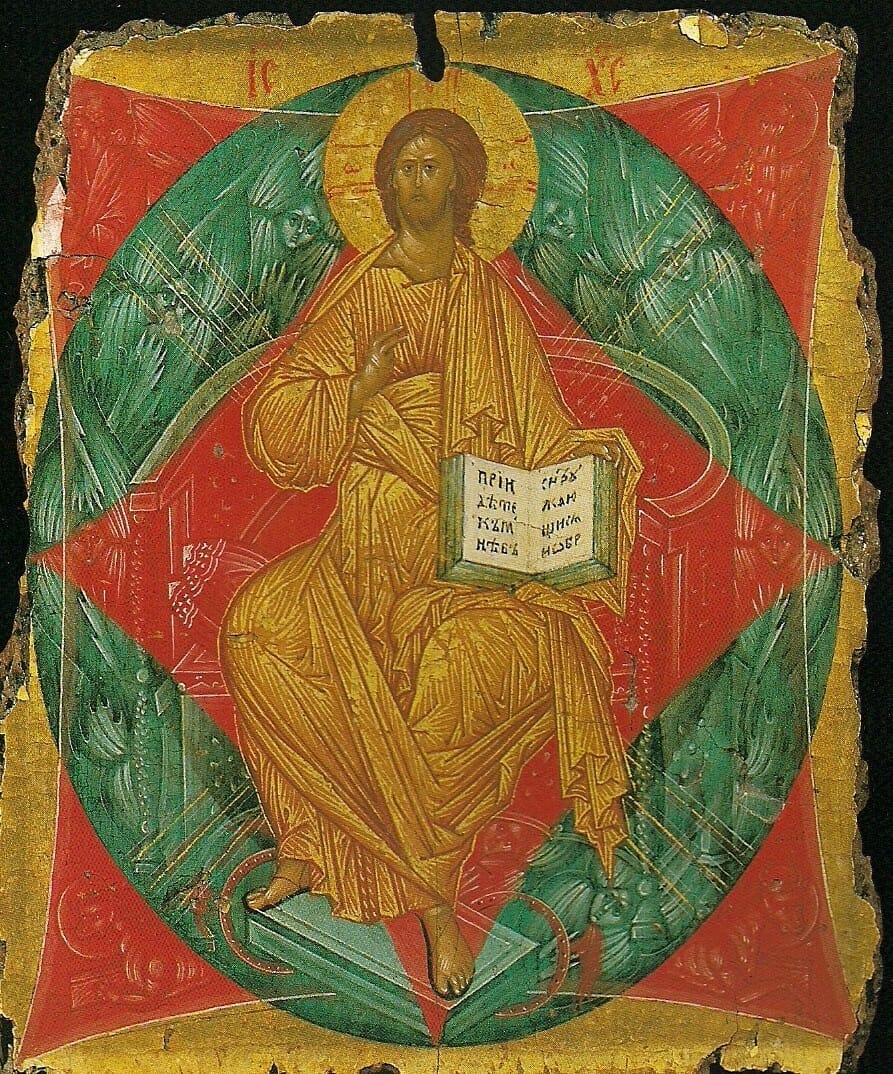
Beauty, Being, and the Universal Observer
There is a further convergence, it occurs to me, between quantum mechanics and classical philosophy — one that approaches the question of the universal observer not from physics but from the traditional understanding of beauty.
Aquinas defines beauty as id quod visum placet: that which pleases when seen. Beauty is one of the transcendentals — a property that belongs to all that exists, to being as such. The definition contains a word that warrants attention: "seen". Beauty, on this account, is not merely a property that things possess in isolation. It is a property that is realized in relation to a perceiver. This suggests an analogy with the quantum argument I have been making. Just as a quantum system exists before measurement in a state of genuine potency — real, but not yet determinate — so too, I want to suggest, a beautiful thing that has never been perceived might be understood as beauty in potency: genuinely there, genuinely beautiful in its constitution, but not yet fully actualised as beauty until it is known, apprehended, received by a mind capable of recognising it for what it is.
On this reading, the act of perception does for beauty what the act of observation does in quantum mechanics: it does not create the thing, but it brings it from potency to act — from being beautiful in capacity to being beautiful in the full and realized sense. And just as the quantum argument ran into the problem that most of the universe has never been observed by any human mind, the same problem arises here. Most of creation has never been seen by human eyes. If beauty requires a perceiver to be fully actualized, and if God is the omniscient observer whose knowledge is constitutive of reality, then it is God in whom the beauty of all creation is always and completely received. He is not merely the observer who covers the gaps left by finite human perceivers. He is the one in whom the beauty latent in everything He created is, at every moment, perfectly and wholly known.
The parallel can be extended further. In the quantum argument, I noted that human observers participate in the creative work of God as co-observers, and that other beings possessed of intellect and will — the angels, whose knowledge is not discursive as ours is, and the saints in heaven, who participate in the divine nature through the beatific vision — may share in this co-observation to a greater degree. The same applies here. The beauty of creation is received, in varying degrees of fullness, by every mind capable of apprehending it: by human beings partially and successively, by the saints and angels more fully, and by God wholly and simultaneously. Creation, on this account, is perpetually beheld; its beauty is perpetually actualized; nothing that exists goes unseen.
The second foundation for this argument concerns claritas — the third of the three conditions Aquinas identifies for beauty, alongside integritas (wholeness) and consonantia (proportion or harmony). Claritas is the quality by which a thing shines forth as what it is, radiating its intelligibility outward. It is not merely a passive capacity; it is an active orientation toward being known, an intrinsic directedness of the thing toward an intellect capable of receiving it. A thing possessed of claritas is not simply available to be known if a knower happens to come along; it is, in its very nature, I suggest, ordered toward being known. And if things are constitutively ordered toward being known, then there ought to be a mind toward which they are ordered — one adequate to receive the full intelligibility they radiate. Here is the parallel with the quantum argument: just as the Copenhagen interpretation requires a conscious observer for a definite physical state to exist, so too the Thomistic account of claritas requires that every existing thing be ordered toward a mind capable of knowing it fully.
I should say that the traditional Thomistic account of beauty does not, to my knowledge at least, in itself, assert that beauty requires an actual observer present to every beautiful thing at every moment, nor does it use the language of potency and act in quite the way I am applying it. The standard reading is that beauty is an objective property of the thing — a real capacity to please a suitably disposed perceiver — whether or not any creature happens to be perceiving it. In invoking Aquinas here, I am not claiming to report the tradition faithfully as it stands. I am extending it in light of the quantum argument, but I believe the extension is consistent with the tradition and does not undermine it. It draws out an implication that the tradition, developed long before anyone had heard of quantum mechanics, had no particular reason to make explicit. The reader should weigh it accordingly.
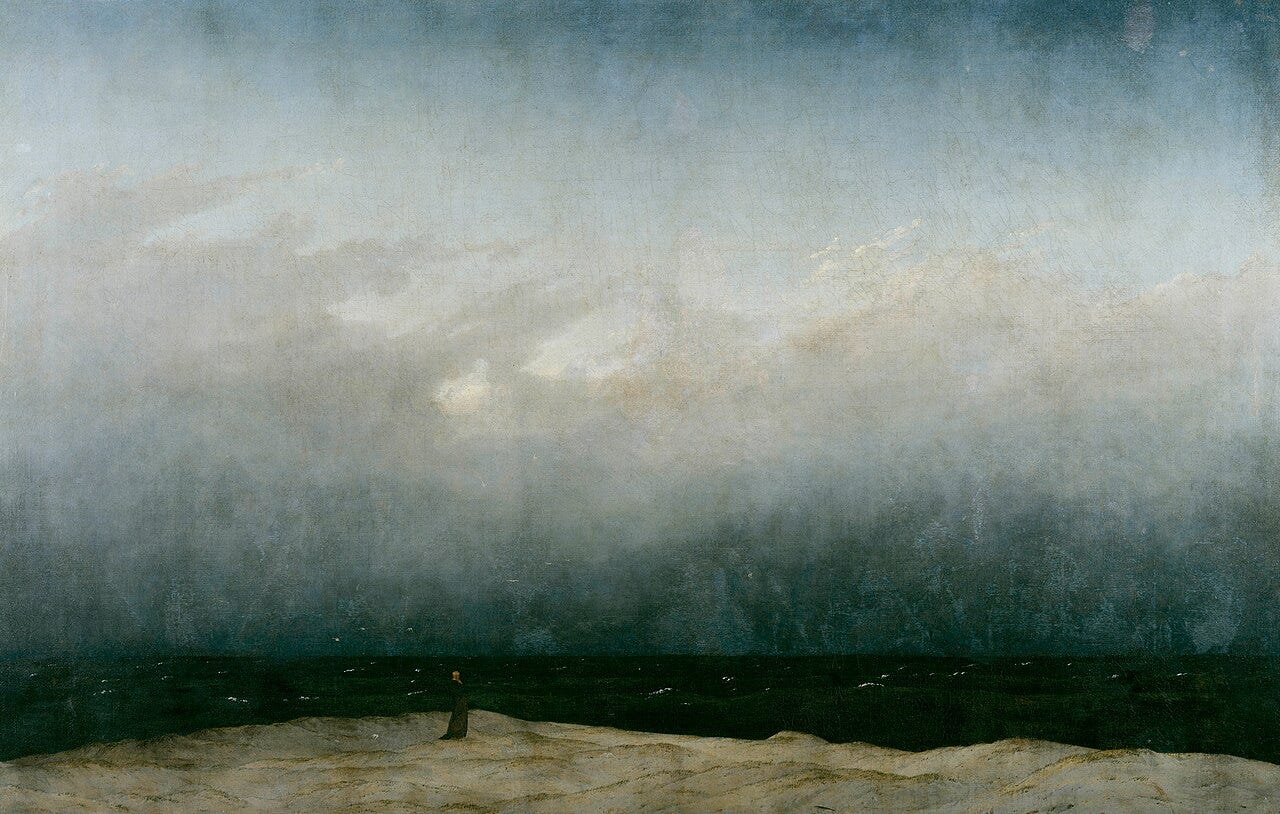
Conclusion
The argument of this article, as I said, is held tentatively and has three parts.
The first is Barr’s: his Traveling Minds Hypothesis provides a coherent alternative to the Many-Worlds Interpretation, giving the Born rule a natural home as a law governing consciousness rather than matter, and preserving the reality of a single experienced world without requiring an infinite proliferation of equally real parallel selves.
The second is my own extension of Barr: divine omniscience, understood in the Catholic tradition as constitutive of rather than responsive to reality, provides the ground of objective existence that finite human observers alone cannot supply. God is the ultimate observer whose continuous and total knowledge is what makes the one real branch real. The objection that divine omniscience eliminates genuine potentiality is answered by consideration of the distinction between God’s eternal knowledge and the temporal reality of creaturely existence: potency and act are genuinely distinct within created time, even though both are held simultaneously in the eternal divine mind.
The third approaches the same conclusion by a different path entirely. The Thomistic account of beauty as a transcendental property of being, and in particular the notion of claritas as an active orientation of things toward being known, implies that a mind adequate to receive the full intelligibility of creation must exist. For the vast majority of creation, that mind can only be God (or perhaps God, and his angels and saints in heaven).
The hypotheses presented here are not scientifically provable; science is only equipped to offer solutions within the realm of the physical and material. Nevertheless, I suggest they are more reasonable explanations than those the materialist can offer. The Aristotelian and Thomistic account of the order of the natural world I draw on was not developed to address a difficulty in explaining quantum mechanics. It is a coherent worldview that already existed, has been tested across many other fields of inquiry, and – Catholics would argue – has been validated by human experience for centuries. Quantum mechanics, metaphysics, and aesthetics, therefore, as presented here, do not prove the existence of a knowing God. But they do, I think, point towards one.