


Introduction
There is a widespread assumption that the arts, the sciences, and the Christian faith occupy separate worlds – that a traditional training in music, painting, or poetry is a pleasant supplement to a serious education, but hardly essential to it, and that faith is a private matter with no bearing on the life of the mind. I believe both assumptions are wrong, and what follows is my attempt to explain why. My aim is to show not only that a formation in beauty is one of the primary conditions of human creativity – including scientific creativity – but that a worldview shaped by Christian faith, far from being an obstacle to rigorous enquiry, is in fact the ground from which that creativity most naturally grows.
What makes this argument different from the usual defence of faith and culture is its direction of travel. The conventional approach takes science and reason as the standard and then attempts to show that faith and the arts can meet that standard – that they, too, are rational, that they, too, have their evidence and their logic. I want to reverse the direction. My argument is that science itself rests on foundations it cannot justify by its own methods – it rests on premises accepted by faith – and that those premises are, historically and philosophically, the inheritance of the Christian West. It is not faith that needs to justify itself before the tribunal of science. It is science that, on examination, turns out to depend on faith.
I begin by examining the premises on which the scientific method rests, arguing that because they are historically derived from a Christian worldview, science and the Catholic Faith are not merely compatible, but share a common origin and a common structure, both resting on premises that reason alone cannot establish, and both proceeding by the application of reason to those premises in search of understanding. I then turn to the process of scientific discovery itself, showing that while reason is indispensable to science, the creative moment – the generation of the original hypothesis – is rooted in intuition rather than discursive reason. That intuition, I argue, is the same faculty developed by a traditional formation in beauty: a formation that comprises both the appreciation and the creation of beautiful art forms. This formation, I argue, should include the study of the traditional mathematics of beauty, which was part of the Western educational tradition for centuries until the modern era and which, for scientists and mathematicians especially, will serve as a natural bridge between science and faith.
To strip a formation in beauty from education is not to produce more rigorous scientists; it is, I would argue, to produce less creative ones, less fully human ones, and less joyful ones. I make this argument in the context of a discussion of science education, but what I say applies to all education and to every vocational specialization within it. To live a life rooted in beauty and creativity is to live life gracefully and joyfully.
The founding premises of science derive from a Christian worldview
The scientific method rests on several foundational premises: that the natural world is real and that we can perceive it through the senses; that it has an intelligible order which we can discern through the application of reason to what the senses give us; and that mathematics is the most powerful language yet discovered for expressing that order, even where it does not capture it fully. Further, this order is assumed to be universal – unchanging across time and space, operating identically both in the laboratory and at the far reaches of the universe.
It may surprise many people to learn that these premises are historically derived from a Christian worldview and are incompatible with many other philosophical and religious traditions. The explanation lies in the recovery of Aristotelian philosophy in the medieval West – its translation, study, and gradual integration into Christian thought, above all through the work of the mendicant orders of the 13th century: Dominicans such as Albert the Great and Thomas Aquinas, who argued that reason and revelation illuminate rather than contradict one another, and Franciscans such as Bonaventure and Roger Bacon, the latter of whom is often credited as one of the earliest advocates of systematic empirical investigation. It was this synthesis – Greek confidence in the rational intelligibility of the natural world, united with the Christian conviction that a personal God had created and ordered it – that provided the intellectual milieu in which the scientific method could take root and eventually flourish. It is no accident, therefore, that modern science developed in the Christian West.
For most people living in today’s secular world shaped by science and technology, these premises will likely never have been explicitly articulated, not even in science education – they are simply absorbed as the invisible background of educated life. I speak from experience: I have two graduate degrees, in metallurgy and materials science, but was never once presented with them in this form.
The portion of the population who almost unknowingly take these axiomatic truths for granted, which is the vast majority of the population, includes many working scientists, who accept them unquestioningly even when they profess a view of reality – such as scientism – that would, if examined carefully, undermine the very premises on which their work depends. However, such a scientist, when carrying out science, behaves as though these premises are true, often not pausing to ask whether their declared philosophy of life permits them to do so.
Scientism is the belief that the scientific method is the only reliable path to knowledge, and that any claim which cannot be verified by it – that is, cannot be scientifically proven – is therefore meaningless or merely subjective. Crucially, the premises upon which the scientific method is based cannot themselves be tested by the scientific method. To attempt to do so would be to commit the logical fallacy of circular reasoning – using the means of testing to validate the very assumptions on which that testing method depends. This is why scientism, which many people today claim to adhere to, is internally contradictory.
There is a deeper point here that is worth making explicit, particularly for readers who hold the Catholic Faith. Catholic theology teaches that faith is not simply a conclusion reached by natural reason, but a gift – a grace by which God moves the intellect to assent to truths that appear reasonable precisely because he causes them to do so. If this is so, then the premises of the Faith and the premises of the scientific method are not merely compatible; they share a common origin. Both ultimately rest on foundations that, traced far enough, lead to the same source: God, who is the author of both the natural order that science investigates and the faith by which we receive the worldview that makes that investigation possible. And both share the same fundamental movement: the acceptance of premises that reason alone cannot establish, followed by the application of reason to reach understanding – what St Anselm called fides quaerens intellectum, faith seeking understanding. In this sense, science depends on faith as much as theology does. They are not merely compatible. They are, at their roots, reflections of the same gift and the same movement of the human mind toward truth.
The scientific method tests hypotheses against reality
Given these foundational premises, the scientific method proceeds by developing a hypothesis about the order of the natural world. But the process by which a hypothesis is formed and then validated has two quite distinct stages, and conflating them leads to confusion about the nature of scientific creativity.
The first stage is the formation of the hypothesis itself. This typically begins with an intuitive leap – a moment in which the scientist senses, one might say, rather than deduces, that a particular explanation might be correct. From this initial intuition, reason and mathematics take over: the scientist asks whether the assumptions embedded in the idea are internally consistent, whether they are consistent with already established science, and whether they can be expressed in mathematical form. This process of internal testing – working out the logic of the proposal – may involve many steps of discursive reasoning before anything is ready to be tested against the world. But the first step in the development of the hypothesis, more often than not, is intuitive rather than logical.
The second stage is validation of the hypothesis, so that it becomes a theorem. Recognizing that human reason is fallible, that data can be wrong or incomplete, and that assumptions embedded in the testing logic may be inaccurate, a hypothesis is not considered scientifically proven until it has been tested against reality. The traditional validation is to ask: does the natural world, in some domain not yet tested, behave as the hypothesis predicts – and does it do so repeatedly? This is the moment of descent from the elevated world of abstract ideas and mathematical expression in which the hypothesis exists, to the world we observe with our senses. Only when this condition is satisfied does a hypothesis – something that is possibly true – make the transition to a theorem – something that is probably true. This is the highest level of scientific proof - probably true. A theorem, though considered more reliable than a hypothesis, is always open to revision or rejection if fresh data appear inconsistent with its predictions. This has happened many times in the history of science.
It should be noted that this classical account of the scientific method describes an ideal that is not always honored in practice. In the softer sciences, especially, where controlled testing is difficult and mathematical description is partial, the bar for transition from hypothesis to theorem is sometimes set lower than rigor demands; and even in the harder sciences, the very human temptation to want one’s ideas to be correct – combined with institutional and professional pressures – can lead to the premature adoption of hypotheses as ‘settled’ science. Some scientists happily admit that they are departing from traditional methodology and refer to it as ‘post–normal’ science. We should always be more cautious about claims that have not been subjected to this full standard of testing, and more alert to the ways in which natural reason, however powerful, remains fallible and self–interested.
It is worth pausing on what that means in practice. Ultimately, a theorem is not validated by peer consensus or review, institutional authority, or the elegance of its mathematics, but by whether it actually works in the world. The first test, ideally, is whether the validating experiment is repeatable in the laboratory, many times, by different hands. The final test is whether it holds in the world at large: whether bridges stand, medicines heal, and computers compute useful outcomes. It is the power of natural science to affect our lives materially that convinces so many people of its validity. As one good scientist put it to me memorably: “It’s technology that keeps science honest.” It is for the same reason – the effectiveness of natural science in delivering working technology – that people have mistakenly overestimated the power of science by adopting scientism.
Scientific creativity is one of intuition rather than discursive reason
The distinctive contribution of the creative scientist whose work increases scientific knowledge is the generation of an original hypothesis. As I described above, hypotheses are not typically generated by reason alone; they arise from an initial intuitive step – an insight that explains the pattern in the data through a perception of symmetry, harmony, or underlying order.
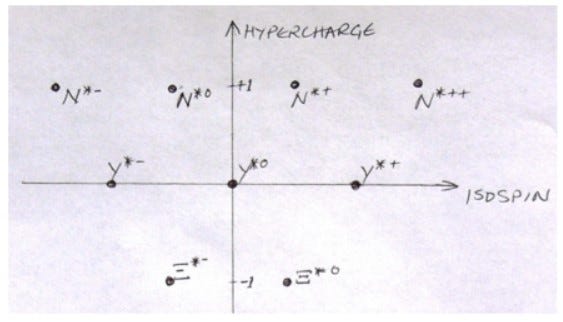
The work of physicist Murray Gell–Mann was a striking example. In the early 1960s, he noticed that a plot of the properties of nine subatomic particles, called hadronic particles, would form a perfect triangular pattern if a tenth particle were present. Starting from this intuition, he set out to find the tenth particle with the properties that would place it at the apex of the triangle in the plot – and he succeeded. Reason was indispensable in testing the hypothesis, but the hypothesis itself arose from an aesthetic perception, not from any logic arising from physical understanding of the behavior of hadronic particles: something was missing, and its absence was felt as an incompleteness. This, I would argue, is a general pattern. An idea presents itself as an explanation, and then reason is employed to test it. The moment of creativity is not propelled by discursive logic, but through intuition.
The intuition for beauty that drives scientific creativity is formed by tradition
Where does this creative intuition come from? In my view, the capacity to “complete the picture” arises from a cultivated sense of what ought to be – that is, the product of an aesthetic sensibility which seeks to complete and account for patterns of data. This intuition is the result of a capacity for apprehending beauty, which is an intuitive grasp of the underlying order of the cosmos rooted in awe and wonder at its beauty. It is cultivated by an immersion in and contemplation of the beauty of the natural world, and with the products of the culture of man, a canon of great and beautiful works, which is likely traditional forms that derive their beauty from that of the cosmos. This development of appreciation for natural beauty should be complemented by the stimulation to create beauty through a creative pursuit. In principle, this can be any fine art or craft. It usually means the pursuit of a traditional form of practice that developed at a time when it was taken for granted that the goal was to form something in harmony with the beauty of the natural world, and that rigor and discipline were necessary in order to do so.
The person does not need to be especially talented in their chosen pursuit; the primary goal here is not so much to create a professional artist as to stimulate the person’s God–given creative faculty, which will then naturally inform all other human activities. The person with such a formation will be more inclined to be creative in everything they do. This is the essence of a traditional formation in beauty. It comprises both the appreciation and the practice of creating beauty.
For the scientist, this aesthetic sense informs and complements a deep awareness of the corpus of existing scientific knowledge – it is highly unlikely that someone who knows nothing about science will be a creative scientist, however finely formed their aesthetic sensibility may be. What we are describing here is a formation that enriches and complements a good and conventional scientific education.
This formation in beauty naturally informs all human activity, and so ought to be part of everyone’s general education. Its greatest impact will be felt in domains where a person combines deep engagement with some natural talent, whatever it may be, since it is there that each person’s potential for creativity and originality is greatest. Those who are gifted scientists, for example, will therefore benefit most from this formation precisely in the field of science.
This is why I believe the argument for arts education is not merely that it enriches life or develops the whole person, though it does both. It is that a formation in beauty is one of the primary conditions under which creative insight, in any field, becomes possible. Within the formation of beauty, time should be given to the study of traditional harmony and proportion – the mathematics of beauty. I will describe it here, as it is virtually unknown in contemporary education and particularly relevant to those with a talent for math and physics.
Beauty, like natural science, has a discoverable mathematical order
The mathematics of beauty deserves particular attention here, not least because it serves as a natural bridge between scientific investigation and the life of faith – especially for those formed in mathematics or physics, who will find in it a discipline that articulates its conclusions in the language they know best. Like the natural sciences, it begins with premises that are proposed rather than proven, proceeds by the analysis of data drawn from the natural world, and tests its conclusions against human experience; yet its object is beauty, and its fruit is the formation of the creative and contemplative imagination that finds expression in art, architecture, and music.
Its roots in Western culture go all the way back to the ancient Greeks. Its development began with the premise – supported by broad and enduring consensus – that people find the natural world beautiful, and therefore that it most likely is beautiful. Then, just as the scientist does today when investigating physical properties, it was assumed that the property of beauty is related to an order underlying the structure of the cosmos we observe. We then study nature for the mathematical patterns that seem to underlie that beauty. Having identified such patterns, they are tested against reality, as with the scientific method. That test involves creating human artifacts that incorporate the proposed mathematical patterns of beauty, then asking: Do people generally find them beautiful? If they do, and do so repeatedly across cultures and generations, we have something analogous to a theorem.
The standard of beauty is a broad and enduring consensus, not expert opinion
As with all things derived from human reason, and again recognizing the weakness of human reason, we should be ready to consider the possibility that any account of the mathematical order of beauty is likely to be incomplete – a useful simplification of the true situation, good but not perfectly accurate. We should not expect, therefore, the same degree of consensus about beauty in human artifacts as we find about the beauty of nature.
So, when considering whether something is beautiful, we look for the broadest possible consensus – one that transcends individual eras and generations. Without that breadth, we cannot rule out that fashion or social pressure is driving agreement. What we cannot rely upon is the assertion of a small group of experts or academic specialists: the appeal must be common, enduring, and multigenerational. G. K. Chesterton called the verdict of the preferences of many generations the “democracy of the dead.”
A simple example may help to make this concrete. Every year, millions of people visit Florence or Oxford – and have done so for generations. It is worth asking which buildings they come to see, and why. They do not, on the whole, come for the modern buildings on the outskirts. They come for the Duomo, or for Magdalen College, for the streets and squares whose proportions seem to satisfy something deep in the human eye. They may not be able to articulate why these buildings move them, but they feel it unmistakably. My argument is that what they are responding to is precisely the mathematics of beauty – the traditional principles of proportion, harmony, and order that governed the design of these buildings and that, once lost from our educational and cultural tradition, we have largely ceased to reproduce. This is the democracy of the dead speaking: a multigenerational, cross–cultural consensus by which people vote with their feet.
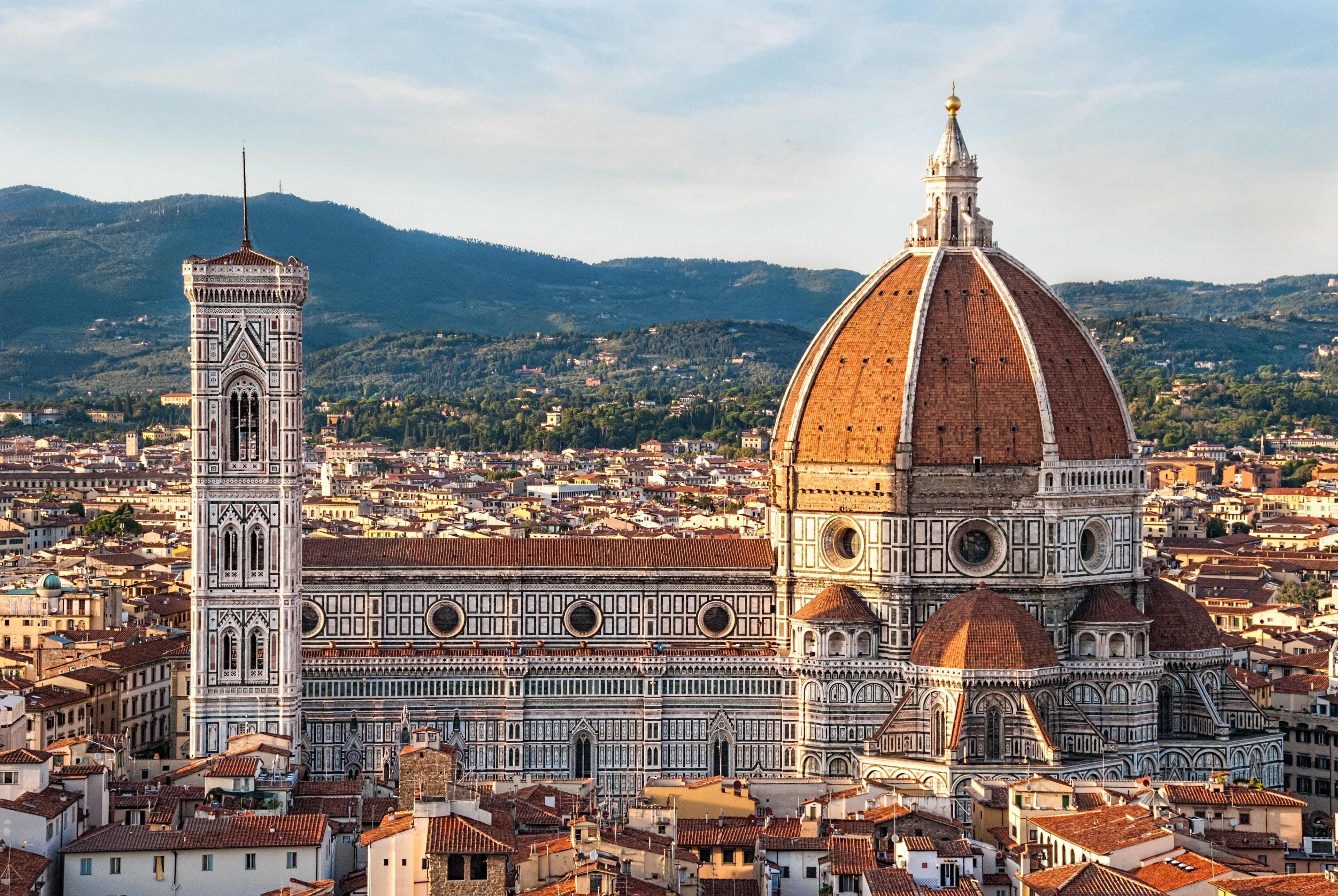
There is another word for it, and that is tradition. It is not a perfect standard, but it is generally a good one and, in my view, the best available. We look to tradition, as far as possible, in any form of art, as a guide to what is good and beautiful. This is why I recommend studying a traditional form of fine art as part of this education, as it is more likely to be beautiful.
It is also worth noting that tradition does not rule out innovation or creativity, as some who are hostile to tradition have asserted. Rather, the underlying pattern that defines any tradition sets the standard by which the goodness of innovation is measured and guides us in creating new and original forms today. We can see this in the history of culture. Across the centuries, there were many, many different styles of art, architecture, and music that conformed to traditional patterns; the potential has not been exhausted – in fact, it is infinite and inexhaustible.
The study of the mathematics of beauty is not the only discipline within a traditional formation in beauty. An artist also develops their intuitive sense, painting, for example, through imitation, copying nature directly, and imitation of the works of great masters – painting landscapes and portraits, studying the human figure, studying the works of great artists of the past, such as Velázquez or Bernini, for example. But the mathematics of beauty is a core discipline within this formation, one that informs creativity across all the arts and, crucially, one that is almost entirely absent from any artistic training today. It is, therefore, something that all creative people – including scientists – should actively seek out and incorporate into their formation, alongside practice in a fine art such as painting or music. Those who wish to explore this further may find Pontifex University’s Mathematics of Beauty course, or my book The Way of Beauty, a useful starting point. Scala Foundation’s Way of Beauty program encapsulates the essentials of a formation in beauty for those who wish to experience it.
The mathematics of beauty was transmitted through the Christian tradition – and rejected by modernism
Some may wonder why the mathematics of beauty is so little known today. As a discipline, it has a long history. Its roots in Western culture lie in ancient Greek philosophy and are associated with figures such as Pythagoras, Plato, and Aristotle. It was brought into the Christian intellectual tradition by prominent figures of the Late Antique period, such as St Augustine and St Boethius, and it remained foundational in art, architecture, and musical composition for centuries. However, it was consciously rejected by Enlightenment philosophers, who undermined the intellectual foundations on which it rested. Influential thinkers such as Burke and Kant argued, in different ways, that beauty could not be grounded in any objective, mathematical order present in the object itself. These ideas took time to permeate the culture, but really began to take hold with the modernist movements in art, architecture, and music at the turn of the 20th century, and by the mid–20th century, this tradition had effectively been banished from schools of art, architecture, and music altogether. Our task, therefore, is to reintroduce this discipline to the world.
Conclusion
My conclusion is this: the arts – that is, both the appreciation and the creation of beautiful art forms – are not a decorative supplement to education, nor a leisure activity for those with time and talent. They are a primary means by which the human person is formed to perceive order, pattern, and meaning – the very perception on which creative thought in every field depends.
The recovery of the mathematics of beauty – transmitted through the Christian tradition, embodied in its art, architecture, and music – is therefore not merely an aesthetic project. It is an educational one, and I believe also a civilizational one.
Underlying all of this is a deeper unity that I hope the essay has made visible – and one that runs in the direction I signaled at the outset. The conventional defense of faith and the arts attempts to justify them on science’s own terms, arguing that they too are grounded in reason and evidence. That is a case I believe can be made, but it is not the one I have made here. Instead, I have argued the opposite: that science itself, examined honestly, rests on foundations it cannot establish by its own methods – on premises accepted by faith – and that those premises are the inheritance of a Christian civilization. Science, faith, and the pursuit of beauty are not competing or contradictory accounts of reality. They are reflections of the same fundamental movement of the human mind: the acceptance, whether by the grace of God or by reasonable trust, of premises that cannot themselves be proven, followed by the patient application of reason and intuition in search of understanding. This is what Anselm meant by fides quaerens intellectum – faith seeking understanding. It is the animating impulse of the Catholic intellectual tradition, of natural science, and of the traditional formation of artists through the study of the mathematics of beauty alike. And I would argue it is equally, if less consciously, the animating impulse of every scientist who has ever looked at the order of the natural world and felt awe at its grandeur and beauty.
One final thought, which returns us to the opening. I began by speaking of education that engenders creativity and a joyful life. The connection between beauty and joy is not incidental. St Thomas Aquinas defined beauty as id quod visum placet – that which pleases when seen or known. The pleasure he describes is the calm delight of the intellect beholding proportion, clarity, and integrity in what it contemplates. This contemplative joy is available to anyone and is stimulated in those formed to perceive beauty – in a piece of music, in the structure of a mathematical proof, in the order of the natural world. And because God is supreme Beauty, such apprehension has the character of a foretaste of heaven: it draws the soul, quietly and without compulsion, toward its ultimate end. A formation in beauty does not merely make us more creative. Leads us to a joy that points beyond itself – for the beauty we perceive in this world is for all its glory, no more than a shadow cast by a greater Light. A formation in beauty does not merely make us more creative. It makes us more fully human by opening a window in this life onto the next – for in created beauty we perceive, as in a ‘glass darkly’, a reflection of the uncreated Beauty that is God himself, and are drawn quietly toward the face–to–face vision of that Beauty which awaits us in eternity.
Grace and peace to you Amigo, Fides et Ratio:
https://claude.ai/public/artifacts/d0615e19-f94f-43ad-95c1-59e30a32afa6
.......we never pray alone. ⏳🌐🔔❤️🔥🪽⛪😌