Go to musicadomestica.com
A phrase captures what Christian prayer in the daily Liturgy of the Hours is meant to be: praying the Bible. Not reading about the Bible, not studying it — but entering into it until the words of Scripture become your own. The Psalms are at the heart of this practice. You can download the short documents listed at the end of this article to do this yourself.
St. Thomas Aquinas wrote in the prologue to his commentary on the Psalms that,
“The material is universal, for while the particular books of the Canon of Scripture contain special materials, this book has the general material of theology as a whole. This is what Dionysius says, in book 3 of the Celestial Hierarchy: The sacred scripture of the Divine Songs (the Psalms) is intended to sing of all sacred and divine workings.”
And St Thomas says again in the same passage:
“The Psalter is read more often in the Church, because it contains the whole of Scripture.”
Saying it contains the whole of Sacred Scripture is no exaggeration. The Psalms reflect the history of salvation that preceded them and, in doing so, anticipate everything that follows — the Incarnation, the Passion, the Resurrection, and the life of the Virgin Mary, for example — just as the Old Testament as a whole anticipates in the New Testament. They are, so to speak, the theological spine of the whole Bible, and this is why the Church has always placed them at the center of her daily prayer.
Go to musicadomestica.com
The tradition of the Liturgy of the Hours is the Church’s ancient practice of sanctifying the day with prayer at fixed times: morning, evening, and the hours between. Its core has always been the psalms, distributed across the days and weeks, accompanied by canticles from the rest of Scripture, which, in their own way, participate in the poetic form of psalmody. Over centuries, hymns and the prayers of the faithful have been written and added to this core, enriching that prayer further; but Holy Scripture, and especially the Psalms, remains at its core for the reasons just cited.
Further, while many associate praying the psalms with monks and clergy, historically it belongs to the whole Church, and lay people traditionally prayed the psalms too, participating in the Church's worship.
If you have no existing form of the Office — no breviary, no Book of Common Prayer, no Liturgy of the Hours app — you can begin simply by reaching for your Bible. The documents here give you everything you need, along with your Bible, to pray the Church's prayer. If you have the biblical texts as presented in Musica Domestica, that is even better, and perhaps ideal as a basic minimum, since they are organized and presented in accessible forms for daily chanting and prayer, making a goal of regular practice realistic.
For those core scriptural elements, you can again draw from Musica Domestica and add basic hymns and anthems for the season.
Pray the psalms according to the schema I have devised (see below) and then consider adding an Old Testament canticle each morning, add the New Testament canticles from Musica Domestica (the Benedictus in the morning, the Magnificat or Nunc Dimittis in the evening), draw on the morning and evening hymns in Musica Domestica, say the Our Father, and add your own prayers of petition and intercession. Then add a short Scripture reading, a passage of prose from the rest of the Bible (not a psalm or canticle), so that the whole of Scripture can be open to you through this daily prayer.
That is the essence of a genuine daily Office—a complete, scripturally grounded pattern of prayer that will help sanctify your whole day.
If you already use a form of the Office—Roman, Anglican, Byzantine, or any other—the schema offers a way to enrich the psalm and canticle section of what you already pray, if you would like. For example, the Paul VI Liturgy of the Hours, devised in 1970, omits several psalms entirely, while popular aids like the Magnificat similarly cover only a selection. This means the two widely used Catholic prayer aids today—the Paul VI Breviary and the Magnificat—don’t cover the full Psalter, so many Catholics who pray the Office miss psalms. This isn’t necessarily a problem; each version offers a carefully curated selection. But for those who, like me, feel the need to sing the full Psalter, the 30-day Coverdale cycle used here, from Musica Domestica, ensures that all 150 psalms are prayed in full each month and can be added to the psalms of the version you have. Beyond that, the schema provides a structured way to mark the feast, the season, and the day of the week: morning opens with the Hexapsalms, the great Byzantine unit of six psalms; seasonal psalms accompany each liturgical season; penitential and Marian psalms mark their proper days; and the morning closes with the praise psalms that crown each day of the week.
The five companion documents are as follows:
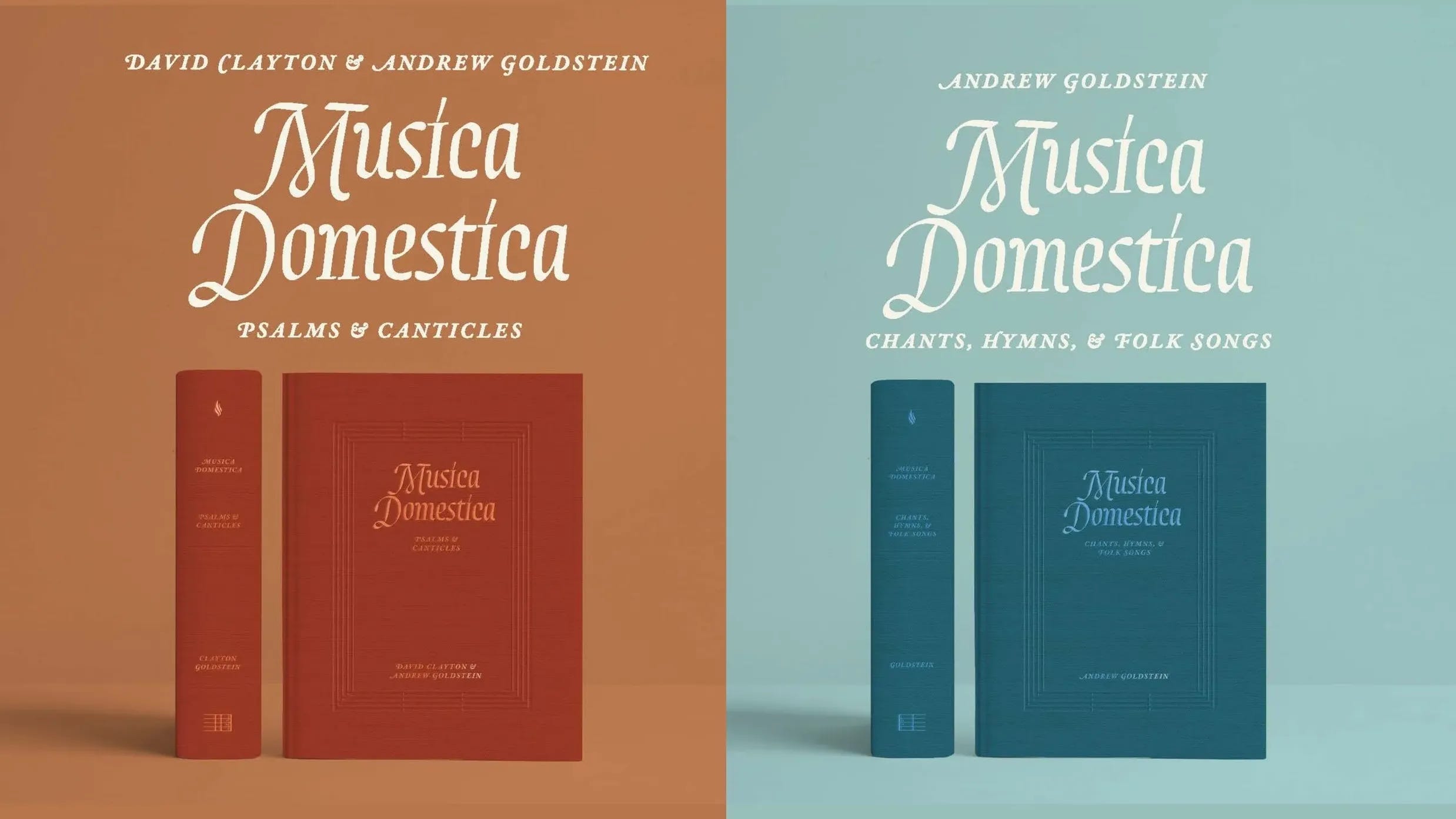
Musica Domestica provides the core scriptural texts: the Psalter, the New Testament canticles (Benedictus, Magnificat, Nunc Dimittis), and hymns and sacred songs for morning and evening prayer, for feast days, and the seasons of the year. It is the central resource from which everything else draws. To order Musica Domestica, go to musicadomestica.com
What Psalms Should I Pray Through the Year? — the Psalm Schema — sets out the full structure of daily, weekly, seasonal, and festal psalmody: which psalm opens each day, which psalms accompany each season, how the Hexapsalm is distributed across the week, and what psalms mark the feasts of the Lord, the saints, and Our Lady.

Arranging the Daily Office — is a practical companion to the Psalm Schema. It offers practical guidance on inserting the Schema material into a morning or evening Office: how the psalm blocks are ordered, where the canticle block sits, how the Evening Prayer is structured, and how to handle occasional coincidences between the schema and the 30-day cycle. It is form-neutral and works equally well with the Roman, Anglican, Byzantine, or any other rite.
The Old Testament Canticles for the Daily Office provides the canticles appointed for each day of the week, arranged for chanting in the traditional manner. Each day includes a primary canticle, ideally just as with the psalms sung; an optional second canticle is provided for those who wish to sing two. A Lenten variant cycle and provision for Solemnities complete the set. You will need to point the text according to the Musica Domestica method to apply Gregorian tones to it.
The Te Deum—We praise thee, O God—is an ancient Latin hymn of praise, dating perhaps to as early as the 4th century. It is not scriptural, but it is such a beautiful traditional hymn that, in the context of the Divine Office, it is elevated almost to that level; it is so often sung within it. I wanted to make it available. Here it is in the traditional Cranmerian English text from the Book of Common Prayer. It is sung on Sundays, Solemnities, and the octaves of the great feasts. I provide two versions: one set out for Gregorian chant, which you can point using the Musica Domestica method; and another set out for traditional Anglican chant, with a four-part melody composed by William Boyce in the 18th century.
Together, these documents offer a way to pray the Bible, rooted in the ancient Church, carried through the centuries in both East and West, and fully accessible to the household and the individual. It is the perfect complement to Musica Domestica and your Bible, of course, and no liturgical expertise — only the desire to take the words of Scripture as your own, morning and evening, through the whole turning year.
Go to musicadomestica.com