This is the final article in a series of five on science, faith, and the philosophy of quantum mechanics. [You can read the first four here, the first is at the bottom, the most recent at the top] The previous articles argued that the scientific method rests on premises derived from a Christian worldview; that quantum mechanics rules out physical determinism and is incompatible with a purely materialist account of mind; that God, as First Cause, is the most coherent account of what resolves quantum indeterminacy universally; and that the God-of-the-gaps objection rests on a false framing, since God always fills every gap in knowledge, the only question being whether he does so through natural causes or not.
This short article adds one further observation, which has been forming in the background of the previous discussions and which seems worth stating explicitly.
Probability is Not Optional in Quantum Mechanics
The central feature of quantum mechanics, for the purposes of this series, is that at the level of individual particles, physics can only tell us the probability of an outcome, never the outcome itself. This is not a temporary limitation of current knowledge. It is built into the theory at a foundational level. The rule by which probabilities are calculated from the mathematical description of a quantum system is a core postulate of the theory — not an approximation, not a practical convenience, but the mechanism by which the theory connects its mathematical formalism to what is actually observed in experiments. Every experiment that has ever been done to test quantum mechanics — double-slit interference with single electrons, the timing of photon arrivals, the decay of individual radioactive atoms, tests of the correlations between entangled particles — confirms that individual outcomes are irreducibly probabilistic. Remove the probability, and you are no longer doing quantum mechanics.
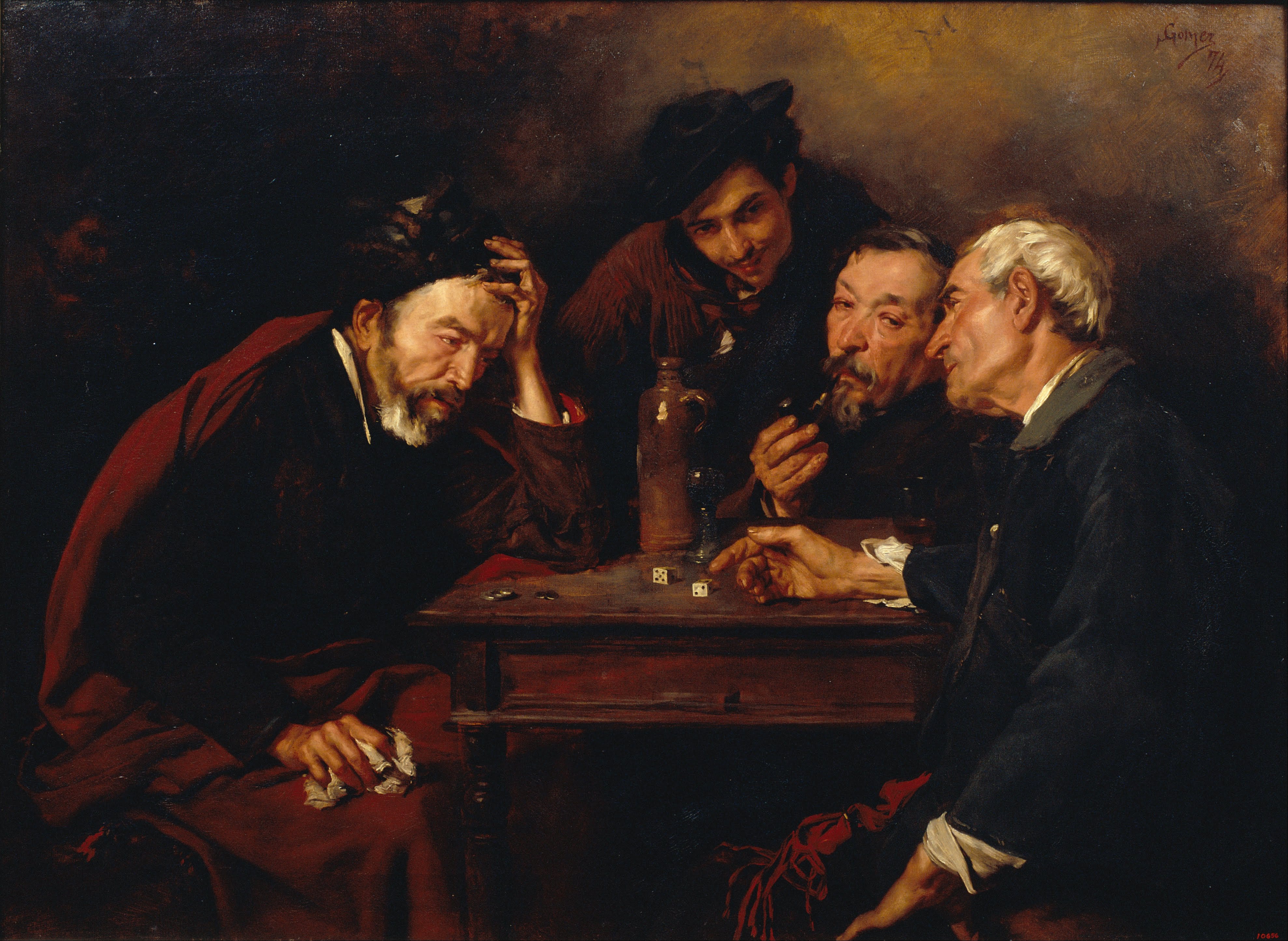
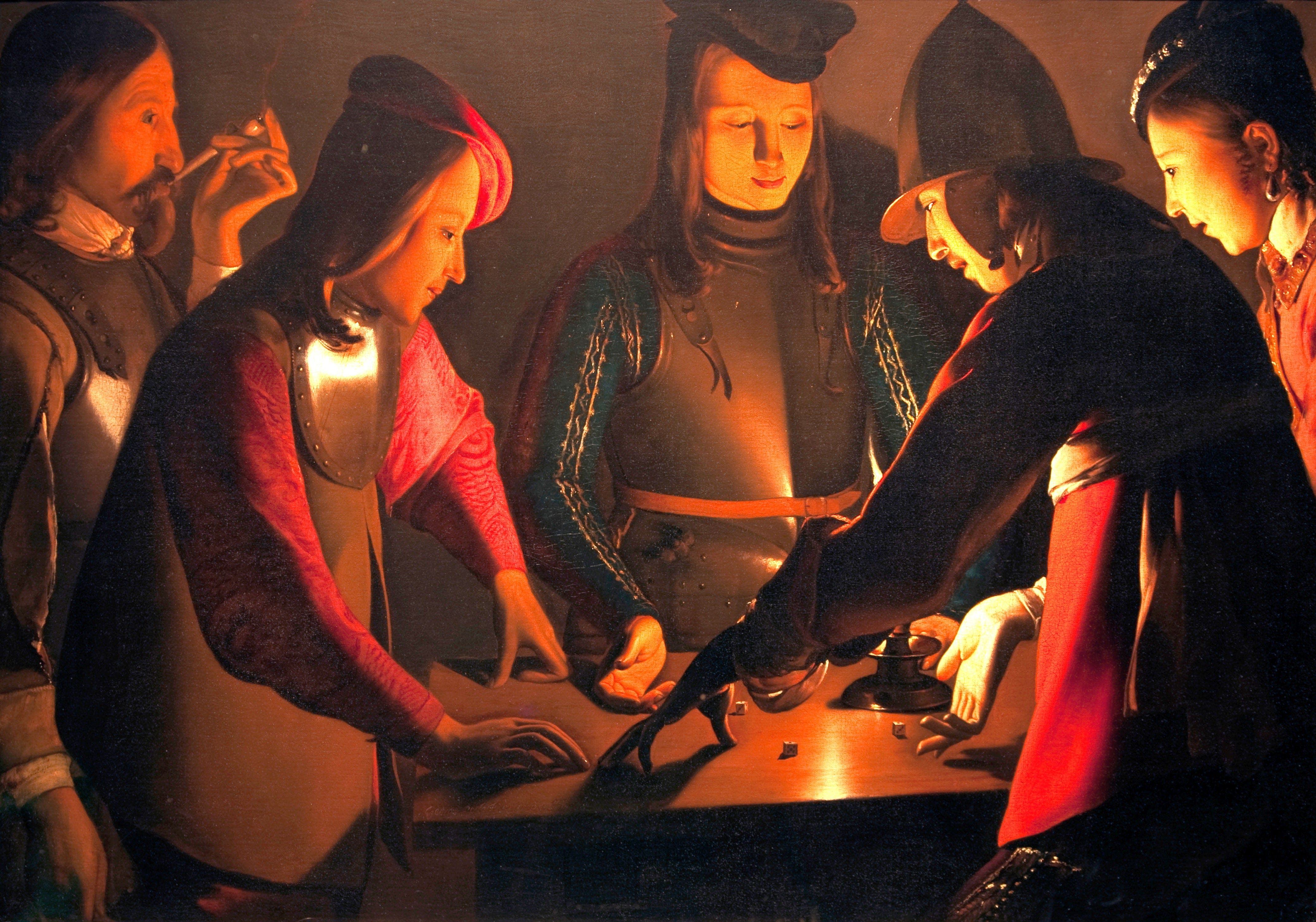
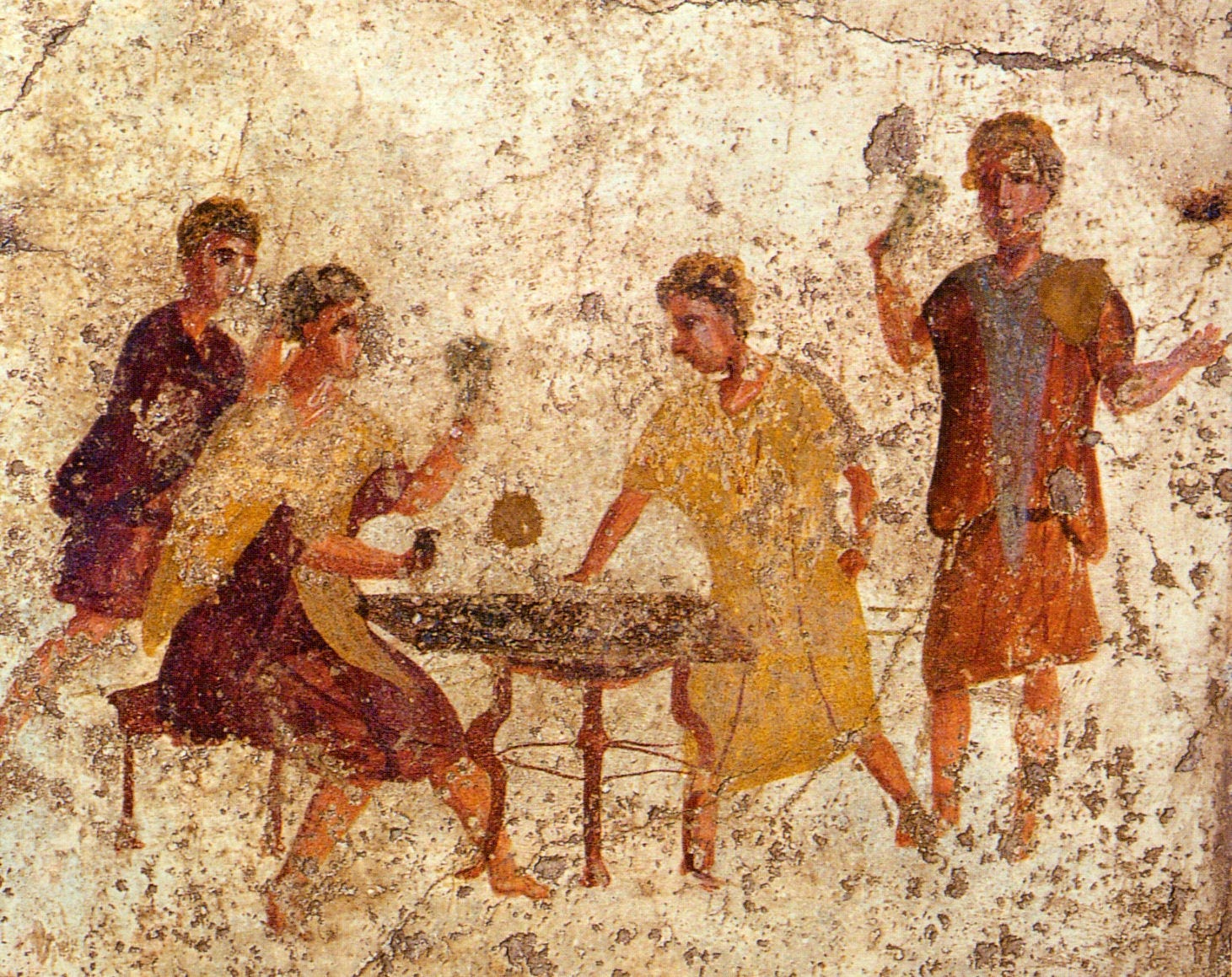
The irreducible primacy of probability in quantum mechanics was not universally welcome, even among the theory's greatest contributors. Albert Einstein resisted it all his life, famously insisting that "God does not play dice," meaning that no complete physical theory could leave individual outcomes genuinely undetermined; he spent decades searching for a deeper, deterministic account that would restore predictability at the quantum level, and never found one.
This matters because of Stephen Barr’s argument, which I accept and have drawn on throughout this series. As long as quantum mechanics involves calculating probabilities, a knowing mind cannot be eliminated from the picture. Probability is a statement about what a knower can expect. It is not a statement about the world in the absence of any knower; it is a statement about the relationship between a physical system and a mind that will make an observation. You cannot have genuine probability without a subject for whom the outcome is, as yet, uncertain. This is why the measurement problem in quantum mechanics — the question of what resolves a range of probabilities into a single definite outcome — cannot be answered without invoking a knower of some kind. A physical system cannot know its own outcome. Only a mind can.
What It Would Take to Remove the Need for Mind
It follows from this that the only way to eliminate the need for a knowing mind from quantum mechanics is to eliminate the calculation of probabilities from quantum mechanics. But if you do that, you no longer have quantum mechanics. You have something else.
What that something else might be is genuinely open. One possibility is that some future development, scientific or philosophical, extends classical deterministic physics into the quantum domain in a way that renders the probabilistic framework unnecessary. This would be something like a return to the Newtonian picture at a deeper level — a mechanics in which individual outcomes are in principle fully determined by prior physical states. This is very unlikely, given how thoroughly quantum mechanics has been tested and how deeply probabilistic its character appears to be; but I cannot say it is logically impossible. Another possibility is that a third type of mechanics, as yet unimagined, might one day emerge that accounts for everything quantum mechanics accounts for but without the probability. I have no idea what that would look like, and I suspect no one else does either.
What I am confident about is this: any proposal that claims to eliminate the need for a knowing mind while remaining within standard quantum mechanics, with its irreducibly probabilistic core, has not succeeded in what it claims. The Many-Worlds Interpretation is the most prominent example. As I discussed in the third article, it attempts to retain the full wave-function description without any collapse, and so without any observer, by allowing every possible outcome to occur in branching parallel worlds. But as Barr and others have argued, a theory without probabilities cannot make contact with experimental reality, and the Many-Worlds Interpretation, which dispenses with the mechanism by which probabilities are assigned to outcomes, cannot coherently do so. It has been on the table since 1958 and has never progressed from hypothesis to confirmed scientific theory. Taking me lead from Barr’s and Koon’s arguments, I remain skeptical of it, and of any proposal that attempts a similar maneuver.
Openness and Its Limits
My worldview does not depend on quantum mechanics remaining irreducibly probabilistic, any more than it depends on any particular finding of natural science. As I said in the previous article, accepting any description of the natural order by natural science never contradicts faith in God. If some future development dissolved the probabilistic character of quantum mechanics entirely and replaced it with a deterministic account, that would be a remarkable scientific achievement to be celebrated, and it would not trouble me theologically. God fills that gap too.
I would, however, note that the incentives here are not symmetrical. For the atheist materialist, eliminating the need for a knowing mind from quantum mechanics is not merely an interesting scientific question. It is a matter of some urgency. A physics that requires mind as a fundamental feature of reality is deeply uncongenial to a worldview that holds that mind is nothing more than a complex physical process. The pressure to find a solution that avoids this conclusion is therefore considerable, and it is worth keeping that pressure in mind when evaluating proposals that claim to have achieved it.

Motivated reasoning is a human universal, and scientists are no more immune to it than anyone else. Until such a proposal has undergone the full transition to confirmed scientific theory and been tested repeatedly against reality, as standard quantum mechanics has been for a century, healthy skepticism is the appropriate response.
The argument of this series has not been that science proves God, or that quantum mechanics is the only route to him. It has been the more modest claim that the physics, examined honestly and on its own terms, does not yield the materialist conclusions so often assumed to follow from it. The gap is real. A knowing mind cannot be removed from the picture without removing probability, and removing probability means leaving quantum mechanics behind. What lies on the other side of that departure, no one yet knows. Until someone gets there, the world that physics actually describes remains one in which mind is not an afterthought but a structural requirement — which is, I would suggest, rather more compatible with a Christian understanding of reality than its materialist alternative.
Where this debate leads, only time will tell. Until it does, the certainty of the answer remains, to borrow Einstein's image, about as certain as the roll of a dice.