


This is one of several postings about the spiritual exercises of the Way of Beauty process, outlined in my book, The Vision for You.
I believe and confess, Lord, that You are truly the Christ, the Son of the living God, who came into the world to save sinners, of whom I am the first. I also believe that this is truly Your pure Body and that this is truly Your precious Blood. Therefore, I pray to You, have mercy upon me, and forgive my transgressions, voluntary and involuntary, in word and deed, known and unknown. And make me worthy without condemnation to partake of Your pure Mysteries for the forgiveness of sins and for life eternal. Amen.
Prayer Before Communion in Liturgy of St John Chrysostom, emphasis by DC]
All unhappiness is caused by sin, which means that all unhappiness can be removed through the mercy of God if we repent and ask for forgiveness.
Some may disagree with this assertion, but I believe that it is true and holds the secret to eliminating unhappiness. Those who reject the concept of sin entirely might argue that unhappiness stems from circumstances and environment beyond our control. Others, including many devout Christians, may resist it as hard teaching, perhaps believing they already confess their sins, yet still grapple with unhappiness. This message is for those who find themselves in the latter group, and wonder, “What more can I do?”
In the previous reflection, we explored the nature of happiness as a profound state of being rooted in our relationship with God, who alone can fulfill our deepest longings. We saw how the “Way of Beauty” program, as outlined in my book *The Vision for You*, introduces the Three Acknowledgements to reframe our understanding: that we cause our own unhappiness through self-centeredness (sin), that we cannot fully control it on our own, and that our only hope lies in God’s grace. Building on this foundation, we now turn to the root cause of unhappiness—sin and its manifestations in resentment and fear. By examining these, we can see how self-centeredness distances us from God, and how acknowledging this opens the door to His mercy and restoration. The “Way of Beauty” teaches us to view unhappiness not as an inevitable burden but as a signal to realign with God’s will, transforming our suffering into an opportunity for a more profound joy.
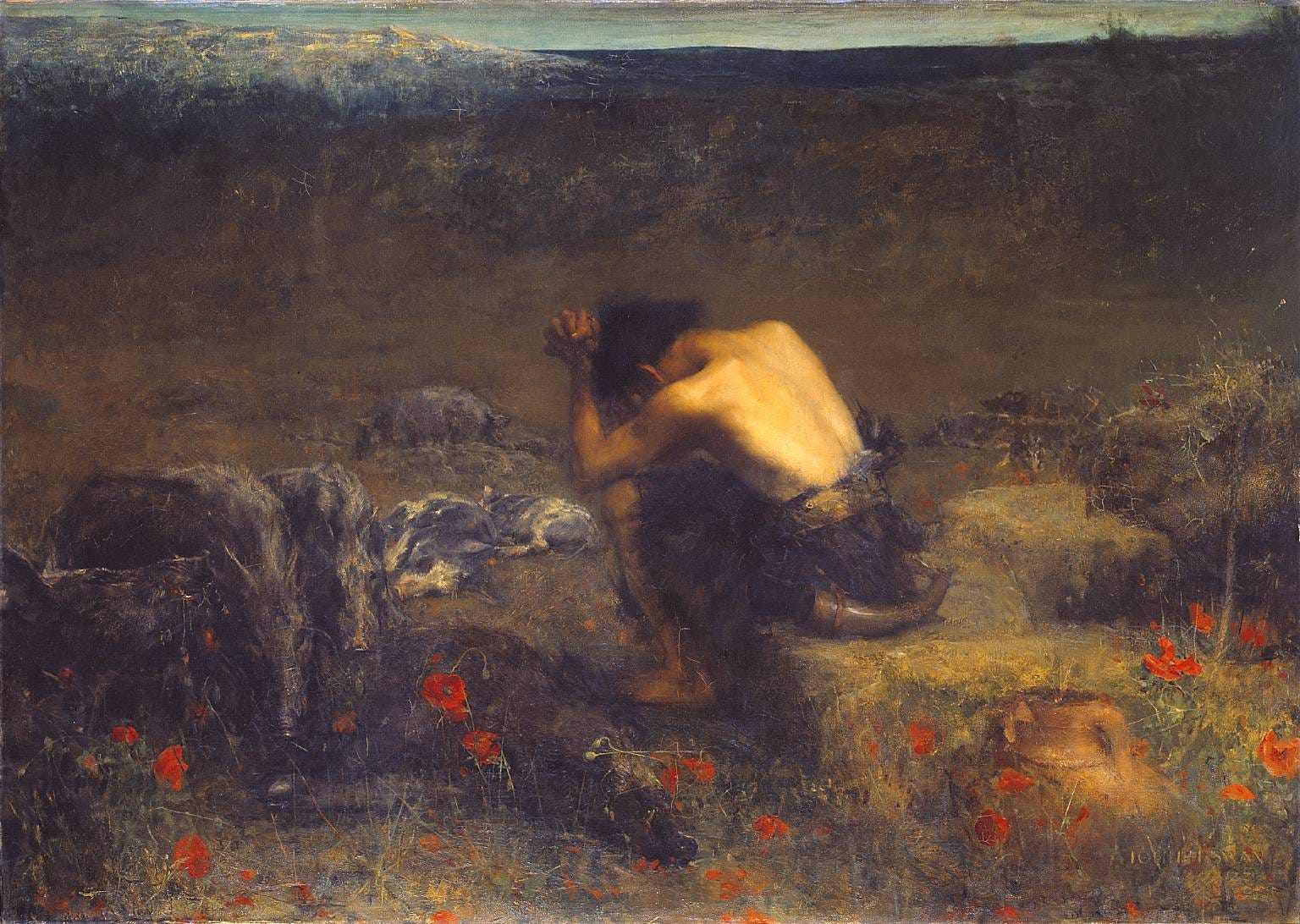
The Nature of Sin
Sin, at its essence, is any thought, word, deed, or omission that turns us away from God and His law, stemming from a fundamental lack of love for Him and others, replaced by an excess of self-love (CCC 1849–1850). The Catechism of the Catholic Church describes sin as an offence against reason, truth, and right conscience, always rooted in disobedience to God, whether deliberate or arising from our weakened human nature. This separation creates a “state of sin,” where our communion with God is disrupted—severed in the case of unrepented mortal sin (CCC 1861), or weakened by venial sins, which allow faults to persist without entirely breaking our bond (CCC 1863).
Sin, in light of this broad understanding of the term, is not limited to conscious, voluntary acts. Catholic theology distinguishes between these “actual sins”—those committed with full knowledge and deliberate consent, and for which we are fully culpable (CCC 1857–1859)—and involuntary impulses born of concupiscence, the inherited tendency toward sin from the Fall (CCC 405, 1264). These involuntary sins, often unknown or unpremeditated, emerge from deep-seated self-centeredness, which is a lack of charity. They are not grounds for full reproach because we have diminished responsibility, for reasons such as ignorance, habit, or lack of intent (CCC 1735, 1860). Yet, they still distance us from God, contributing to our unhappiness just as surely as grave sins. The Prayer Before Communion in the Liturgy of St. John Chrysostom, used in the Byzantine Rite and embraced by Byzantine Catholics as well as Orthodox, captures this range of understanding of the nature of sin beautifully: “Forgive my transgressions, voluntary and involuntary, in word and deed, known and unknown.” This patristic prayer acknowledges that human weakness extends beyond willful choices, and God’s mercy covers all. Similarly, the Roman Rite’s Confiteor confesses sins “in what I have done and in what I have failed to do,” implicitly including these involuntary lapses.
A complementary approach to an examination of conscience
This broader understanding of sin also challenges the conventional examination of conscience, by which we reflect on the sins we have committed in order to ask for God’s mercy for them. The conventional approach usually focuses solely on actual, premeditated acts, in which we try to answer for ourselves the question, “What have I done wrong.” Instead, the “Way of Beauty” process invites us into a deeper process by which we ask ourselves not only the question, “What have I done wrong?” but also now “Am I unhappy, and why am I unhappy?”
By this process, our unhappiness reveals to us the accumulated effect of self-centered impulses — most usually small, incremental separations that, over time. These can accumulate and steadily erode our relationship with God and, like a “death by a thousand cuts,” lead to profound misery and ultimately to mortal sin, by which the principle of charity that binds us to God is severed altogether.
By recognizing sin in all its forms, we affirm that God, whose love is unwavering, is never the cause of our separation— we are. This is liberating news: if we have caused the rift then there is always a path back to happiness, for we can seek healing through repentance. We can be assured that when we ask for the restoration of our relationship with Him it will be restored for his love and mercy are unwavering and without limit.
Resentments and Fears: Manifestations of Sin and Self-Centeredness
Unhappiness, as the Three Acknowledgements teach, always signals this separation from God. This unhappiness is manifesting primarily as either resentment or fear. Resentment is a form of unhappiness we feel from events in the past. These can be recent slights or long-buried wounds. Resentment ranges in intensity from simmering mild irritation to an eruption of blazing anger. It can be directed at others (for their actions, words, or thoughts), at institutions (like governments or authorities), at ourselves (in the form of regret, guilt, or shame), or even at God who we might blame at some level for the perceived injustices of fate. Fear, conversely, projects resentment into the future: in this context it is self-centered anxiety about potential threats to our well-being, real or imagined, such as death, financial ruin, loneliness, or damaged reputation. We should point out that even when we are facing real and imminent danger, where we would want a fear that gives us a healthy desire to escape or deal with such danger, it is the elimination of unnecessary self-centered fear that give us the courage of the chivalrous and virtuous knight who, with God’s grace, is able to face danger with dignity. Most of the fears that those of us who are not in real danger experience on a day-to-day basis, are exclusively self-centred and unnecessary.
The daily experience for most of us is that, together, resentment and this self-centered fear form a downward cycle of discontent, where past hurts fuel future worries, all prioritizing our desires over God’s will.
The key to the argument we are making is the premise that unhappiness stems not from external events themselves—no matter how unjust or painful—but from our self-centered response to them. Consider a scenario: I am unjustly sacked by my boss after an argument. The event is real, perhaps even evil, and we should oppose such injustices. Yet, my unhappiness connected to the event—resentment toward the boss for wounding my pride, fear for my economic security and so on—arises from self-centeredness. If I were perfectly aligned with God, I would respond with love for my oppressor (as Christ teaches in Matthew 5:44), trust in divine providence (Romans 8:28), and acceptance that all events in God’s world are either willed for good or permitted to yield greater good.
Crucially, we rarely choose resentment or fear consciously; even though I may resolve to respond with love and compassion for my boss, typically part of me at least does not. I simply can’t help but feel some resentment toward him. These resentments emerge in my consciousness, it seems, after a reaction that takes place, some would say preconsciously, in our hearts. So the act of taking a resentment, arises from concupiscence, and is involuntary and unknown in that moment.
In the face of any grave injustice, we would say that it is a “natural” reaction to be angry—it is hard to imagine that it could be otherwise without grace. I am never aware of choosing to be angry, for example, it just happens. However, through this program, once we recognise anger and all other resentments, we do have a choice. We choose to hang on to it or we can choose to take steps to eliminate it, with God’s help, along with the accompanying unhappiness. This is what we mean when we assert that the Way of Beauty, misery is optional. Evil and suffering exist, but they need not rob us of joy.
In the past, before I learned this profound truth, the only way I could escape the deep despair arising from many resentments and fears, was by looking for distractions through superficial pleasure in the hope that I might forget. For a few minutes, it might work. But as soon as I stopped to reflect quietly on my situation, the reality of my deep unhappiness returned and I would be overcome by waves of darkness and despair. Now, the situation is the reverse. By viewing unhappiness as a sign of separation from God, I know how to turn back to God and I choose to do so because I want to be happy and, so are at least, I am not too proud to ask. As a result I find that even amid trials, a deeper joy persists. God forgives all sins, I have found, if I repent of them. He draws us back to him like a loving parent rescuing a wayward child who has strayed into danger.
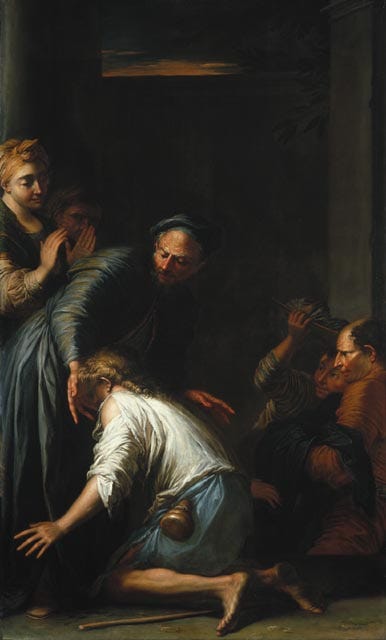
How do we return to God when we are unhappy
The “Way of Beauty” program provides the tools for this, but true transformation requires practical application. I was shown a technique for analysing my feelings of unhappiness and attributing it to specific sins. This was so powerful that when I confessed these sins, all my unhappiness was removed. I continue to use this technique, almost daily and as needed in order to stay happy. For those who wish to see this technique described I refer them to pages 195-223 of The Vision for You.

"If I were perfectly aligned with God, I would respond with love for my oppressor (as Christ teaches in Matthew 5:44), trust in divine providence (Romans 8:28), and acceptance that all events in God’s world are either willed for good or permitted to yield greater good."
This is so beautiful, true, unworldly and so counter-cultural. As a former Marxist Social Justice Warrior, understanding that union with God in this life and the next is our reason for being is so 'liberating' in the best sense. I imbibed so many lies living in that false worldview, but all Glory to God for the Grace of conversion, I now understand that no external circumstances can keep me from the love of God, only an act of my will (sin) can do that. Acknowledging that oppression and injustice are part of our fallen condition was a hard pill for me to swallow, but acknowledging that they present no barrier to God's work in my soul has been transformative. I know many 'oppressed' people who are very happy because they have a relationship with the Divine. Thank you Lord for delivering me from the lies of Marxism and thank you for this article Dr. Clayton. I look forward to reading your book, which I have purchased.
An insightful and thought provoking post. I do think you could more clearly distinguish between anger and resentment, with the latter being necessarity caused by attachment to self and develop the idea of the former possibly being an appropiate reaction to injustice. A deficiency in anger in some circumstances is a sin or sign of it. Fear and anger shouldnt be eliminated but harnessed or transfigured by hope, or so i believe.