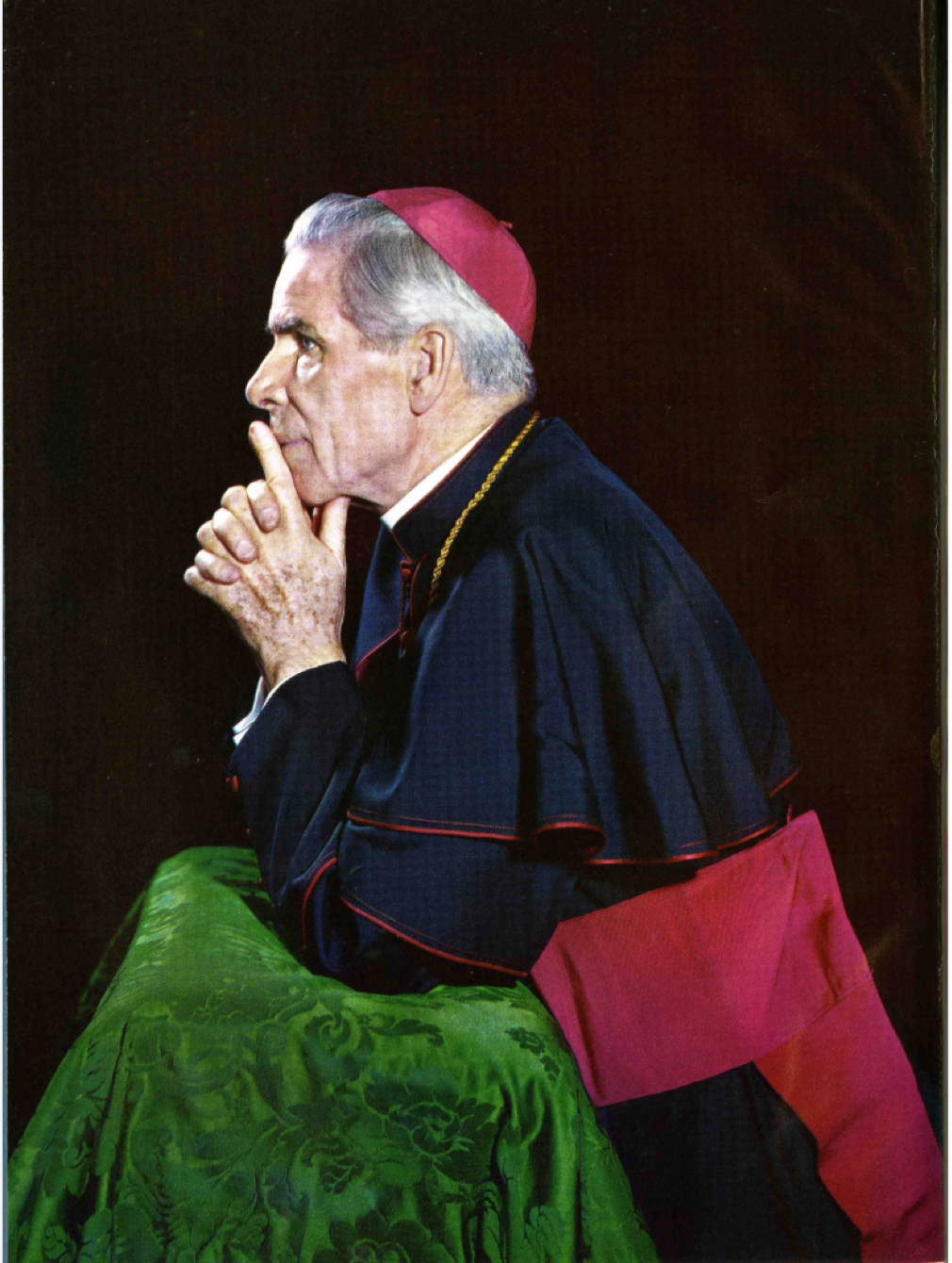
Many of you will know about the Beatification Mass for Bishop Fulton Sheen, held in St. Louis, Missouri, on September 26th. Reports say over 50,000 people attended this wonderful occasion, including - as seems to be the case so often nowadays - many young people. Musically, this was, for me at least, somewhat mixed; nevertheless, there were great highlights. Foremost among these was when, during communion, the excellent choir sang the words of Our Lord's Beatitudes to music composed by Paul Jernberg, who is Composer-in-Residence and Music Director at Wyoming Catholic College.
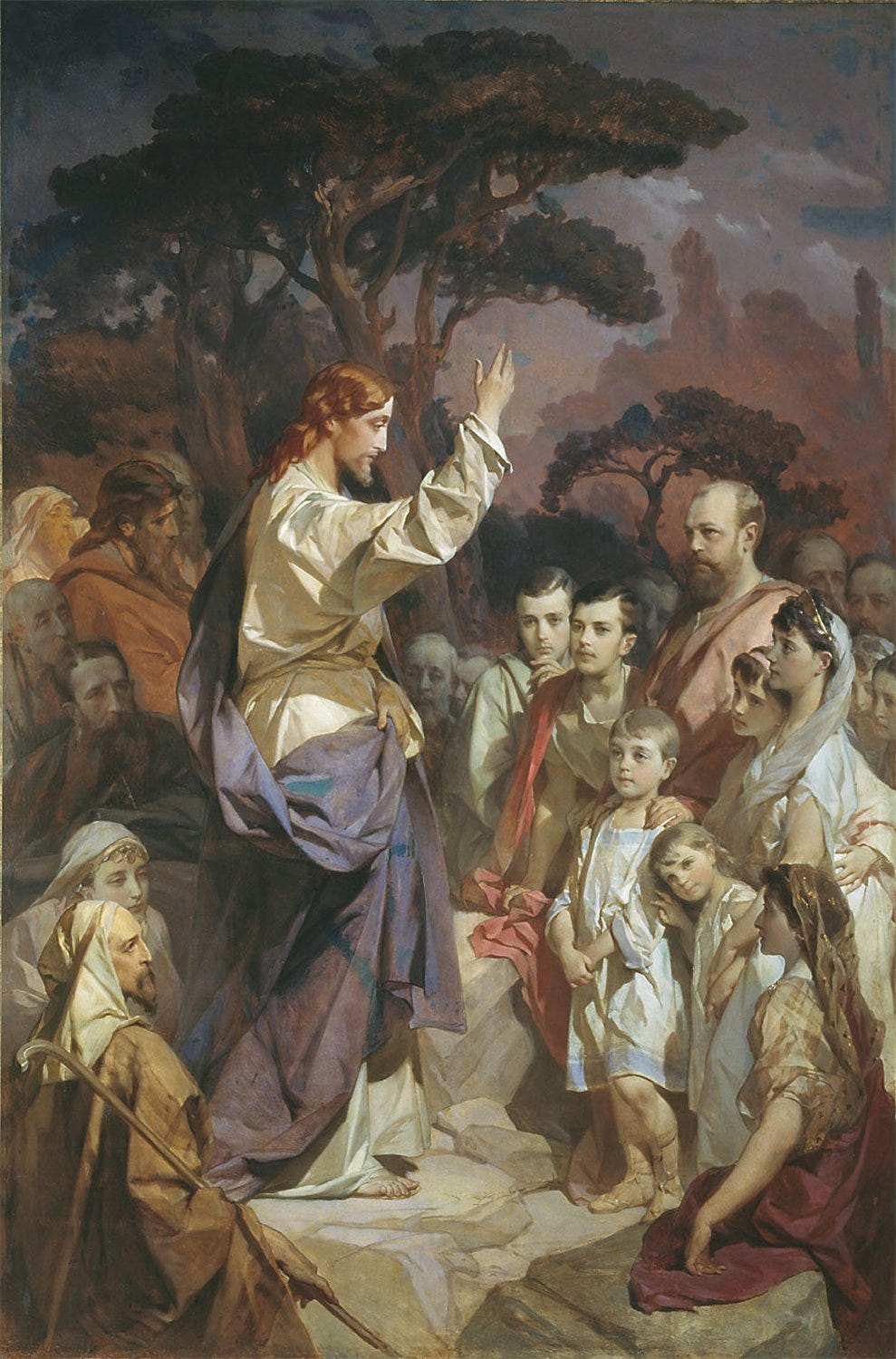
The text of the Jernberg Beatitudes comes from the Byzantine Divine Liturgy of Saint John Chrysostom. It opens with the words “Remember us, O Lord, when you come into your Kingdom,” echoing the plea of the good thief crucified next to Christ on Calvary. The choice is fitting. Blessed Fulton Sheen was a bi-ritual priest who celebrated the Byzantine and Roman Rites, and he offered the first pontifical Byzantine Divine Liturgy in English in North America on September 5, 1955, in Uniontown, Pennsylvania.
You can hear the piece in the context of the Beatification Mass here (at c. 2:07:35):
Another recording is available here and at pauljernberg.com:
Scala Foundation is delighted to announce that it has commissioned Paul Jernberg to compose harmonized four-part settings of all the psalm tones used in my upcoming book Musica Domestica (musicadomestica.com), co-authored with Andrew Goldstein of the Vigil Project and to be published by Word on Fire Publication. These tones are part of my contribution to the two-volume set that will be released in early February 2027 and is available for pre-sale now. They are my adaptations of Gregorian chant tones to the text of the English Psalter, and families and parishes can learn them easily (instructional videos are available on the musicadomestica.com website). I also developed a system of pointing the text that is the same for all the psalm tones. As a result, you can apply any tone to any text with confidence. This means that once you know just one tone, you can sing the whole Psalter in that tone until you learn more. This will get families chanting authentic Gregorian chant immediately.
There are 18 tones in all, and each of the 8 Gregorian modes (and the tonus peregrinus) is represented. Paul's additional settings of all 18 still work with my pointing system and will allow choirs and families who pray the psalms with these tones to chant them in harmony or unison, depending on preference and musical ability. As is the hallmark of all of Paul’s liturgical compositions, they will be noble and elevated in tone, but accessible and beautiful, and not so difficult to sing that ordinary church choirs and reasonably musically literate families won’t be able to sing them.
This commission follows another. Scala recently commissioned Sir James MacMillan, the world-renowned Scottish composer and conductor, to set an adaptation of Saint Augustine’s hymn to beauty from the Confessions. I wrote the words for the adaptation, which also includes the Way of Beauty Prayer, a request for inspiration and creativity in our mission of love for God and neighbor.
Both commissions are made in that spirit of noble accessibility. The aim is to have music of the highest standard that good amateur choirs can nonetheless perform well. This is not a new idea. The great polyphony of Palestrina and Victoria from the Renaissance is sublime, and yet parish and amateur choirs around the world sing it every Sunday, drawing people to God just as it did 500 years ago. As with all great music, it has the qualities of being both timeless and of its time; its appeal is universal. We want the music of our own time to do the same and to be played 500 years from now! There is no reason why we can’t match, or even surpass, those great works of the past today.
We hope these commissions will inspire others to become patrons of sacred music, and to consider commissioning new work themselves. If you would like to support this work, or to talk with us about a commission from a composer or a working artist, please contact the Scala Foundation and we will connect you.