


In a short and clear paper written in 2000, on the New Evangelisation, Benedict XVI, as Cardinal Ratzinger, wrote:
Human life cannot be realized by itself. Our life is an open question, an incomplete project, still to be brought to fruition and realized. Each man’s fundamental question is: How will this be realized—becoming man? How does one learn the art of living? Which is the path toward happiness?
To evangelize means: to show this path—to teach the art of living. At the beginning of his public life Jesus says: I have come to evangelize the poor (Luke 4:18); this means: I have the response to your fundamental question; I will show you the path of life, the path toward happiness—rather: I am that path.
The deepest poverty is the inability of joy, the tediousness of a life considered absurd and contradictory. This poverty is widespread today, in very different forms in the materially rich as well as the poor countries. The inability of joy presupposes and produces the inability to love, produces jealousy, avarice—all defects that devastate the life of individuals and of the world.
This is why we are in need of a new evangelisation—if the art of living remains an unknown, nothing else works. But this art is not the object of a science—this art can only be communicated by [one] who has life—he who is the Gospel personified.
I chose to become a Christian because I believe that the Catholic faith is the route to the happiest life we can have in this life and perfect happiness in the next. Despite this, many, even many Christians, are miserable and don’t know how to change the situation. Their lives are characterised by the poverty of the ‘inability of joy’. I can say this because I was one of those unhappy people until I was shown the art of living happily. My experience is that I needed more than a basic Christian catechesis; I needed to learn the habits of joy in order to capitalise, so to speak, on all that the Church gives me. I was given insightful catechesis over 30 years ago now by a lay Catholic who offered me a life ‘beyond my wildest dreams’ and I was just miserable enough to listen to him. Scala Foundation’s Way of Beauty program, with its spiritual exercises at the core, passes on the art of living joyfully that was passed on to me all those years ago. We offer this because we want all to share in this gift. This is open to all. You don’t have to be Catholic or even Christian to practice the principles of this process and feel the effect. But their effectiveness is maximised if you are a practising Christian (as a Catholic, I would say as a practising Catholic Christian), and the reason why it is effective can only be fully understood, in my opinion, through the lens of Catholic Church teaching.
Download the flier to find out more:

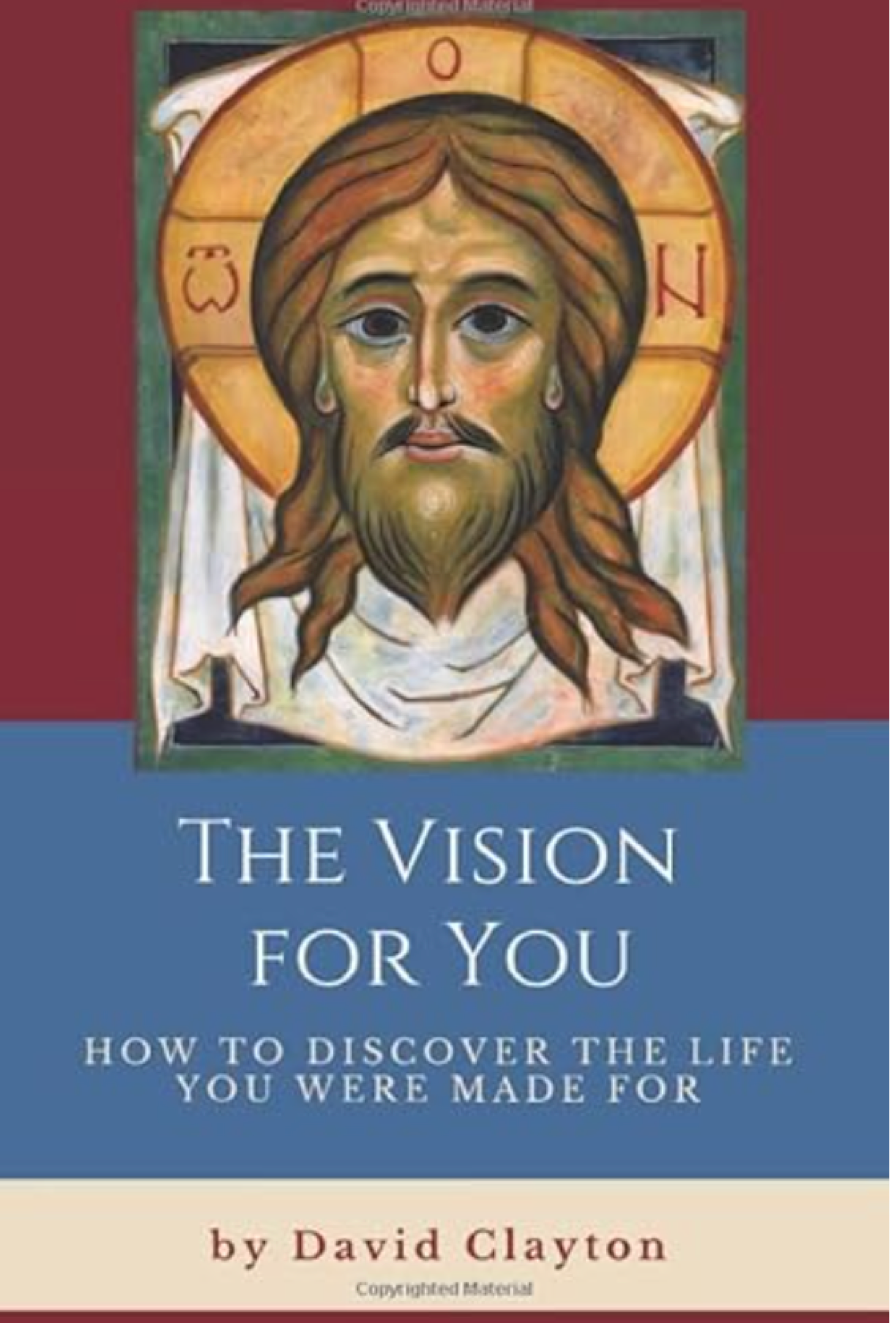
Joy doesn’t just happen to us, it has to be cultivated, and if you don’t know how to be joyful, this might be for you. These are habits that cultivate faith, joy, love, creativity, and if maintained, offer us a lifetime of happiness. The spiritual exercises that are at the core of the Way of Beauty are described in detail in my book, The Vision for You.

But what is the happiness that we seek? And is it really true that we can all be happy regardless of circumstances? Benedict seemed to be assuming so in his words above, but many, even some sincere and pious Catholics, may doubt this. However, I say yes! And here’s why.
The "Way of Beauty" program has eight principles. They are listed here:

Here, we will consider the three foundational principles, called the "Three Acknowledgements". They are intended to reframe our understanding of happiness, its obstacles, and the need for God in order to be happy.
Foundational to going through the process is our being able to acknowledge our deep need for God and then to pray for his help daily. This is not enough, however. Once we decide we need God and we want to be happy with his help, we have to take the steps to cultivate that joy through the development of daily habits of prayer, meditation, and good works. That is what the remaining five principles - the Five Spiritual Exercises of the Way of Beauty program are for. This week, however, we will focus on the first three, the Acknowledgements. Here they are:
1. We acknowledge that we are the cause of our own unhappiness through our self-centred behaviours, thoughts, and feelings (otherwise known as sins). Other people or circumstances, no matter how unfortunate, are not the true cause.
2. We acknowledge that we cannot perfectly control our thoughts and actions to rid ourselves of unhappiness, which manifests as resentment and fear.
3. We acknowledge that our sole hope for happiness lies in God. With His grace, we can do His will, be free of resentment and fear, and live a good, beautiful, and joyful life. Once we accept this truth, misery becomes optional, as we can choose to turn to God.
When I read these acknowledgements and discussed them with my mentor, David, many years ago, I realised that I had been suffering from a serious but deeply held delusion. This delusion was that if things went my way, then I would be happy.
As a result, I had always been dependent upon external circumstances for my happiness. If only I had the right job, I thought, and the right girlfriend or wife, and the right house and the right amount of money to get everything else I thought I needed, then I would be happy.
However, this belief meant that I was perpetually unhappy because circumstances were never as I thought they ought to be. I might be able to manipulate, cajole others or charm my way towards the hoped-for scenario, but I could never do it perfectly. Finally, in my mid-twenties, it dawned on me that things would never be what I hoped for, and I was at the point of giving up trying. I had lost all hope and was in despair because I now imagined that I could never be happy.
Then I discovered the Way of Beauty program, which presented a different picture. I was told that on the face of it, I was even more powerless than I had thought–that not only could I not control external circumstances, I could not control my responses to those external events and further that even if things did go my way, I would still be unhappy, because these things alone could never satisfy me. I was looking for happiness in the wrong place.
Happiness lies in God alone, and God always makes Himself available to me if I want to look for him. The Way of Beauty program, I was told, was available to me to help me find Him.
If I could swallow my pride and adopt the routine of prayer, meditation and good works and start to work my way through the other principles of the program, I would establish a deep relationship with God, and I could be happy. I did have a choice - I could choose to accept God’s helping hand, which is permanently on offer to me, and be happy.
If you are unhappy at all, this might work for you, too.
I was an atheist when I started, but you might be an atheist or you might be a practising Christian. Provided you are open-minded enough to give these actions an honest attempt, this life of joy is open to you, too, I believe. I have seen The Way of Beauty program work for many people other than me, some starting out as atheists, and some at the other end of the scale, sincere and pious Christians. All benefited from learning how to live their lives according to the principles of The "Way of Beauty" process.
But is it really the case that I can be happy, you may ask? I would say yes. I firmly believe that what was offered to me is also available to you.
But to accept this, I think some may need to know more about both what happiness is and about the cause of our unhappiness, sin. We will deal with happiness first and sin after that.
What is happiness?
Happiness, at its core, is challenging to define precisely—it is in this sense ineffable. However, we can say some things about what happiness is based on our personal experiences. For example, we know when we are happy and when we are unhappy. We cannot be happy and not know it, just as we cannot be unhappy and be unaware of it, although sometimes the causes of both happiness and unhappiness may elude us. And, most importantly, we all know that we want to be happy in life, and we seek it for ourselves. There is not a single person who, in their heart, does not assent to this principle. We may not be able to say precisely what happiness is, but we all know we want it, and we know it when we have it.
Reflecting further, I would say that it is a state of mind reflecting the state of being of the whole person, and it is a profound good. However, happiness can manifest in many different forms, some more desirable than others: some forms of happiness are superficial and fleeting, like passing pleasures, and others are deep and abiding, and are often equated with joy. These levels of happiness can coexist; we may be happy about one aspect of life while unhappy about another. The most desirable happiness is the deep, abiding happiness - joy - that resides at the core of our being. When we are happy at this level, we can always say that while life isn’t perfect - there may be some things I would change if I could - it is, nevertheless, as a general picture, good. Through the Way of Beauty program, even when I am not happy with certain aspects of my life, I can say in all sincerity that, nevertheless, “I am happy” because I possess joy at a deeper level.
The Catholic Church teaches us, like the Way of Beauty program, that the most profound, most permanent happiness is found in a relationship with God. The Catechism of the Catholic Church (CCC) states that “God alone satisfies” our natural desire for happiness, quoting St Thomas Aquinas (CCC 1718), and that true happiness is found in communion with Him, as human beings are created with a natural desire for happiness that only God, our ultimate end, can fulfil (CCC 27).
However, knowing this truth does not automatically grant us the happiness we seek. Many, like me, need further guidance on how to follow the path to God and to happiness.
Sin, by turning us away from God, disrupts true happiness because it causes us to focus less on God and to try to wrest happiness from other things, which will always be in vain. The CCC notes that pursuing lesser goods—such as wealth, power, or pleasure for their own sake—leads to fleeting satisfaction and ultimate dissatisfaction, as these cannot fulfil the heart’s longing for the infinite (CCC 1723, 1855–1856). The "Three Acknowledgements" reinforce this, identifying self-centeredness, focusing on ourselves and personal pleasures above and before God, as the root of that separation from Him, called sin, which causes all unhappiness.
However, and here is the good news, when we seek God’s help–as directed by the Way of Beauty program– and acknowledge our flaws, we can be happy. Then even those lesser goods contribute to profound joy. There is nothing inherently wrong with wealth, power or the sensual pleasures of life. The problem arises from the misuse of these gifts.
This is the ongoing task of this life. When we strive for the ideal of ordering all things to God, even though the results are never perfect, we can be granted a profound and abiding happiness.
The message of the Christian faith is that true happiness, rooted in hope and consolation in Christ, persists at the deepest level, even amidst suffering or situational unhappiness, and that this is available to all of us if we work for it. This is exemplified in the lives of the saints and martyrs and is available to all of us. External circumstances may cause temporary distress, but they do not sever the enduring joy found in God’s unchanging presence. We may drift from Him, but with His mercy and help, we can always return, rekindling that profound happiness. The "Way of Beauty" has shown me how to navigate this return through spiritual exercises that guide us back to God when unhappiness signals to me that I have drifted away from Him..
If I were to characterise the change in me in this regard, I would put it as follows: Before encountering the "Way of Beauty", my life was marked by superficial distractions and pleasures, which temporarily masked an underlying despair which always resurfaced if I paused to reflect on my life. Now, through the practices taught by the "Way of Beauty", the dynamic is reversed: I may face momentary unhappiness from time to time, but if I pause to reflect on my situation, I can appreciate the reality that life is good. I feel deep gratitude for God’s blessings. This program has taught me that by seeking God’s help to remove resentment and fear—the manifestations of self-centeredness—I can abide in the joy that flows from communion with Him. This happiness is both eternal and worth striving for.
Eliminating unhappiness
One of the keys to being happy is knowing how to avoid or eliminate unhappiness. The Way of Beauty program teaches a process of a deep examination that helps us to do that. I will discuss how to do that next…coming soon!
For those who wish to know more at this stage, they can either buy my book or watch this conversation with Tammy Peterson (Jordan Peterson’s wife), who is a recent Catholic convert, in a wide-ranging conversation about art, culture and the Christian faith.
And here is my painting of the New Evangelist portrayed is as a chivalrous and virtuous knight, to inspire us today, striving to cultivate the art of living joyfully.
