A Model for Artists Today
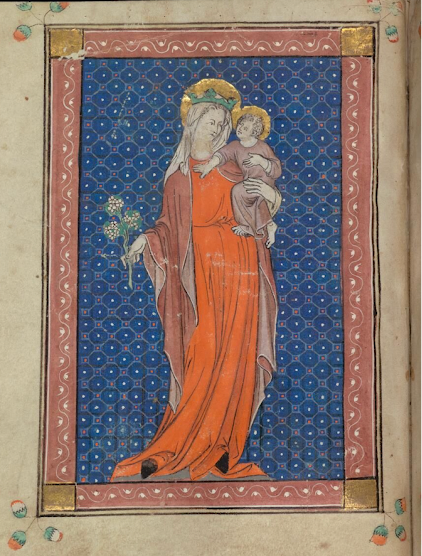
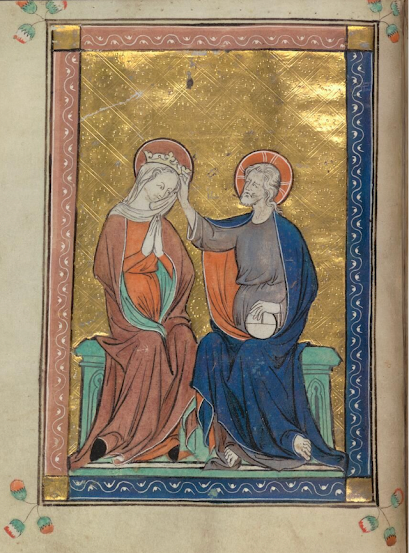
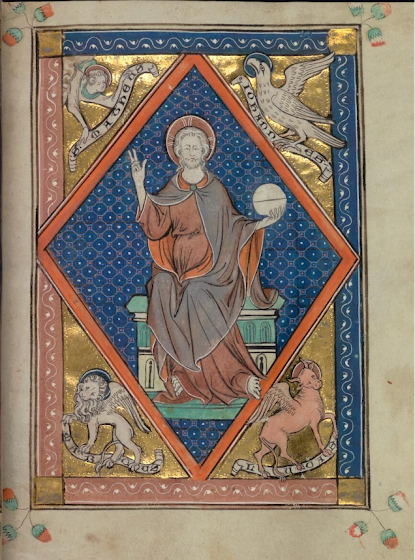
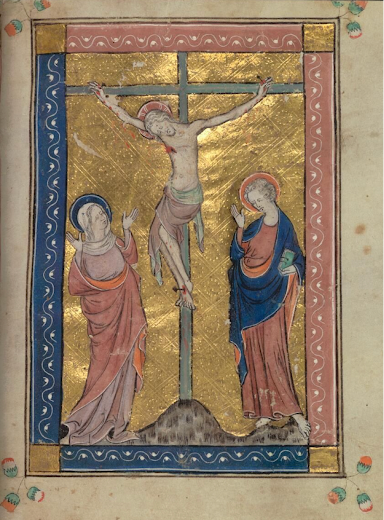
I was recently made aware of this remarkable collection of English medieval illuminations through Hilary White’s Sacred Images Project Substack, and I was immediately struck by the quality of the draughtsmanship. Looking at these images, it became clear to me that these are among the finest models I have encountered for artists who wish to learn to draw and paint in a style appropriate for the renewal of sacred art in our own time.
The Sarum Use and Its Living Descendants
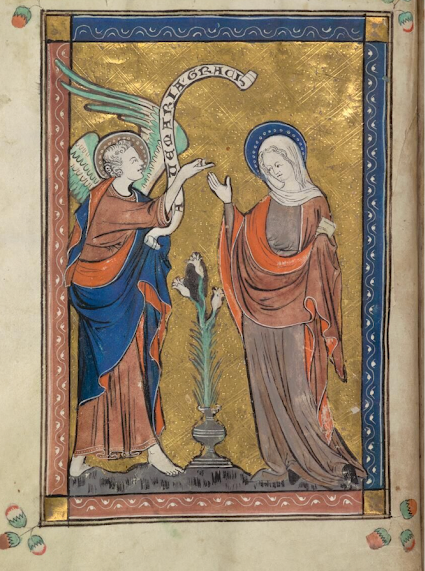
Before turning to the images themselves, it is worth pausing to consider what this Psalter actually is - it is significant in a way that resonates today.
The Sarum Use was a distinctly English form of the Roman Rite, developed at Salisbury and prevalent across much of England throughout the medieval period, right up to the Reformation. This particular Psalter belongs to that tradition.
This gives these illuminations a particular resonance with Christians in the Anglo-American world. The Psalter from the Book of Common Prayer, called the Coverdale Psalter - after Miles Coverdale, who translated the text into English in the 16th century - is a liturgical descendant of the Sarum Use of the Roman Rite. It is the Psalter that generations of Anglicans have prayed, and which continues to be prayed today. It is approved for use by Catholics (in the 1928 revision used by the Anglican Ordinariates), Orthodox, and many Protestant denominations. All share a living connection to the liturgical world that produced the images shown here. To look at this Psalter is, for many of these Christians, to encounter a visual companion of their contemporary daily worship.
The School of St Albans — Broadly Understood
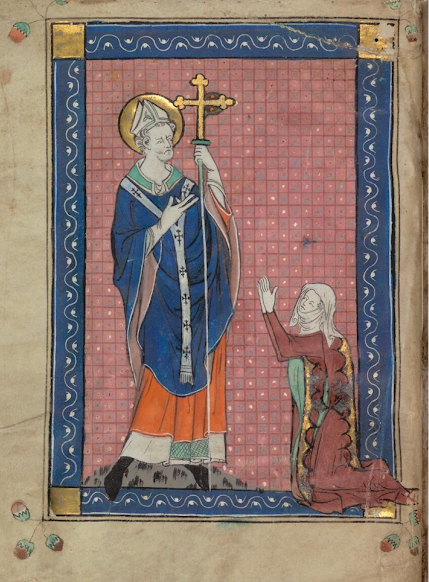
I have referred in the past to the tradition these images represent as the School of St Albans, though I use that phrase in a more generic sense than art historians might. Strictly speaking, the School of St Albans refers to the English illumination of the early Gothic and late Romanesque period — particularly the work of the 13th-century monk Matthew Paris, who worked at St Albans Abbey. His style can be seen in manuscripts such as the Westminster Psalter and in the wall paintings that still survive in English churches.
This Psalter was likely not produced at St Albans — it comes from elsewhere in England. The Cambridge Digital Library, which provided the images, suggests that it is likely elsewhere in southeast England, either Lincoln or East Anglia. But it still contains the essential elements of the style as I have described it: the primacy of line in describing form, a limited palette, and an emphasis on flat coloration rather than blended tonal modeling. Whether we call it the School of St Albans or simply the English medieval tradition, this manuscript is a full expression of it!
These limitations in stylistic features, which distinguish it from naturalistic forms of art, are its strength. As a result, the style sidesteps what I consider the blight of so much modern sacred art: sentimentality. When you cannot render every gradation of light and shadow, you are forced to think clearly about form, about meaning, and about what is essential. Line demands clarity, while tonal naturalism invites sentiment. The School of St Albans offers artists today a discipline that might hold sentimentality at bay!
What to Notice in These Images
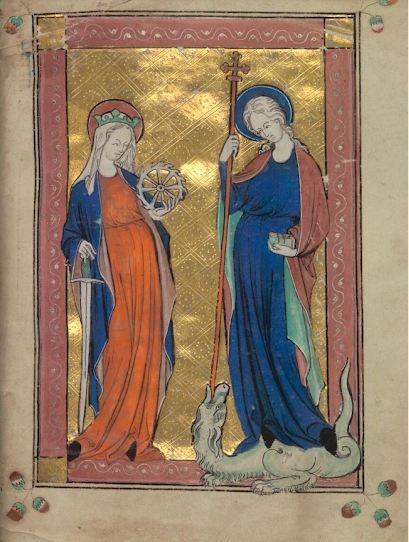
As you look at these beautiful reproductions from the Psalter, there a couple of points I would make:.
Consistent with the broader Western tradition of sacred art, there is a heavy emphasis on beautiful, ornate patterns in the borders, backgrounds, and across the surface of the image. This richly ornamented flatness is distinct from what we encounter in much contemporary Byzantine iconography, for example, which tends toward greater austerity in those areas that could be decorated.
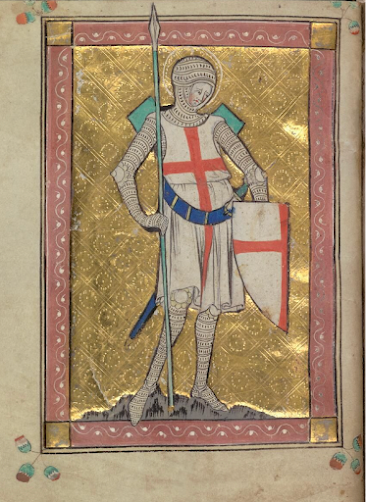
At the same time - and here is an example of how the English tradition converges with the Byzantine - the content follows traditional customs. Notice, for example, how the Nativity is depicted. St Joseph is portrayed as significantly older than Our Lady: by tradition, he was a widower, and is depicted in imagery as set apart from the Virgin and Child in the Nativity. This deliberate distancing signals his temporary doubt about the Virgin Birth. Contemporary depictions of St Joseph in the Roman church, on the other hand, tend to portray him as a young and vigorous man.
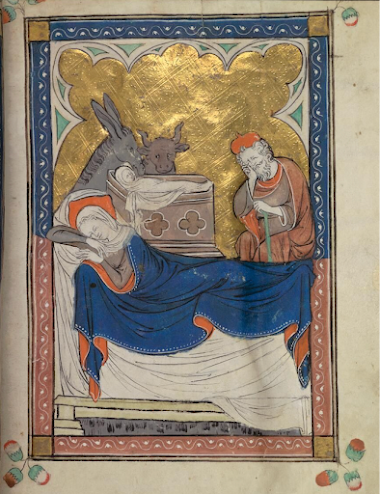
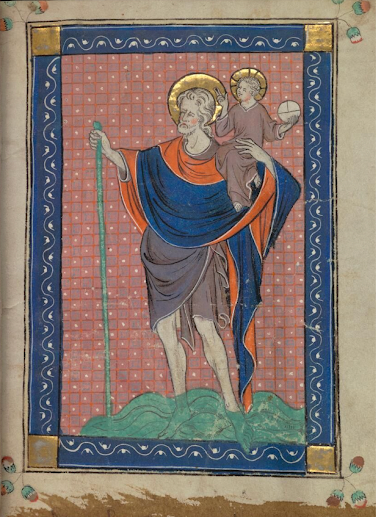
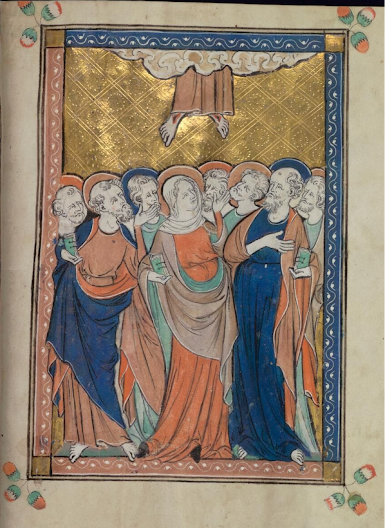
There are twelve folios of this type, which can be seen at the Cambridge University Digital Library site. In addition there are twelve calendar pages that list the feasts of each month along with border decoration.
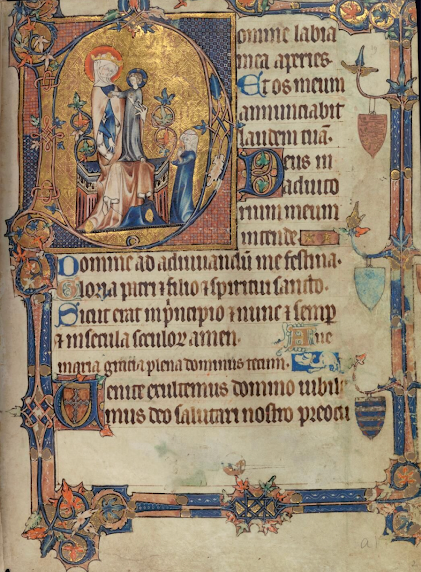
And decorated letter pages for each of the eight Hours, as well as for the Office of the Blessed Virgin Mary. The following one is for Matins. You can see the letter ‘D’ which begins the opening lines, Deus in adiutorium mean intende. Domine, ad adiuvandum me festina.
How Artists Can Learn This Today
It struck me that these images can be a resource for any artist serious about working in this tradition and making it their own today. The goal is not a simple imitation, but to reestablish a living tradition that develops organically over time so that it simultaneously participates in the tradition, while always being fresh and new, and speaks to contemporary people.
The practical path forward for those who are interested, I suggest, begins with the Writing the Light program, which I have written about before: the wall-painting and icon-drawing courses offered by the master iconographer George Kordis. This is a two-year, part-time hybrid program that combines online instruction with in-person workshops — see my recent post for more details. The program is rooted in the Greek tradition of iconography, which provides the foundational skills of the craft: the discipline of line, the understanding of light, and the visual grammar of sacred art.
Students who want to make the School of St Albans specifically their own should supplement this formation with systematic personal study of past works — particularly artists such as Matthew Paris himself, and now, I am suggesting, these images from the Use of Sarum Book of Hours. The principle at work here is an ancient one in artistic formation: imitate a style until it becomes your natural expression.
This is exactly how the great artists of the High Renaissance made the ancient world their own. Michelangelo and Raphael did not simply admire Greek and Roman statuary — they copied it, systematically and persistently, alongside drawing and painting from life. Through that double discipline of copying the masters and studying nature, the classical ideal became their natural artistic language.
The same path is open to artists who wish to make the Gothic style their own. Learn the craft’s skills through a rigorous program like Writing the Light. Study works from life. And alongside both of these, copy and contemplate works by the masters of the English medieval tradition. It will require students of ability and drive in the first instance — but it is most certainly possible. This is how traditions are retrieved.
You can read more at WritingtheLight.com.
A Word to Patrons
There is another challenge here, and I address it directly to those with means and a heart for sacred art renewal: consider sponsoring a talented artist from your own parish or community to undertake Writing the Light’s formation. The retrieval of this tradition will not happen through institutions alone. It will happen one artist at a time, formed with patience and supported by people who understand what is at stake. You could be part of that!
All images are from the University of Cambridge Digital Library, made available for download and licensed under a Creative Commons Attribution-NonCommercial 4.0 Unported License (CC BY-NC 4.0).