


I think that those who criticise the Christian artistic tradition for always presenting Christ as a northern European are wrong, and it reveals, on the part of the critics, ironically, a narrow, parochial Eurocentric bias in their interpretation of history.
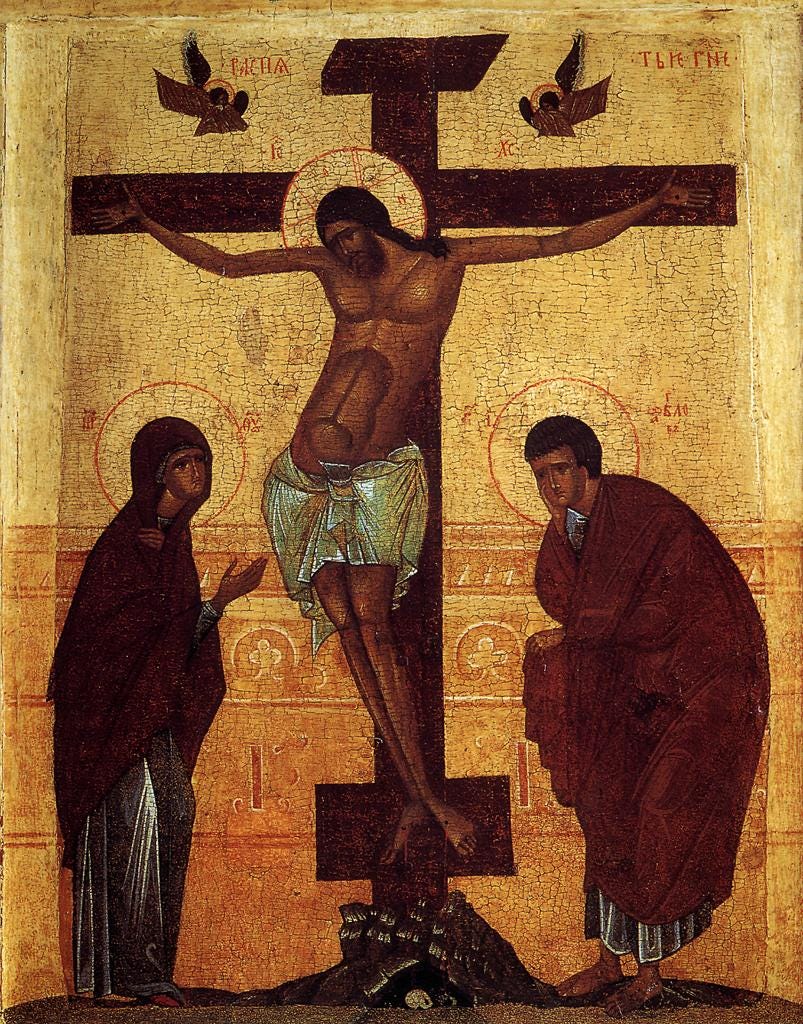
I have read several articles over the years that criticise the traditional representation of Christ as historically inaccurate and exemplary of historical northern European cultural bias.
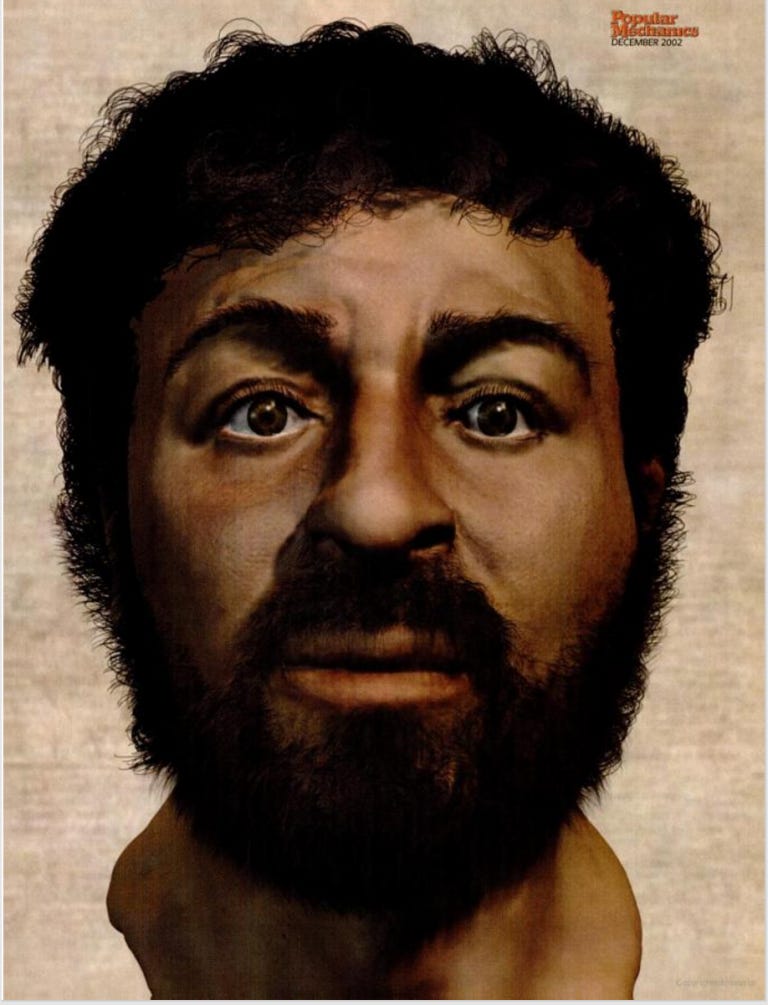
Twice in recent years, I have heard this discussion sparked by the discovery of human remains in the Holy Land, which date back to the time of Christ, and have allowed scientists to create an image of the person from whom the bones came. The figure that is recreated is, surprise, surprise, olive-skinned and Semitic-looking, and so this indicates, so the logic goes, what Christ would probably have looked like. This being so, it demonstrates how narrow-minded Europeans are, and how culturally narrow Christianity is for portraying Christ as a white, Caucasian.
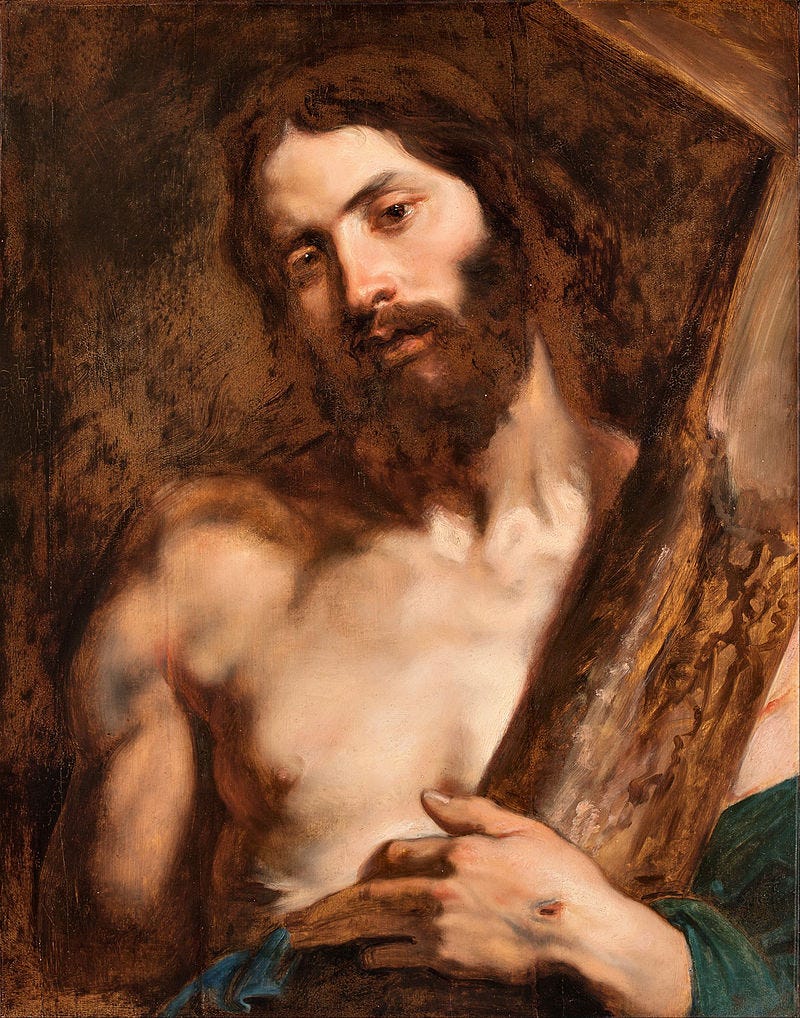
In short, it would be said, Christ didn’t look like this painting by Sir Anthony Van Dyck, as the Church has often represented:
He looked instead more like this scientific reconstruction of a man developed from a skull discovered in the Holy Land (according the this article, here):
Here is my reaction to this absurd piece of pseudo journalism: first, if ever there was a concocted news piece this is it - do we really need the discovery of a skull as evidence that a Jew living in the Middle East about 2,000 years ago might have been dark-skinned and Semitic-looking? I think nearly every Christian today would at least be open to the idea without feeling that their faith was threatened, and it wouldn’t require the discovery of a skull to convince them.
Second, I think that the argument reveals a narrow understanding of the Christian artistic tradition and a lack of appreciation of just how universally inclusive it is. I will acknowledge that there is a tradition of artists who present Christ as their own race or the race of those for whom the painting is intended. The idea behind this is to encourage people to believe that Christ is a person to whom they can relate to at a personal level. This is natural. Sir Anthony Van Dyck, who was northern European and who spent most of his professional life working in England, might very well naturally paint Christ as a northern European. But why shouldn’t he? I feel that it is as reasonable for a European to paint Christ as European as it is for him to be painted as an African for an African congregation, or as Chinese for a Chinese audience, as in this painting:

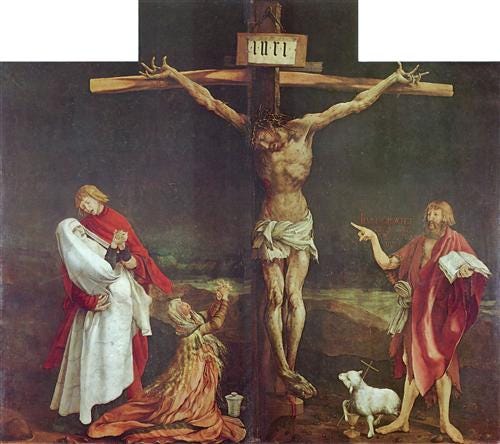
This desire to portray Christ in a form that the intended viewers will relate to can manifest itself in other ways. This famous crucifixion by Grunewald shows Christ with the open sores of a fungal infection transmitted through rye grain eaten in the bread of 16th-century France. Those who suffered from this horrible, disfiguring disease were given care in a hospital, and this painting was painted for the chapel in the hospital. The intention was to give them solace by showing that Christ not only bore the pain of their sins but also suffered with them physically.
Many times, the depiction of Christ in the Christian artistic tradition does indeed look like the fair-skinned Van Dyck image. However, I would contest the idea that this results from a northern European cultural bias on the part of those who assume that anybody who looks like that must come from northern Europe originally. Look at these two images, first this one:
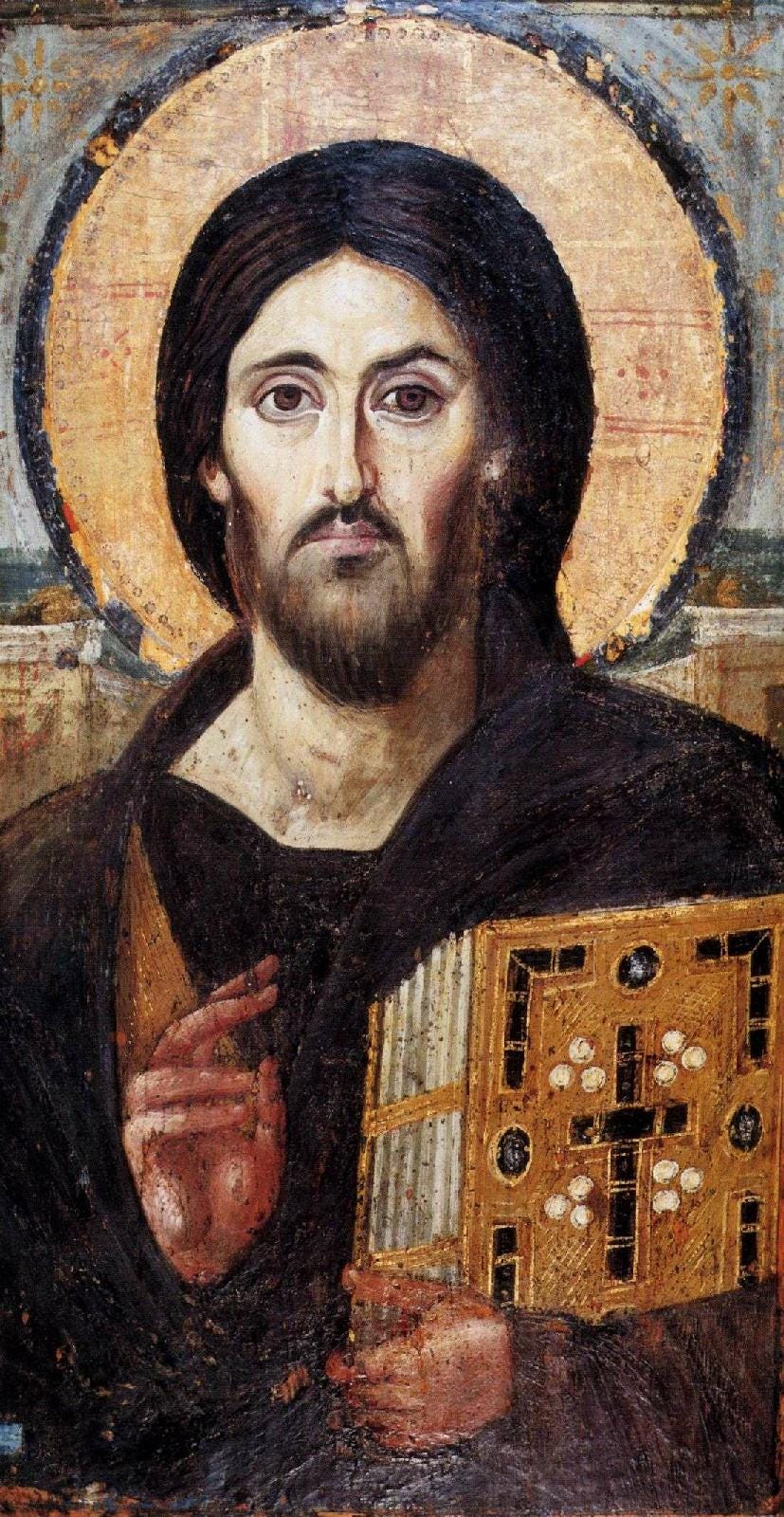
And now this one:
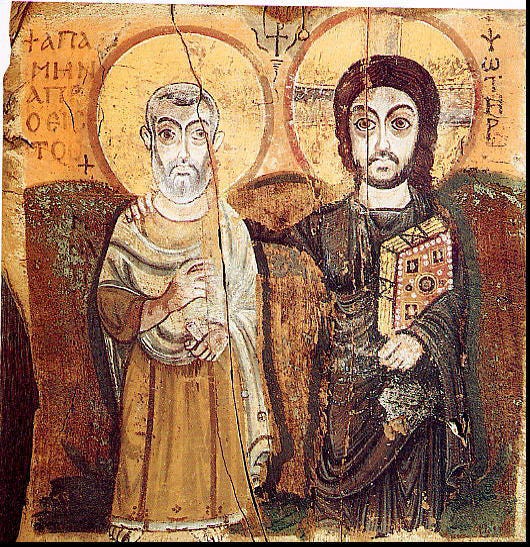
Both have Christ represented as a light-skinned man. However, these have no connection with Western Europe; they were painted in Egypt before ‘the West’ was even an idea in people’s mind. The first one comes from Mount Sinai and dates back to the 6th century, and the second is even older, a Coptic icon from the 4th century. Why did they represent him in this way? One possibility that is often overlooked in these articles is that the tradition has preserved an image that corresponds to what Christ looked like. If this were the case, and it is historically accurate, one would expect to see others who looked similar. Here are two portraits of Egyptians dating back to the 2nd century AD.
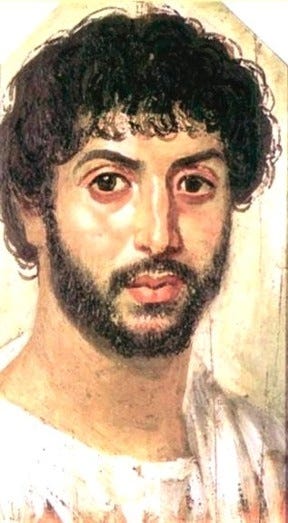
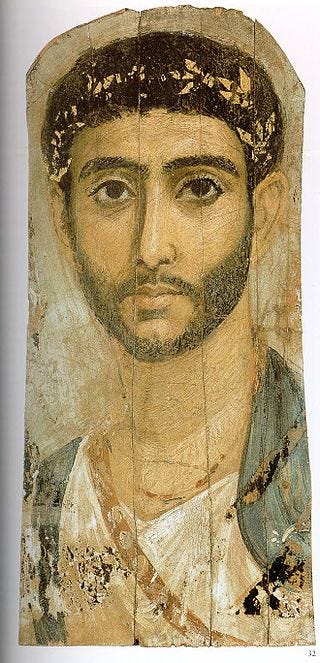
The two paintings above are portraits for coffins painted in encaustic, a technique by which pigments are suspended in hot wax. Not everybody would have been this light-skinned in Egypt at this time, but at least this shows that some were. Egypt is not the Holy Land of course, but one would have expected an Egyptian artist painting Christ, referring back to the ancient examples given previously, to have some idea of what those who lived next door in the Holy Land might have looked like. Nevertheless, suppose the images of Christ are not accurate and reflect a prejudice of Egyptian artists of the period, which is possible. In that case, the prejudice which created them is certainly not northern or Western European, but rather aristocratic 4th-century North African.
There is another reason why Christ would have been light-skinned in religious images, even if it was widely believed that he was naturally much more dark-skinned. This reason has nothing to do with racial stereotypes. The Christian tradition consistently portrays Christ, to varying degrees, as an idealised heavenly figure. Even in naturalistic styles, such as the baroque exemplified by Van Dyck, there is always an element of idealisation that points to this heavenly destiny. The model for this is the Transfiguration. The three apostles, you will remember, saw him transfigured on Mt Tabor, shining with light. In authentic Christian liturgical art (by authentic I mean art that conforms to a Catholic worldview in both content and form), there is always an indication of the Light of the World bursting through in paintings of Christ or the saints. Sometimes this is achieved by lightening the whole complexion of the person. Here we have a portrayal of Christ from the 16th century, painted by an artist trained initially in Crete in the Eastern Mediterranean, who later lived in central Spain, known as El Greco.
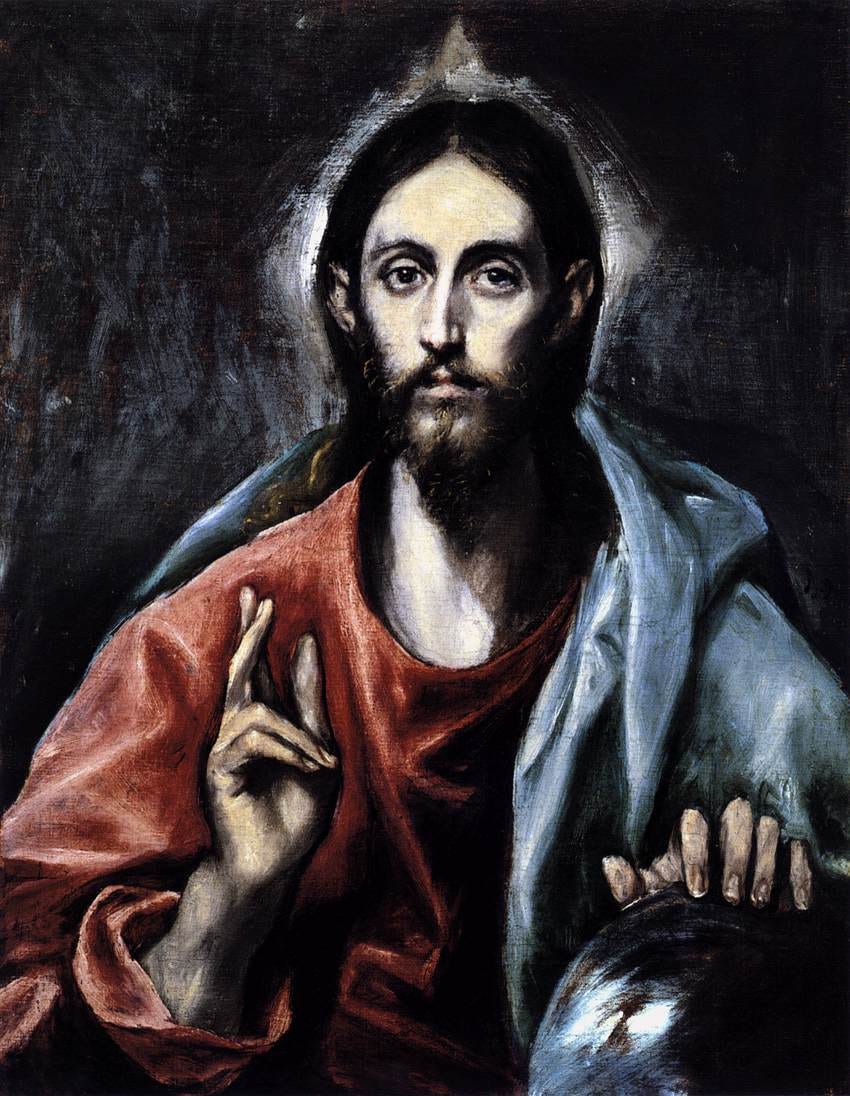
Sometimes the indication of the divine light is achieved by adding concentrated lines of pure white light that sparkles on the surface of generally darker skin. Russian icons especially tend to use this latter method, and ironically, it is in Russian art that we see some of the darkest skinned portrayals of Christ. I say it is ironic, because if racial or nationalistic prejudice was driving the portrayal of Christ one would have expected from a Greek living in Spain to paint a darker Christ than a Russian living in Russia. The icon below is from the late 15th century by the Russian iconographer known as Dionysius:
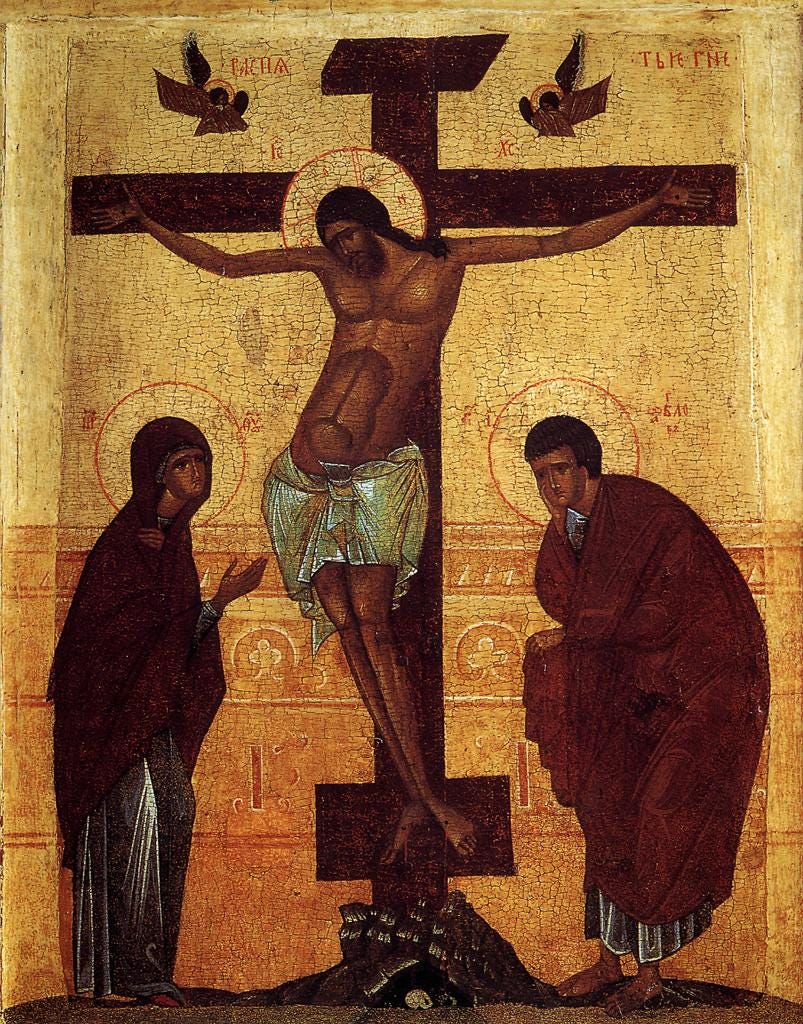
For those interested, the pigment colour that produces this skin complexion is called Avanna ochre. I was instructed always to use this colour for skin by a teacher in London, and the reason was that it conformed to the Mediterranean complexion that Christ would have had.
Is it right to portray Christ as a non-Middle Eastern person today?
The answer to this is yes if it will help anyone, regardless of race, to come to Christ. On the whole, however, I think it is not necessary. Most people now understand that Christ was a historical figure from the Middle East, and it is the traditional imagery of the Church that is most likely to portray what Christ actually looked like and convince us, looking at it today, of the fact. Further, it seems rather patronising to me to assume people of any ethnic group today are so naive and provincial that they are not aware of this.
Early Christian art provides a valuable window into the beliefs of the early Church regarding Christ, with a greater likelihood of accurately reflecting those convictions. This parallels the reasoning behind, for example, valuing the scriptural commentaries of the early Church Fathers. The closer a commentator or artist lived to the time of Christ himself, the more likely their work captures the authentic beliefs of the Church as established by Christ Himself.
The difference between an artistic historian who knows his subject, and ulterior propaganda….
Wonderful article. Then there is the whole question whether the pigments used in the paintings look the same today as when they were originally painted - pigments often turn lighter or darker depending on how they were preserved. Religious images were often overpainted in later times.