


In a recent posting I wrote about Mary Harrington’s review of my wife Margarita’s new book, When Mary Calls: Surprising Encounters with the Mother of God and in particular about the connection she drew between the purging of images at the Reformation and the long decline of Marian devotion that followed. Harrington sensed that the two belonged together, that the loss of the icon and the loss of the Mother were somehow one loss, though she did not set out the reasoning that binds them.
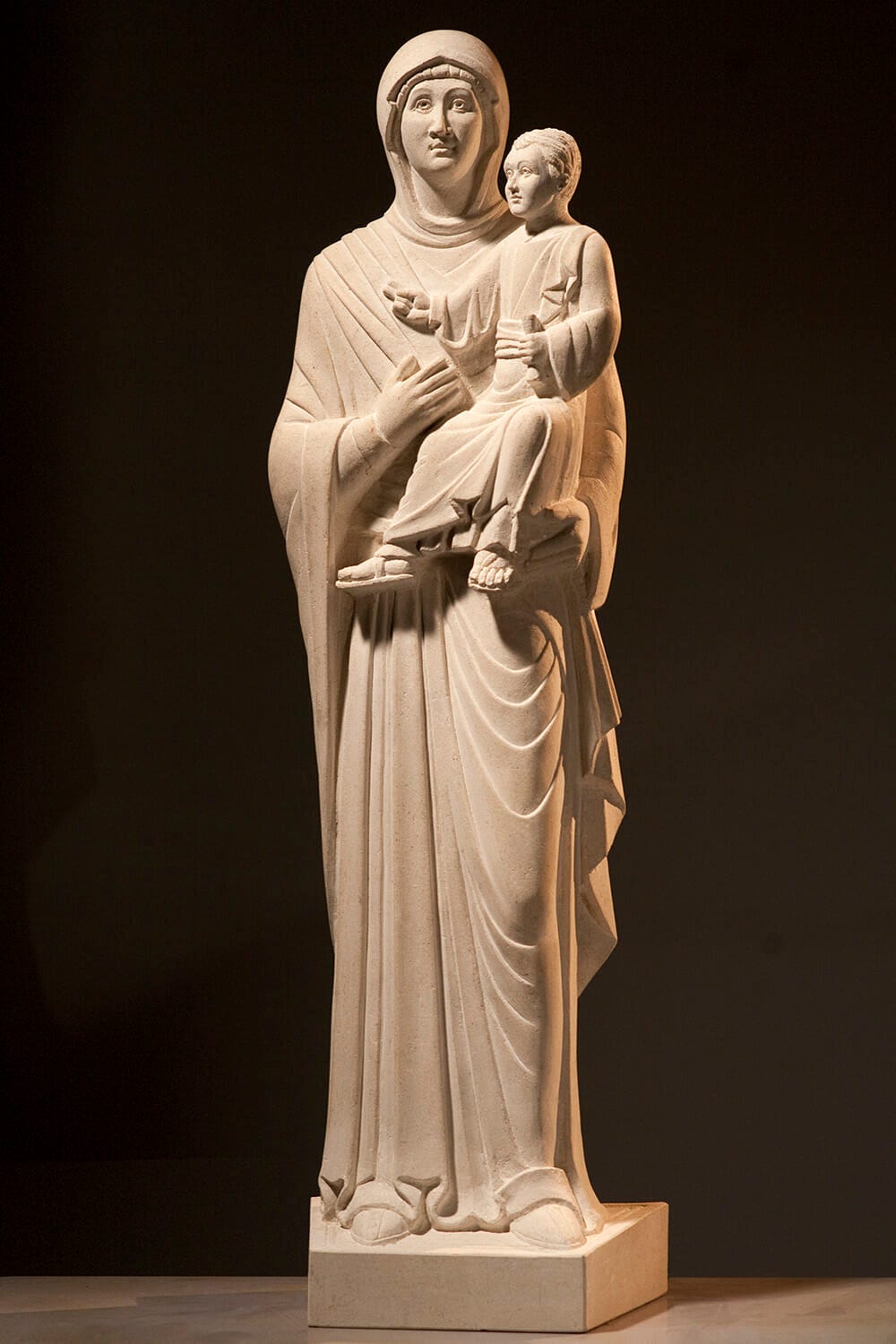
I want to take up that thread here and follow it further, because I think the connection is not just a historical coincidence but a matter of theological necessity. Images and Mary are bound together in the roles they play in the Christian faith and in Christian culture, and understanding why is to understand something important about how Christian culture is built and how it decays.
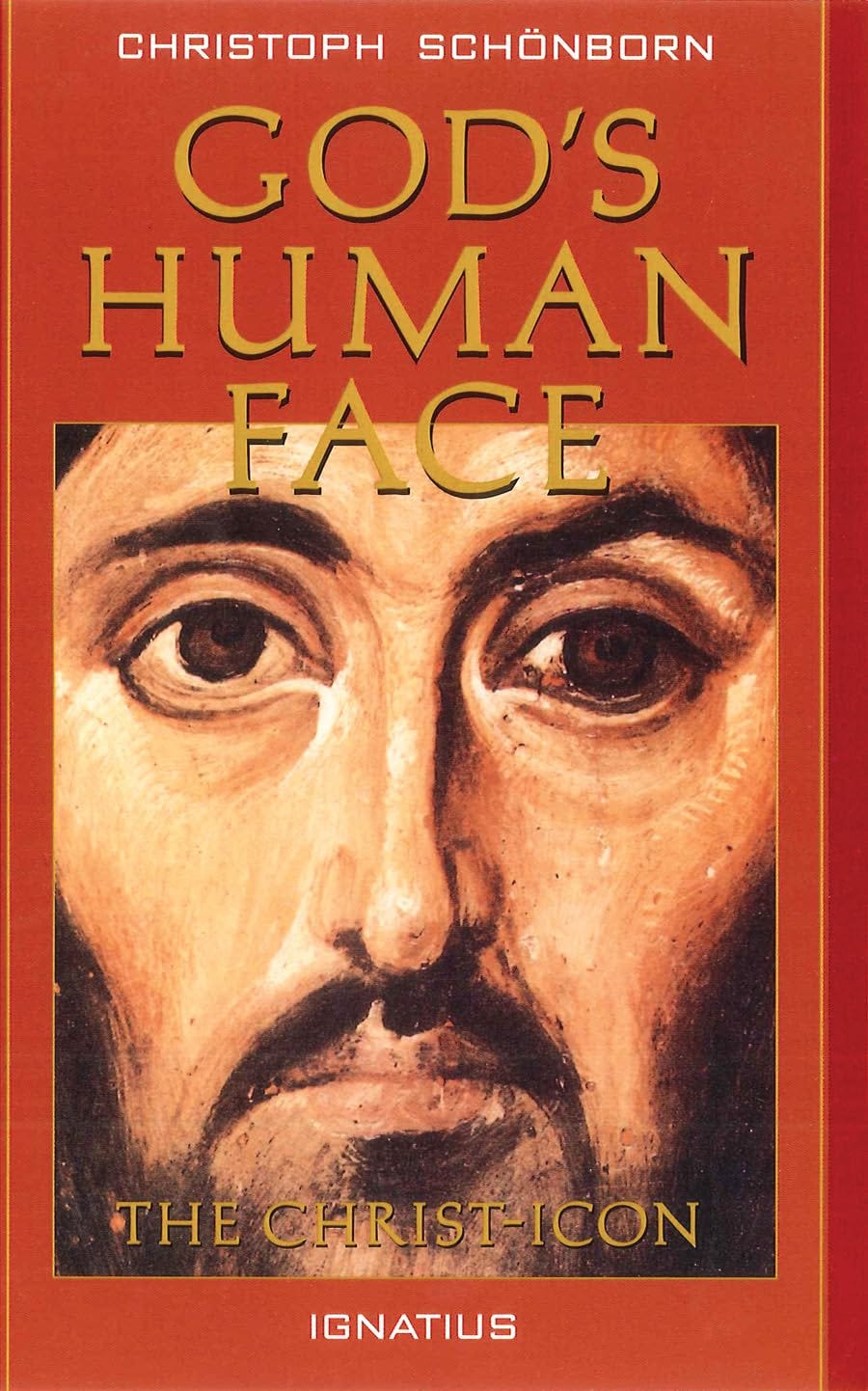
The argument is an old one, and it was worked out over the first eight centuries of the Church. Cardinal Schönborn, in his book God’s Human Face, describes the trail of logic that led to the conclusions of the Seventh Ecumenical Council, the council that concerned itself with sacred art and the veneration of holy icons. What he shows is that the conclusions of the first six councils were necessary to the deliberations of the seventh. The defense of the image was not an afterthought. It was the culmination of everything the Church had so far learned to say about God and man.
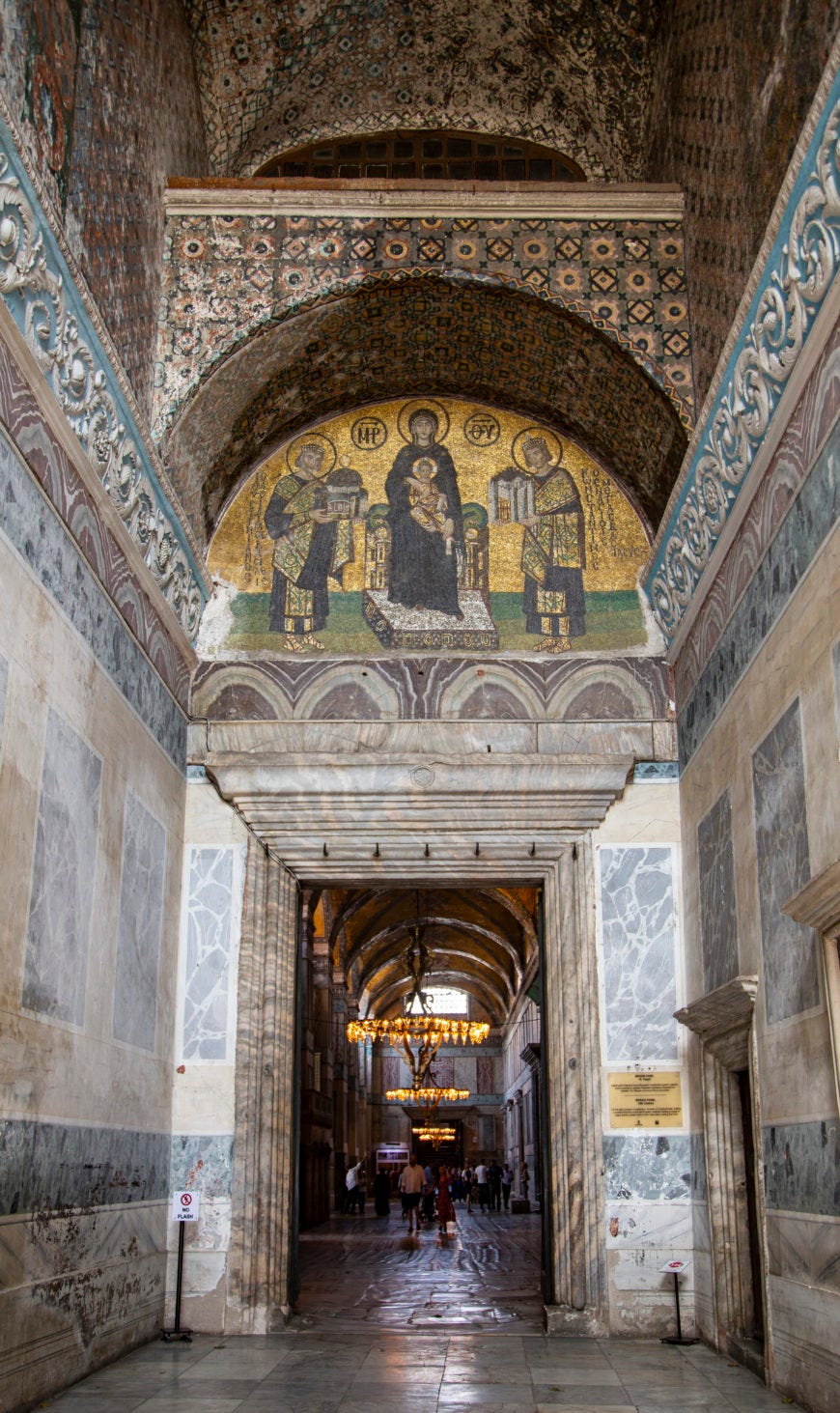
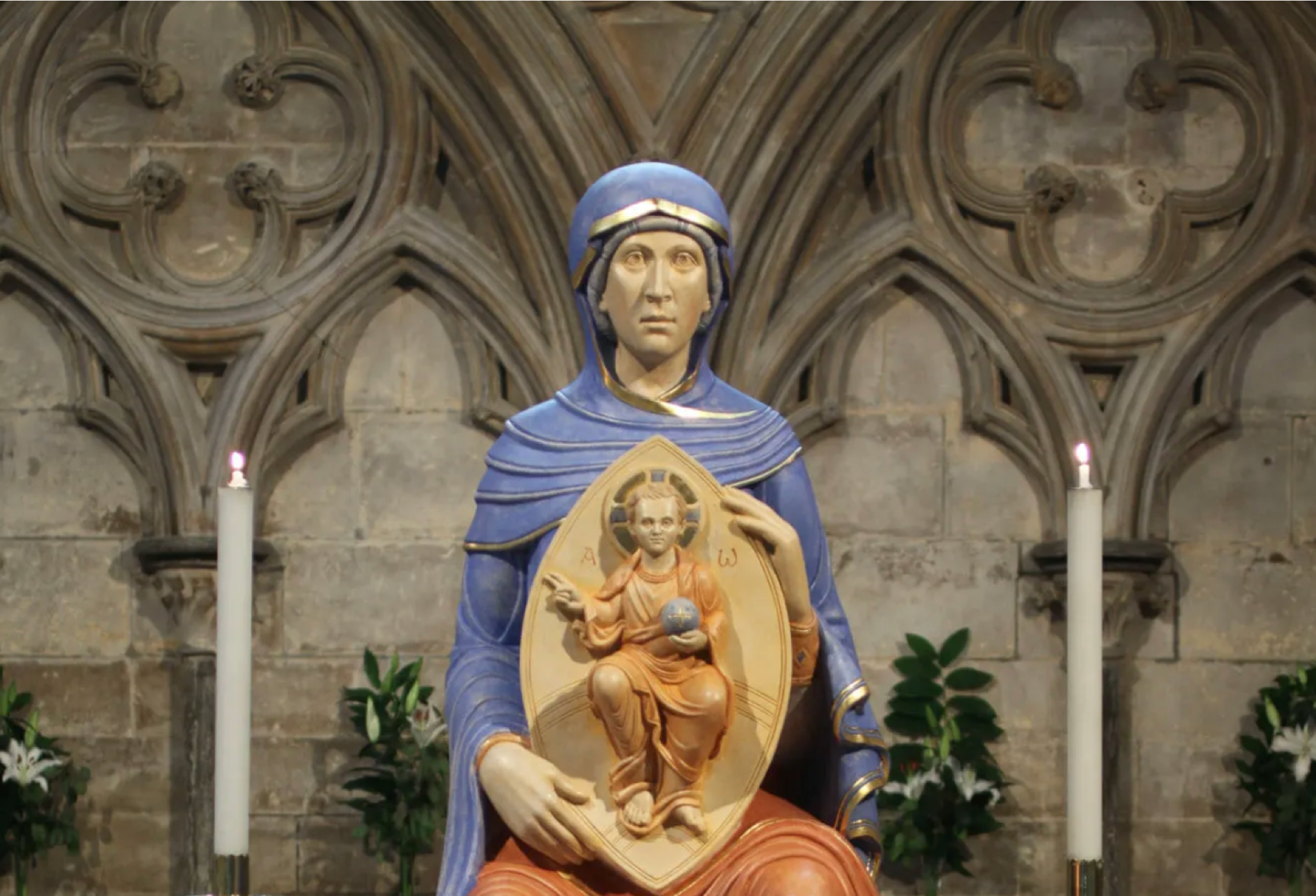
The chain runs like this. The Church had first to establish the doctrine of the Trinity, three persons, Father, Son, and Holy Spirit, and to articulate what a person is. Then it had to articulate an adequate Christology for the second person of the Trinity, the Son, one person in two natures, fully God and fully man. Then it had to articulate an adequate Mariology, establishing that Christ received his human nature from Mary, and that Mary was therefore the mother who bore the person of Christ, and so was the Mother of God and worthy of the title Theotokos, the God-bearer.
Only then could the council reach its conclusion about images. If Christ is the image of the invisible God, the Father, as St Paul says, then during his historical presence on earth man was able to see the person of Christ as man, and in seeing him to see the image of the Father, and so to worship the Father through the Son in the Spirit. This is what Christ himself meant: “He who has seen me has seen the Father.” By extension and by analogy, we can worship Christ through images of him when we venerate an icon of Christ.
Worship is due to God alone. But we venerate Mary and the saints, as distinct from worshiping them, when we venerate images of them, kissing them, praying before them, and so on. The veneration passes to the one represented; it does not stop at the wood and paint.
Notice what this means. The defense of the icon depends on the doctrine that Christ is fully man, which depends in turn on the doctrine that he received a real human nature from a real human mother. Take away Mary and the whole structure becomes unstable. If Christ’s humanity is obscured, the ground for the image is cut away, and if the image goes, so in time does the vivid sense of Christ’s humanity that the image served to keep before our eyes. The icon and the Mother hold each other up.
How we apprehend the beauty of the cosmos
There is a further step that carries us from theology into the experience of beauty. The cosmos bears the pattern of Christ, the Creator, for through him all things were made, as St John tells us:
“In the beginning was the Word, and the Word was with God, and the Word was God. He was with God in the beginning. Through him all things were made; without him nothing was made that has been made.” (John 1:1–3, cf. Colossians 1:16)
This was affirmed by the Church in its formulation of the Nicene Creed as well.
The cosmos is beautiful to us when we behold it because it bears that pattern in its underlying order, an order we perceive and delight in when we appreciate its beauty. This is true even for those who do not yet love Christ, for the pattern of Christ is imprinted on every human heart at conception and purified through baptism and the sacramental life. We instinctively connect the pattern of the cosmos with the one imprinted on our hearts each time we apprehend the beauty of the cosmos.
But the fullest appreciation of the beauty of the cosmos does not come from appreciating it as it now is. Beautiful though it is, fallen nature is not yet fully what it ought to be. We grasp the beauty it would have in its perfection, and will have on the last day, only to the degree that we grasp the beauty of Christ himself. Though that pattern is imprinted on our hearts at conception, it can be distorted by our sin, which also clouds our inward gaze.
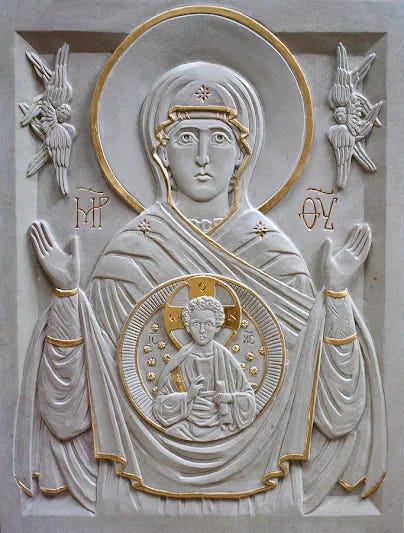
To purify our recognition of the perfection toward which beauty points, we need to purify our hearts through participation in the life of faith and the sacramental life, and crucial to this grasping of the beauty of Christ is the veneration of his icons. This is not to claim that the holy icon bears a perfect representation of Christ. Rather, the icon is fashioned by a tradition designed to work in harmony with prayer and worship, so that through it we have a deeper and richer encounter with Christ in heaven and with Christ present in the Blessed Sacrament.
That encounter imparts to our hearts a deeper grasp of who Christ is and a greater love for him, so that we begin to intuit the idealized pattern of the cosmos even when we look upon its fallen version. And this greater appreciation of the beauty of the cosmos leads us in turn into a yet greater grasp of the beauty of Christ, for we see more clearly how the beauty of the world speaks of the One who made it. It is an upward spiral, a positive feedback loop in which the apprehension of beauty and the love of Christ feed one another.
Because holy images, and through them the fullest possible grasp that Christ is truly man, are necessary to this dynamic, it follows that if we do not venerate holy images of Christ and worship him and the Father through them, with the help of the Spirit, our love for Christ and our appreciation of the beauty around us will tend to decline. This is in part why, one may speculate, the Seventh Ecumenical Council went so far as to argue that the veneration of images is a necessary component of the expression of our faith, not an optional devotional extra.
And given that Mary’s role in the Incarnation is essential, for it was she who gave Christ his human nature, neglect of Mary will, in time, lead to neglect of her Son as well, and to a diminished capacity to see Christ in the world and in the people around us.
This, I think, is what Harrington either alluded to or glimpsed without fully spelling out. The Reformation’s suspicion of images and its de-centering of Mary were not two unrelated reforms. The Reformation’s suspicion of images and its de-centering of Mary were not two unrelated reforms. They were two parts of the same change, and they stand or fall together.
What, then, has all this to do with culture?
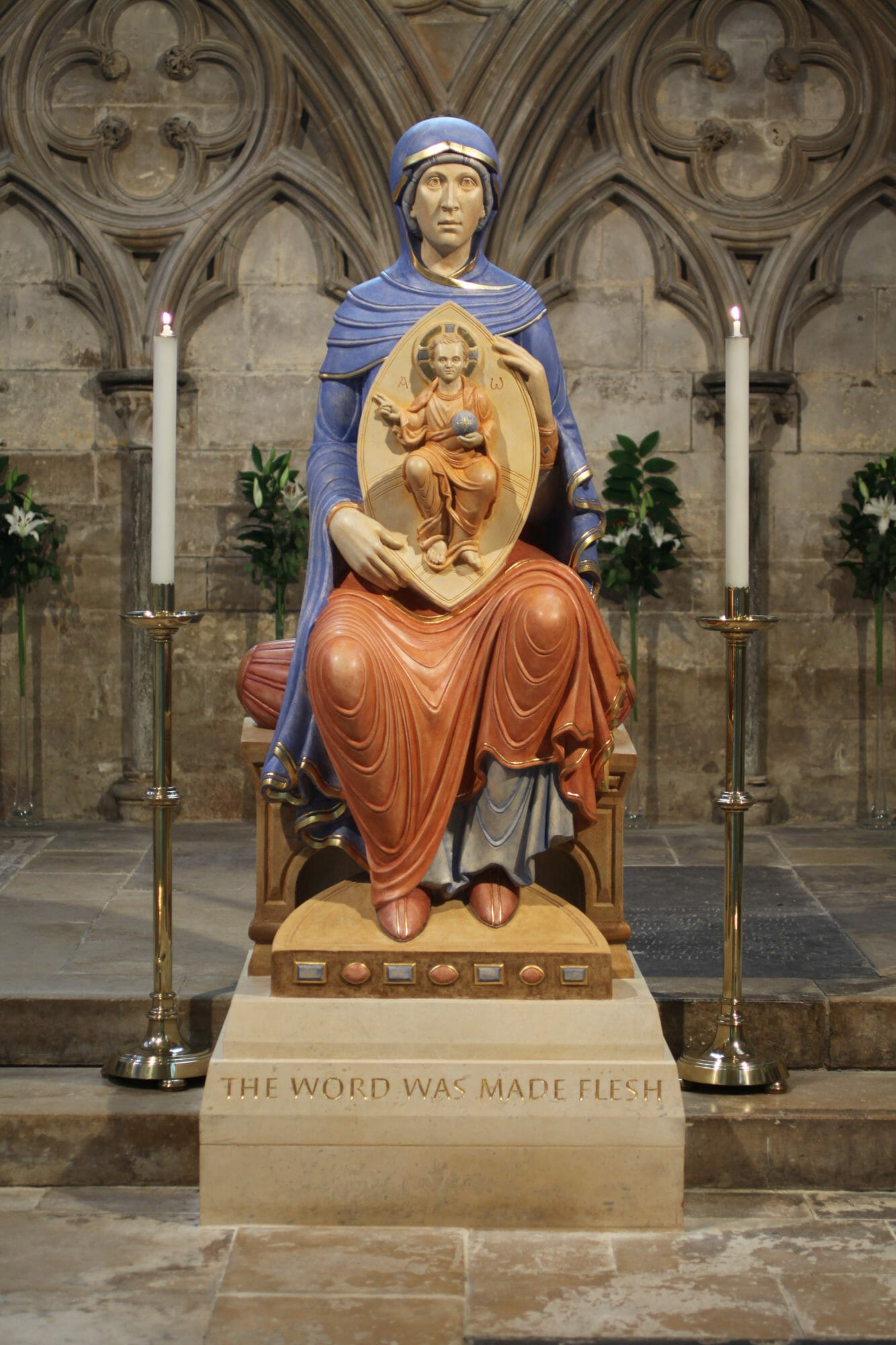
As I have written about extensively in my books such as The Way of Beauty, man’s capacity to create a beautiful culture that is Christian, and for those of us in the West that Christian culture is the same as traditional Western culture, rests in his being able to co-create with God, to form matter, under God’s inspiration, into a beauty that speaks of the idealized cosmos, which is to say the beauty of Christ in heaven. To the degree that he succeeds, his work surpasses the beauty of fallen nature. This requires grace and the disposition to respond to grace, the instinct to manifest the pattern of Christ in our work. That pattern was imprinted on our hearts at conception, and the instinct to manifest it grows with our love for the One who placed it there, for as that love grows we see him more clearly in ourselves, in others, and in the cosmos, and we begin to see how each creature ought to be in its perfection.
That creative capacity is therefore stimulated by love of Christ and love of his Mother, in whom love of the Son is bound up, for she directs us to his human nature, which then opens the door to loving the whole person, God and man. And that love is itself stimulated through a life of prayer to Mary and to Christ, and through the veneration of icons of each. The formation that does this work is not principally a formation of the intellect, by which we understand the principles I have been laying out, useful though that understanding may be. It is primarily a formation of the heart, a formation in love. It is through devotion to Mary and worship of Christ that we grow in love, and it is from that love that beautiful Christian work proceeds.
Why focus on Mary and on images?
A word on why I single out these two things. Mariology is necessary to the faith but not sufficient on its own. As I am a convert to the Catholic faith, I can see why we need every link in the chain: trinitarian theology, Christology, the understanding of the human person, Mariology, the theology of images, and the other necessary aspects of Catholic dogma.
It strikes me that it is important to focus on Mary and the image because they are the two aspects often neglected by many Protestants. The veneration of images might remain an obstacle for ecumenism, but Mariology need not be so great a barrier as it might first appear, because it is part of the Protestant inheritance too, as I argued in the previous essay; the Reformers retained the core Marian dogmas even as they grew wary of certain devotional practices, a concern which Catholics have addressed in pastoral documents.
If we want a unified Christian response to the pressures now bearing on believers, we should seek to establish a shared foundation across as many aspects of the faith as we can. And it may be that, as has happened before in the history of sacred art, the Catholic Church, the Orthodox, and those fewer Protestant communities that retain the use of sacred art in their worship, such as the Lutherans, the Anglicans, the Episcopalians, the more liturgical churches generally, will lead the way. Othat others will then build on what they do in the wider culture.
As I detail in my book The Way of Beauty, this was the historical pattern, for example, in the Baroque and the neo-Gothic revival, where renewal began in the worshipping community and spread outward from there.
Liturgy as the wellspring of culture
This points to the conclusion that Christian culture is, in fact, renewed. A Christian culture does not grow first in the academy, the gallery, or the public square and then work its way inward to the altar.
It grows the other way round. Liturgy is the wellspring. It is in the worship of God, and supremely in the Eucharist, that the love I have described is kindled and sustained, and it is from that worship that the impulse to make beautiful things, and to order a whole society toward beauty, flows out into the world.
This is why it is the liturgical churches that have historically driven the evangelization of culture, for they possess the wellspring that nourishes culture. Among the liturgical churches, those that elevate the role of sacred art within worship itself, that do not confine the image to private devotion and personal prayer but give it a place at the very center of their public worship, will tend to be the most fruitful, because in them the dynamic of beauty and love I have traced is most fully at work.
And among these, the Catholic Church, which possesses the fullness of truth and the fullness of the sacramental life, is uniquely placed to be the source of a renewed Christian culture. Not because Catholics are more talented or more devout than their neighbors and brothers in Christ, but because the Church holds, intact and unbroken, the whole chain of doctrine that makes the icon possible and the whole sacramental order that makes love grow.
The icons are coming alive again, as Harrington aptly discerned, is one message that emerges from When Mary Calls. Harrington clearly perceives that Clayton’s book about Mary is about much more than Catholic devotion. Margarita Mooney Clayton, who is my wife, also correctly directs our attention to liturgical forms of Marian devotion that are often overlooked, and suggests a broader cultural renewal can emerge through devotion to Mary.
Icons will draw their life from the liturgy, and it is from the liturgy—including art and music for the liturgy—that a broader Christian culture, if we are to truly see one in our time, will rise.
And if such a renewed Christian culture is to rise from the ashes of icon desecration, Mary will be crucial. For it is through Mary that we come to her Son, and through him to the beauty that a Christian culture exists to make visible.
Most Holy Theotokos save us! 🌐⛪☦️🪽