


I have published another article—Why Pray the Psalms, and How to Pray the Bible in Song—on why the Psalms, in general, are important to our prayer life. Here I address the issue of why the particular translation, that of Myles Coverdale, used in the Musica Domestica, Volume II, Psalter, authored by Andrew Goldstein and me, has been chosen.
Why the Coverdale Psalter?
The Coverdale Psalter is uniquely suited to praying the psalms in English: its translation is written in beautiful, poetic language with a rhythmic pattern of stresses that facilitates chant. It covers all 150 psalms in a monthly cycle of Morning and Evening Prayer, which makes it convenient for lay people who lead busy lives; and finally, it belongs to a living tradition that stretches from pre-Reformation Catholic England through the Book of Common Prayer to the present day and has been a powerful formative influence in shaping the culture of the Anglosphere, for both Catholics and Protestants, and especially in England and America.
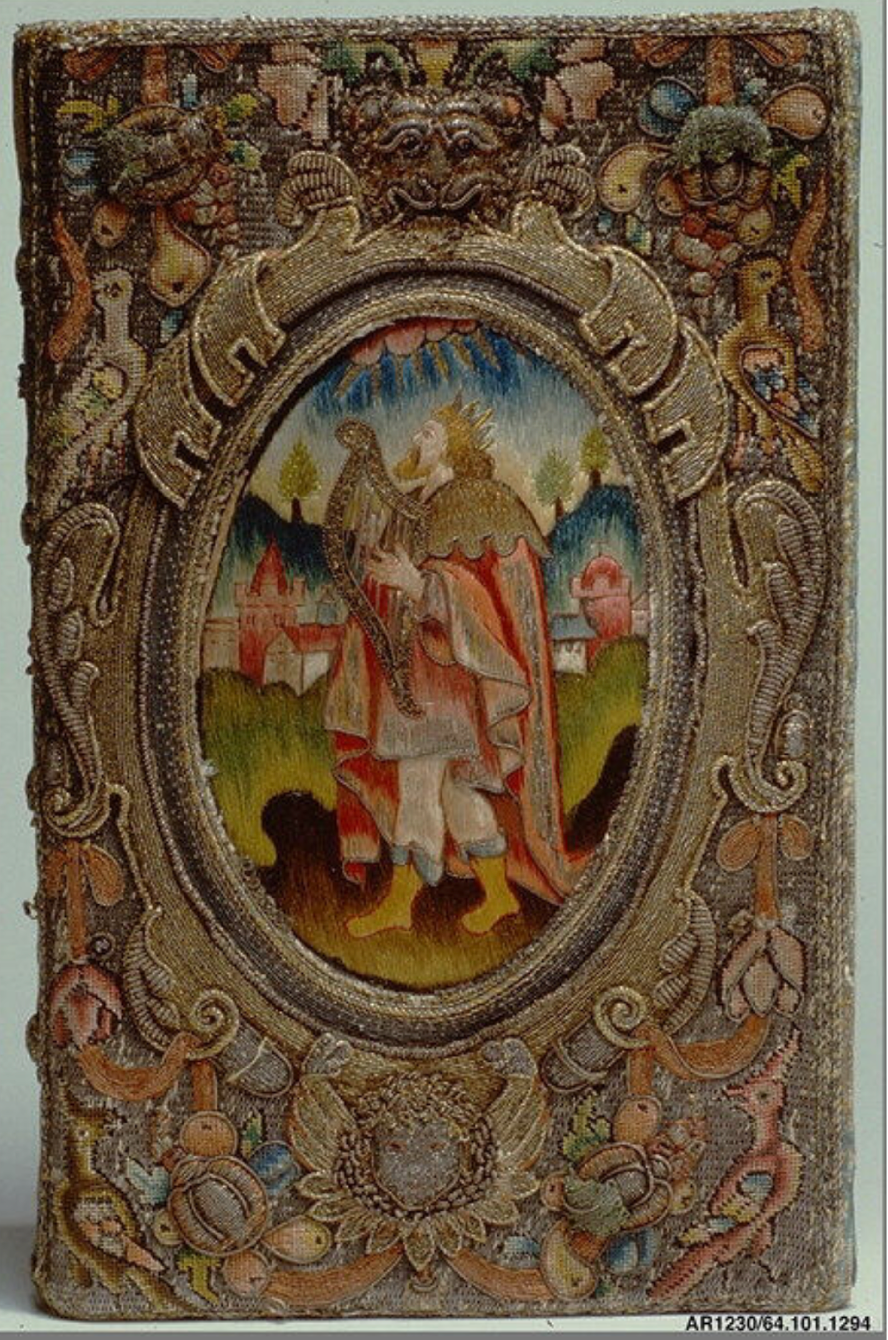
Made for the Voice
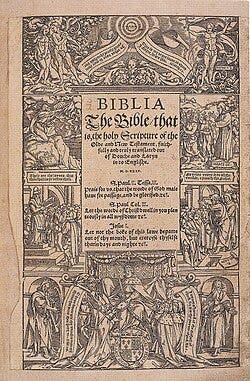
Myles Coverdale translated and published his Psalter in 1535 as part of the first complete printed Bible in English. In an age when texts were routinely read aloud, he crafted his translation specifically for proclamation in chant — an art for which he was well prepared, having also written hymns and thus possessing a strong sense of how music and text combine. An ideal translation of the Psalms should be accurate, preserving the meaning of the original; it should use poetic, beautiful language; it should be intelligible to the ordinary reader; and it should be shaped so it can be chanted. Very few English translations maintain all of these qualities to the degree that the Coverdale Psalter does. This explains the longevity of this translation’s use.
Andrew Thornton Norris, the English Catholic poet, argues in The Spiritual History of English[^1] that the English of the Tudor and Stuart periods, sometimes called the Early Modern period, was unusually well suited to communicating spiritual content. The particular development of its vocabulary, syntax, and rhythm gave it a natural capacity to carry theological meaning poetically, a capacity that has steadily diminished as the language has evolved from that time to the present. The Coverdale Psalter and the King James Bible are the great monuments of this moment. They are not merely old translations that have acquired authority through long use; they are translations made when the language was, in important respects, at its most poetically beautiful and best suited to the aims of these projects.
This matters especially because the psalms are not primarily a text to be read but a prayer to be sung. As the associated article in this series, Why Pray the Psalms, argued, it is specifically in being sung as part of daily prayer that the psalms do their deepest formative work — impressing their imagery, their movement from lament to praise, their habitual orientation toward God, upon the intuitions and affections at a depth that reading alone cannot reach. The translation used for singing therefore shapes not only what is understood but what is felt and desired. When a translation fits the natural music of the language — placing emphasis where it falls in speech, letting the phrases breathe — it forms the soul. This is not a private effect. Over years and generations, those formed this way contribute to and shape the wider culture, through a shared moral imagination, a shared vocabulary, and shared instincts about what is true and beautiful.
One small illustration of how widely this formation can reach is the phrase “the apple of the eye,” rendered consistently across both the Coverdale Psalter and the King James Version, and appearing in five distinct books of Scripture. In Deuteronomy 32:10, God’s care for his people in the wilderness is expressed: “He found him in a desert land... he kept him as the apple of his eye.” In Psalm 17:8, it becomes a petition: “Keep me as the apple of the eye, hide me under the shadow of thy wings.” In Proverbs 7:2, it governs the keeping of the law: “Keep my commandments, and live; and my law as the apple of thine eye.” In Lamentations 2:18, it appears in the context of grief and divine attention. In Zechariah 2:8, it speaks of God’s particular tenderness toward those he has chosen: “...for he that toucheth you toucheth the apple of his eye.”
The phrase refers to the pupil of the eye — its center, the most delicate and closely guarded part. Its recurrence across the law, the psalms, the wisdom literature, the prophets, and the lamentations shows it functioning as a consistent image of divine care and preciousness of humanity before God. So by the 19th century, it had become a common expression for someone who is dear to us.
That passage from the psalms had been sung morning and evening in the daily Office; it entered the soul through prayer before it entered culture through literature. This is precisely what happens when a translation is not merely accurate but formative: its images become, over time, the images through which a whole culture perceives the things of God.
The text used in Musica Domestica is the Coverdale Psalter as it appeared in the American 1928 Book of Common Prayer. That 1928 revision was handled with a deliberately light touch: the revisers retained Coverdale’s language wherever it remained defensible, altering it only where it had become seriously misleading, where the Latin source had distorted the Hebrew, or where individual words had shifted in meaning enough to obscure the sense. The result gently modernizes the surface while leaving the substance and Early Modern scriptural character intact. It therefore continues directly from the Coverdale tradition and retains the qualities that make the translation especially well suited to sung prayer and formative in its influence.
All 150 Psalms, Every Month
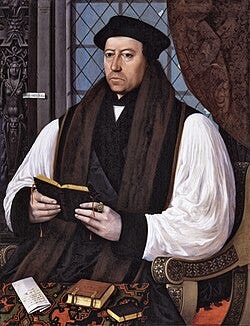
One of the great achievements of Thomas Cranmer, who designed the Book of Common Prayer Offices of 1549, was arranging all 150 psalms into a thirty-day cycle to be prayed in Morning and Evening Prayer throughout the month.
The daily Office in this arrangement takes perhaps thirty minutes, with the portion of the daily psalms at about 10 minutes per office (the lay person may omit portions if desired, so it can be even less). It is most suited as a lay Office, designed not for monks in a monastery who devote their whole lives to chanting the Office, but for ordinary Christians in households, schools, and parishes. Cranmer drew on what is called the Sarum Use — one form of the Roman Rite that developed in England through the medieval centuries. Sarum is the ancient name for the town of Salisbury, the cathedral city where the liturgy originated. He took this and simplified it radically, reducing seven daily Hours to two principal ones.
The result is a structure in which every psalm is prayed each month, so that no part of the Psalter is neglected. This matters theologically. As St. Thomas Aquinas wrote in the prologue to his Commentary on the Psalms, the Psalter “contains the whole of Scripture”: the law, history, wisdom, and prophecy of the Old Testament are all taken up and concentrated here, while the New Testament is anticipated in those psalms that speak directly of the Incarnation, the Passion, and the Resurrection. Praying all 150 psalms regularly is therefore not merely reciting texts, but passing through the whole of salvation history through voice and heart. Some contemporary forms of the Office omit parts of the Psalter and, in this respect, forgo the full impact otherwise available. For busy lay people who wish to pray all 150 psalms in a manageable way, this schema is ideal.
From England to America
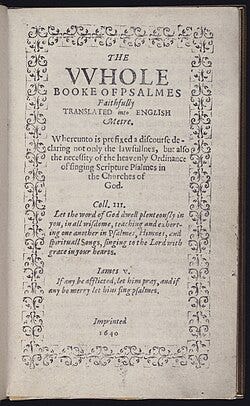
The Coverdale Psalter did not appear out of nowhere. It is the English descendant of a long line of Latin Psalters chanted in English monasteries, cathedrals, and parish churches. The Sarum Use, the dominant form of Catholic worship in England for centuries before the Reformation, preserved the structure of the ancient Roman Office, and this was one starting point for the work of the 16th-century reformers. What Coverdale translated, and what Cranmer arranged, was, in some respects, already old: in the broadest sense, the tradition of psalm-prayer reaches back through the medieval Church to the psalms as they were sung in the Temple.
John Henry Blunt, an Anglican liturgical scholar, examined pre-Reformation English Psalters in the Bodleian and British Museum collections and found that the simplified thirty-day psalm arrangement — the arrangement that became central to the BCP — was already present in the tradition before Cranmer. The Reformation broke many things, but the rhythm of daily psalmody was not among them: it was carried forward, in English, in the same form it had been practiced in Latin.[^2]
This continuity was formally acknowledged in 2009, when Pope Benedict XVI issued Anglicanorum Coetibus, establishing the Personal Ordinariates for former Anglicans received into full communion with the Catholic Church. An Ordinariate, in this context, is a diocese-like structure with a Bishop at its head that covers wide geographical areas overlapping many other Roman Catholic dioceses, but has authority only over certain churches within it. The Divine Worship: Daily Office — the official liturgy of those Ordinariates — uses the Coverdale Psalter and, specifically in the United States and Canada, the 1928 revision, which is the same translation used by Musica Domestica. The Catholic Church has therefore recognized the Coverdale tradition and made it her own by incorporating it into her worship. When a Catholic prays the Coverdale Psalter, he is not borrowing from Protestantism, but praying in harmony with many Protestant brethren, and participating in something that belongs to the full patrimony of the Church in the English-speaking world.
“Without excluding liturgical celebrations according to the Roman Rite, the Ordinariate has the faculty to celebrate the Holy Eucharist and the other Sacraments, the Liturgy of the Hours and other liturgical celebrations according to the liturgical books proper to the Anglican tradition, which have been approved by the Holy See, so as to maintain the liturgical, spiritual and pastoral traditions of the Anglican Communion within the Catholic Church, as a precious gift nourishing the faith of the members of the Ordinariate and as a treasure to be shared.”[^3]
What the Church Requires of a Translation
This historical continuity is confirmed by the theological and liturgical criteria the Church herself sets out for sacred translation. Liturgiam Authenticam, the 2001 instruction on liturgical language, states that translations must be marked by “a kind of language which is easily understandable, yet which at the same time preserves these texts’ dignity, beauty, and doctrinal precision” and that the form of language used should be “suitable for public recitation and chanting.”[^4]
The Coverdale Psalter meets these criteria better than most modern alternatives. Where contemporary translations seek transparency — rendering the Hebrew as plainly as possible — Coverdale rendered it also as something to be sung. He preserved the parallelism of Hebrew poetry and evocative images. Parallelism is a literary device in which a sentiment or image is repeated in a different way to reinforce the point. For example, Psalm 22 opens:
“My God, my God, look upon me; why hast thou forsaken me?
O my God, I cry in the day time, but thou hearest not; and in the night season, and am not silent.”
Liturgiam Authenticam also insists on preserving the images and metaphorical language used in the original texts, noting that such images become part of the Church’s permanent patrimony. The Coverdale Psalter has become precisely such a patrimony in the English-speaking world and participates in the Church’s patrimony as a whole.[^5]
The American Inheritance
Here we come to a reason for recommending the Coverdale Psalter that speaks particularly to American Christians, and that concerns the civilization they have inherited.
The English-speaking colonies that became the United States were shaped, in their public culture and moral imagination, by Scripture. The Bible — read, preached, memorized, and sung in the daily rhythm of prayer — formed the imaginative and moral framework within which the colonists understood themselves, their obligations, their rights, and their relationship to God and to one another. The psalms occupied a central place in this formation. They were not simply one part of Scripture among others; as another article in this series, Why Pray the Psalms, argued, it is specifically in being sung as part of regular prayer that the psalms do their deepest formative work — shaping the intuitions, the moral imagination, and the sense of what is beautiful and desirable at a level that occasional reading cannot reach. The images of Scripture entered the colonial mind not primarily through private study but through the daily rhythm of the Office, through the psalms sung in the cadences of these translations. The culture those colonists built, and the constitutional order their descendants framed, carried within it the imaginative and moral formation this prayer had produced.
The principal translations through which Scripture reached the colonial mind were the King James Bible of 1611 and the Coverdale Psalter in the Book of Common Prayer. These two translations share a common ancestry — both draw on the same tradition of English biblical scholarship, and their diction and cadence are closely related. As Andrew Thornton Norris argues in The Spiritual History of English, this was a period in which the language — what we might call Early Modern scriptural English, the language of the Tudor and Stuart periods — had an unusual capacity for communicating spiritual content, and the King James Bible and the Coverdale Psalter are its principal monuments. Together they formed the scriptural culture of colonial and early republican America. The Founding Fathers were steeped in both.
The Coverdale Psalter was not the only source of this formation, but it was one of the principal ones — and it remains available to us today. If we wish to pray and be formed in the same scriptural tradition that shaped American civilization, we can draw on any of these sources. In Musica Domestica, we have chosen the Coverdale Psalter, in its 1928 American revision, as the most suitable vehicle for that prayer: it is the translation designed for singing, that covers all 150 psalms in a monthly cycle, and that retains the essential qualities of Early Modern scriptural English that Norris identifies as specially fitted for spiritual formation.
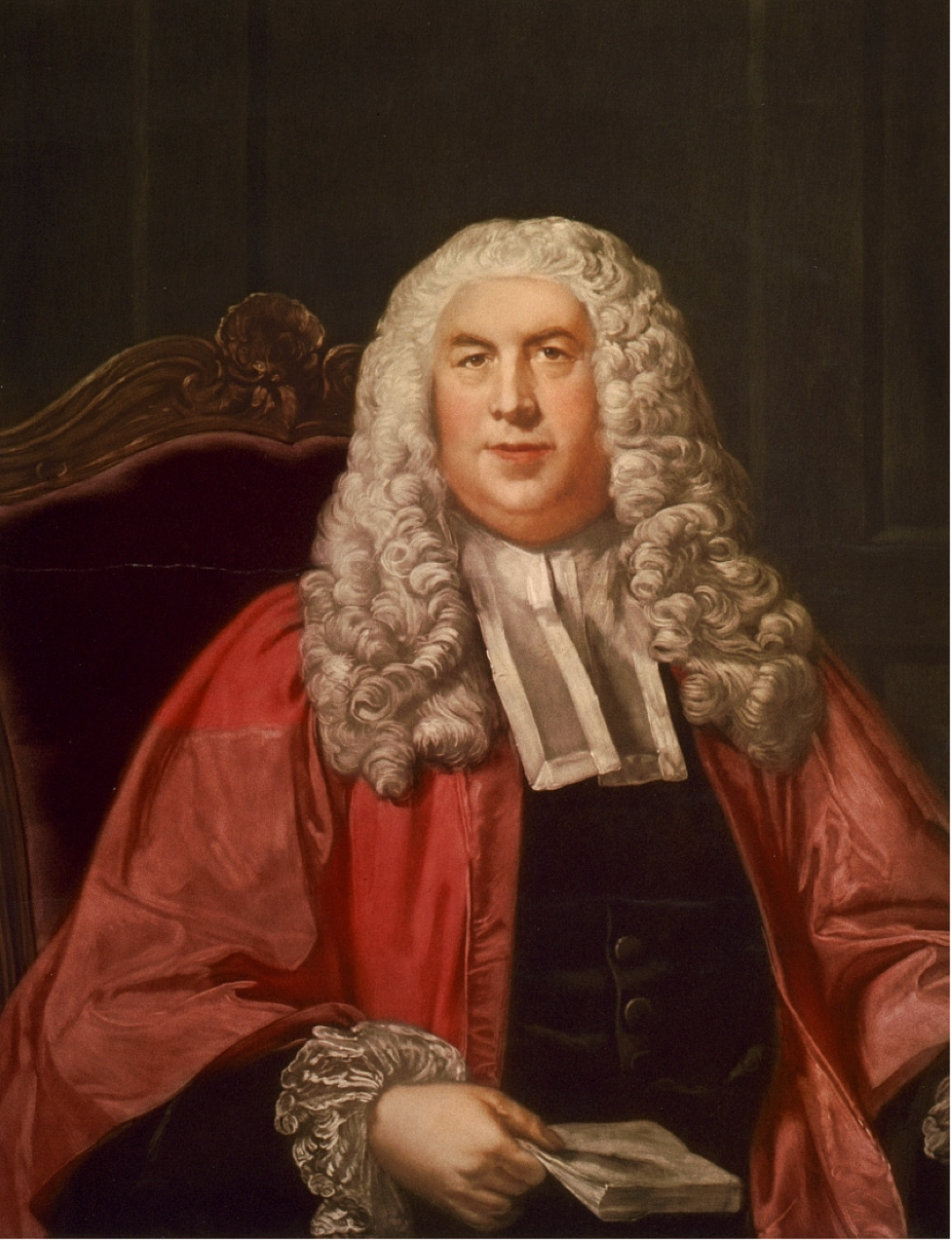
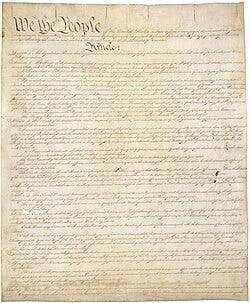
This matters for understanding the constitutional tradition the Founders created. American law inherited its foundations from English common law, and the most influential articulation of that common law for the founding generation was William Blackstone’s Commentaries on the Laws of England, published between 1765 and 1769. Blackstone (1723–1780) was Professor of Law at Oxford; his Commentaries became the standard legal textbook in the American colonies and remained so for generations. John Adams, Abraham Lincoln, James Madison, Alexander Hamilton, and Thomas Jefferson (with certain reservations), and many others read and cited it extensively, drawing directly on his ideas (while rejecting aspects they felt did not apply in the American context).[^6]
What Blackstone argued importantly — and what made his work so influential — was that English common law, which became the basis of American law, was itself grounded in a higher law: natural law, understood as divinely instituted. For Blackstone, law was not simply what legislatures enacted, or courts decided; it derived its authority from its conformity to a moral order embedded in creation by its Creator. The legal tradition the Founders inherited, and built upon in framing the Constitution, understood itself as answerable to a transcendent moral order—the same moral order that Scripture, and the psalms in particular, had been impressing upon the imagination of English-speaking Christians through daily sung prayer for generations.
Pope John Paul II drew on this same convergence when he addressed the United Nations in October 1995. He spoke of universal human rights “rooted in the nature of the person,” reflecting “the objective and inviolable demands of a universal moral law … written on the human heart.”[^7] Three days later, leaving America, he applied it directly to the American founding. The Declaration of Independence, the Constitution and the Bill of Rights, he said, “are grounded in and embody unchanging principles of the natural law whose permanent truth and validity can be known by reason,” and democracy serves what is right “when it makes the common good the end and criterion regulating all public and social life.”[^8] He had already given the warning that follows from this in Centesimus Annus: “if there is no ultimate truth to guide and direct political activity, then ideas and convictions can easily be manipulated for reasons of power,” and a democracy without values slides toward totalitarianism.[^9]
The scriptural formation provided by daily prayer and study in these translations will have been, I would assert, one of the principal channels through which that sense of ultimate truth was transmitted across generations and embedded in the culture.
The legal scholar and the psalmist were not describing two different things. What the one called the natural law, knowable by reason, the other praised as the law of the Lord: “an undefiled law, converting the soul” (Ps 19:7). St Paul joins the two when he speaks of a law “written in their hearts” (Rom 2:15).
For American Christians today — Catholic and Protestant alike — returning to the Coverdale Psalter is not a nostalgic exercise. Through it, we can enter directly into the imaginative and moral world shared by our English and American forebears, and draw on that inheritance to shape the world we live in now.
A Bridge Across Denominations
For Protestant readers who already use the Book of Common Prayer, all of this will be familiar ground. What may be less familiar is recognizing that, in doing so — praying the psalms in Cranmer’s thirty-day cycle, morning and evening — they are already doing what Catholics call the Liturgy of the Hours. The BCP Office is the Liturgy of the Hours in English: two principal Hours, the full Psalter covered monthly, canticles from the Old and New Testaments, scripture readings, collects, and intercessions. The structure is the same; only the name differs.
The Coverdale Psalter is therefore not a concession or a compromise. It is a resource that Catholic and Protestant Christians can pray together, standing in the same tradition, drawing on the same inheritance. For Catholics who wish to pray in a form accessible to their Protestant neighbors, spouses, or friends, it offers exactly that possibility. For Protestants curious about Catholic prayer, or wishing to pray with Catholics as Christian brethren, it offers common ground that is simultaneously Catholic and genuinely their own.
The monastic tradition preserved and intensified what was always a universal inheritance. The structured prayer of the Hours — psalms morning and evening, the voice lifted in praise and petition — is not a Catholic specialty or a Protestant recovery. It is what the Church has always done, in every century and in every language that the gospel has reached.
[^1]: Andrew Thornton Norris, The Spiritual History of English, Os Justi Press, 2024.
[^2]: John Henry Blunt, The Annotated Book of Common Prayer: Being an Historical, Ritual, and Theological Commentary on the Devotional System of the Church of England (New York: EP Dutton, 1903), reproduced in The Dunstan Psalter (Glendale, CO: Lancelot Andrewes Press, 2022), p. 293.
[^3]: Benedict XVI, Apostolic Constitution Anglicanorum Coetibus (2009), §5, III.
[^4]: Liturgiam Authenticam, §25, 28.
[^5]: cf Liturgiam Authenticam, §43, 59.
[^6]: I freely admit that I am not a constitutional expert and have not read Blackstone. I have relied on second-hand accounts online to validate this. For example: Blackstone and His American Legacy Albert S. Miles, David L. Dagley and Christina H. Yau The University of Alabama, USA; Ashbrook, The Free Speech Center, and the Cato Institute.
[^7]: John Paul II, Encyclical Letter Centesimus Annus (1991), §46.
[^8]: John Paul II, Address to the General Assembly of the United Nations, New York, 5 October 1995.
[^9]: John Paul II, Address at the Farewell Ceremony, Baltimore–Washington International Airport, 8 October 1995.
By Martin Falbisoner - Own work, CC BY-SA 3.0, https://commons.wikimedia.org/wiki/Special:Redirect/page/28359026