


The Psalms have always been at the heart of the Church’s prayer and her Liturgy. But why? What is it about these ancient songs that has made so many Christians over centuries view them as an indispensable part of prayer and worship?
St. Thomas Aquinas, writing in the 14th century, gives us one answer. In the prologue to his commentary on the Psalms, he explains what distinguishes the Psalter from every other book of Scripture:
“The material is universal, for while the particular books of the Canon of Scripture contain special materials, this book has the general material of theology as a whole. This is what Dionysius says, in book 3 of the Celestial Hierarchy: The sacred scripture of the Divine Songs (the Psalms) is intended to sing of all sacred and divine workings.”
And again, in the same passage:
“The Psalter is read more often in the Church, because it contains the whole of Scripture.”
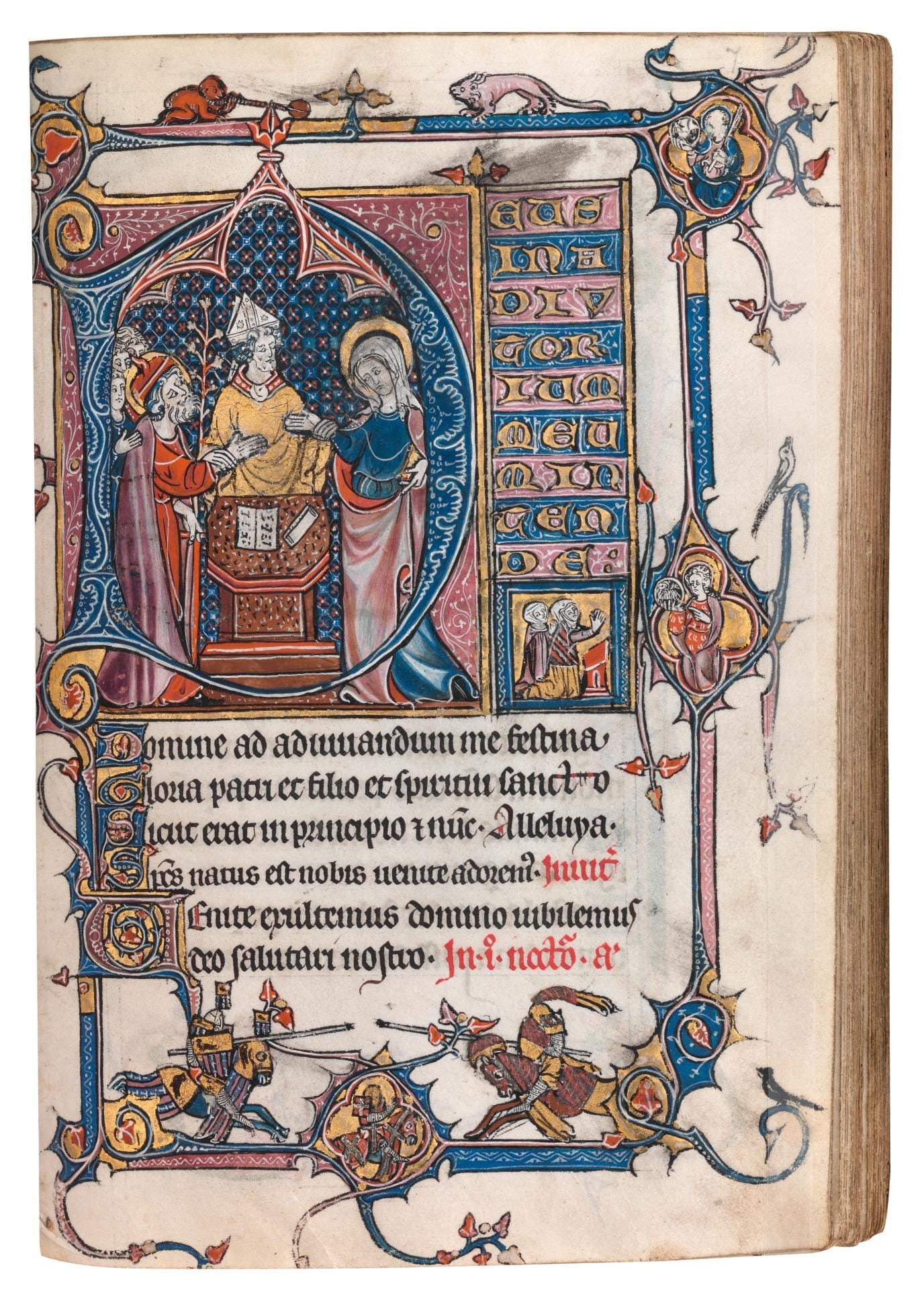
Response: Domine, ad adiuvandum me festina. (”O Lord, make haste to help me.”)
This is no exaggeration. The Psalms have long been interpreted, since well before St Thomas was living, as incorporating the history of salvation that preceded them, and anticipating what followed: the Incarnation, the Passion, the Resurrection, and the life of the Virgin Mary. They are the theological spine, so to speak, of the whole Bible. All the other books of Scripture contain something particular; but the Psalter contains aspects of everything. As the General Instruction of the Liturgy of the Hours (109) puts it: “The Fathers of the Church saw the whole psalter as a prophecy of Christ and the Church and explained it in this sense; for the same reason the psalms have been chosen for use in the sacred liturgy.”
This is why the Church has always placed them at the center of her daily prayer.
The Psalms as Poetry
Aside from their theological content, the way in which the psalms are written is important too. The Psalms are poetry, even in translation — and this matters enormously. They work on us not primarily through argument but through rhythmic poetic forms that communicate imagery and emotion.
Emotionally, they meet us where we are, engaging us by articulating the full spectrum of human experience, good and bad: joy, gratitude, confusion, anger, desolation, and despair. But when the hook is negative emotion, they do not abandon us to cope with it on our own and leave us there in despair. Working through the whole range of human feeling, they resolve everything — ultimately, and always — in God. For this reason, they can be thought of as offering a form of spiritual psychotherapy!
The imagery of the Psalms has shaped Western culture and literature far more deeply than many realize. Praying the Psalms forms the imagination from within. We receive their imagery, their patterns of thought, their habitual movement from lament to praise — and over time, without our noticing, they begin to shape the way we see everything.
At the most superficial level, many poetic phrases from the psalms have worked their way into everyday English vernacular. There are many examples from the psalms (and scripture as a whole), but to list just four as examples:
At one’s wit’s end. From Psalm 107:27, which describes sailors caught in a violent storm who “reel to and fro, and stagger like a drunken man, and are at their wit’s end”.
My cup runs over (or “runneth over”). From Psalm 23:5, using the image of an overflowing wine goblet at a banquet to mean having abundant good fortune or blessings.
Take someone under one’s wing. Drawn directly from the recurring avian imagery in Psalm 17:8, Psalm 61:4, and Psalm 91:4 (”under his wings shalt thou trust”), evoking a mother bird shielding her chicks.
Out of the mouth of babes. From Psalm 8:2 (”Out of the mouth of babes and sucklings hast thou ordained strength”), used whenever a young child makes an unexpectedly wise or candid remark.
We could go on. But this runs deeper than simply lifting phrases out of the psalms, or scripture, and using them in other contexts; through the repeated praying of the words, the general pattern of the poetic form of the language in which they are expressed as well as the truth they direct us to will begin to inform our language and our thought.
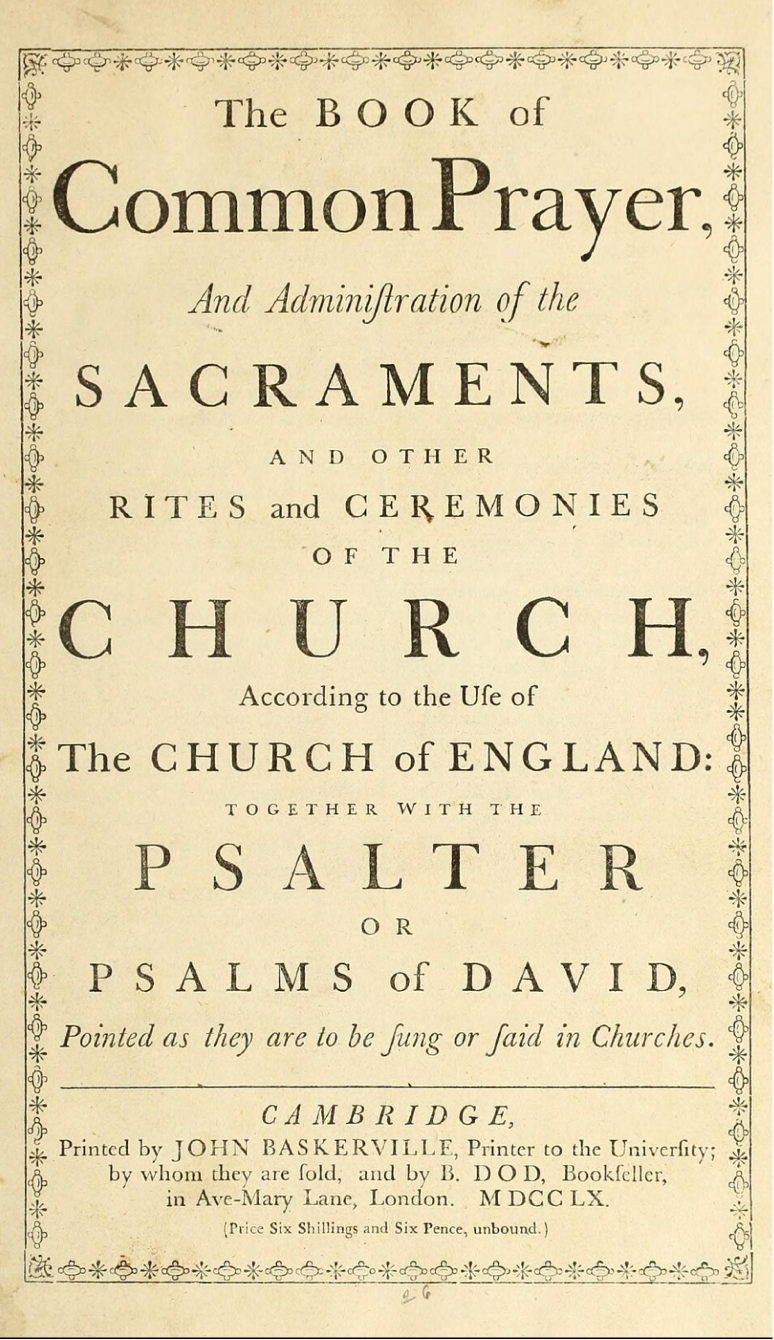
Furthermore, this formative power extends beyond individuals to whole communities. The Psalms shape the culture of any community that prays them together, because they stimulate the spiritual imagination and order it toward our ultimate end: God. This is not a secondary effect; it is one of the principal reasons they have stood at the center of communal worship from the Temple in Jerusalem to the present day. Through the regular prayer of the whole psalter by generations, and particularly in England and America in the form of the translation used in the Book of Common Prayer, the Coverdale Psalter, the collective imagination has been stimulated richly in myriad ways and has manifested itself in cultural forms that characterize the community or nation (more on that in a future posting). This culture, emerging from common values and a common mode of expression, helps establish a sense of belonging for those in that community, as they see something of themselves and of God in the forms around them and find them beautiful.
The Liturgy of the Hours: Why It Matters
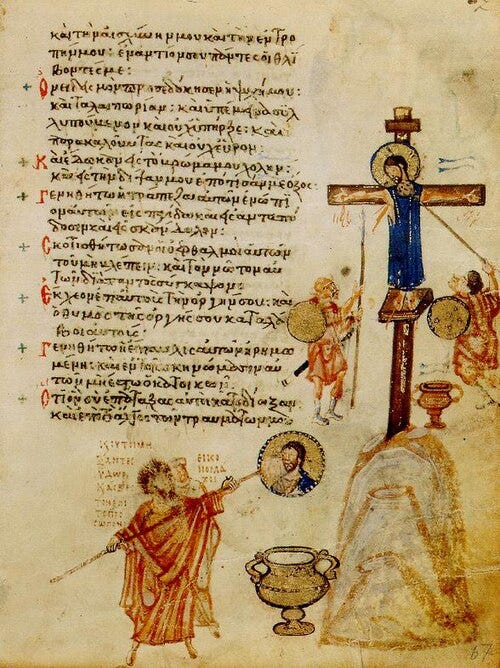
The Liturgy of the Hours is the Church’s ancient practice of sanctifying the day with prayer at fixed times: morning, evening, and the hours between. Its core has always been the Psalms, distributed across the days, weeks, and seasons of the year, accompanied by canticles from the rest of Scripture, and enriched over the centuries by hymns and the prayers of the faithful. Scripture — above all the Psalms — remains always at its center.
While we tend today to associate this practice with religious and clergy, historically it belongs to the whole Church. Lay people have always prayed the Psalms, participating in the Church’s worship in harmony with the ordained and consecrated religious. The monastic tradition preserved and intensified what was always a universal inheritance.
A word for Protestant readers — and particularly those from Anglican, Episcopal, or other traditions that use the Book of Common Prayer. You may not use the phrase “Liturgy of the Hours,” but if you pray Morning Prayer (Matins) and Evening Prayer (Evensong) from the BCP, you are already doing precisely what Catholics mean by that phrase. The BCP’s 30-day psalm cycle covers all 150 psalms in full — sung in two daily Offices, morning and evening — which is exactly the structure the General Instruction of the Liturgy of the Hours identifies as the “double hinge of the daily Office.” The Psalter of Musica Domestica is taken directly from the Book of Common Prayer (the 1928 revision of the Coverdale Psalter). The Catholic Church has formally recognized the legitimacy of this tradition as preserved in the BCP through Pope Benedict XVI’s establishment of Personal Ordinariates, called the ‘Anglican Ordinariates’ in common parlance, because they allow Catholics to worship legitimately in the characteristic and beautiful forms of those first established in the Anglican Liturgy after the Reformation in England. The official Liturgy of the Hours of the Personal Ordinariate of the Chair of St Peter, which covers the United States and Canada, called Divine Worship: Daily Office, uses this same Coverdale Psalter and BCP structure. The name differs; the prayer is the same. What is offered here builds on that shared inheritance and is intended equally for those who come to it from either tradition.
The most important function of the Hours is their relationship to the Eucharist in Sunday worship. The General Instruction puts it plainly: “The Liturgy of the Hours is an excellent preparation for the celebration of the Eucharist itself, for it inspires and deepens in a fitting way the dispositions necessary for the fruitful celebration of the Eucharist: faith, hope, love, devotion and the spirit of self-denial.” (12) It is the chanting psalms which constitutes the beating heart of the practice of the Liturgy of the Hours.
But the Hours do not only prepare us for the Eucharist; they also carry what we receive out into the rest of the day. The dismissal — Go in peace to love and serve the Lord — sends us into the world. The Hours are how we live out that directive: they refocus us, again and again, on the rhythm of God’s time, ordering our daily activities in relation to what we have received. The General Instruction calls this the sanctification of the day: “The purpose of the Liturgy of the Hours includes the sanctification of the day and of the whole range of human activity.” (11)
A traditional cycle of praying the entire Psalter over 30 days in Morning and Evening Prayer honors what the General Instruction calls the “principal Hours”: “In keeping with the ancient tradition of the universal Church, Morning and Evening Prayer form a double hinge of the daily Office and are therefore to be considered the principal Hours and celebrated as such.” (37)
For more on how to put this practice into effect — what books you need, how to structure morning and evening prayer, and how the psalms, canticles, and hymns of Musica Domestica fit together — see How to Pray the Bible in Song.
How to Approach the Psalms in Prayer
The Psalms can pose real challenges. Their structure is complex, their historical references sometimes obscure, and they do not always address God directly as personal prayer tends to do. The General Instruction of the Liturgy of the Hours (100-110) acknowledges this and offers three keys to unlock their riches.
The first is a scriptural understanding: knowing something of the historical and liturgical context of the Psalms helps unlock their meaning. This is part of what a practice of daily prayer, sustained over years, gradually gives you—as much through acquired familiarity of repeated prayer as through study.
The second is openness to the emotions and attitudes expressed. The Psalms do not filter or sanitize human experience. They include anger, protest, even the desire for vengeance against enemies. These are not embarrassments to be explained away; they are honest expressions of the human heart before God, and praying them honestly — including the uncomfortable ones — is part of what it means to bring our whole selves to prayer.
The third is the communal dimension. When we pray the Psalms in the Liturgy of the Hours, we do not pray only as individuals; we pray in the name of the Church, and in the person of Christ. We pray in the person of Christ because we are members of his Church, which is considered His mystical body. This concept of the Church as the body goes back to St Paul (e.g., Col 1:18; Rom 12:5; 1 Cor 12). It is considered mystical in that it is not his physical body. Reflecting this traditional understanding, Pope Pius XII wrote in his encyclical Mystica Corporis Christi in 1943 that the Church is Christ’s Body because He is its Head who founded, governs, sustains, and vivifies it; it is mystical because that life and union come from the uncreated Holy Spirit and transcend any purely natural or human association, while remaining a concrete, visible society.
This communal character of the psalms runs deeper still. The psalms establish a bond of solidarity — within the Church universally, through participation in Christ’s mystical body, and within any particular group of people who pray them together. This is part of why religious and monastic communities have always prayed the psalms in common: the shared prayer creates something we might call a mystical communion, a bond that is real but exceeds what any purely human fellowship can produce. Yet this effect is not exclusive to religious communities. It is present wherever Christians pray the psalms together — in a parish, a family, a small group of friends — because the bond formed is not primarily social but spiritual, mediated through Christ. And any of us can participate in it too!
This communal aspect explains why it is still good to pray the psalms even if the mood of a given psalm does not match our immediate emotional state. If Psalm 22 — “My God, my God, why hast thou forsaken me?” — does not describe how I feel this morning, I am still right to pray it: I pray it on behalf of those in the Church who are in that darkness, and I pray it as Christ’s own cry from the Cross. This communal praying gradually forms us in compassion and solidarity with the whole Body. We develop an understanding of suffering we have not personally experienced, and when suffering does come to us, we find the Church’s prayer already there to carry us through it and resolve it in Christ. This is what I meant by the ‘spiritual psychotherapy’ referred to earlier.
The Psalms and the Formation of the Mind
There is a further dimension to the Psalms’ formative work that is worth making explicit, because it touches something deeper than feeling or imagination: they guide the intellect itself.
Our faculty of discursive reason — the capacity to argue, deduce, and weigh evidence — is only as reliable as the axiomatic truths from which it starts. Those foundational axioms cannot themselves be established by discursive reason; they are prior to it. What grasps them is what the Scholastic tradition calls the intellectus—this is a faculty that belongs to what Scripture refers to as the spirit of man —by which a person simply sees what is true, as we see that something is beautiful. (For those who wish to know on ths I refer readers to The Vision of the Soul: Truth, Goodness, and Beauty in the Western Tradition, James Matthew Wilson, pub. Catholic University Press, 2013, Part 1.) The intellect does not arrive at first principles by argument; it recognizes them. And it is drawn to them because it finds them beautiful and good.
This means that the formation of the intellect — its ability to reach for what is true — depends on the formation of its sense of beauty. An intellect formed in the beauty of God will naturally incline toward truth, because it will perceive true things as beautiful and desirable. An intellect formed on lesser beauties will reach for lesser things, and will not know truth to the same degree, however rigorous its reasoning that arises from them. If you start in error, you are likely to end in even greater error!
The Psalms, prayed regularly and especially sung, offer precisely this formation of the spirit. They impress upon the soul a sense of beauty ordered to God — not as an abstract ideal but as a living encounter with the One who is beautiful. Working together with and complementing powerfully that most powerful encounter with Christ present in the Eucharist, the Psalms form the intellectus from within, so that over time the person who prays them is not merely persuaded of the truths of faith but drawn toward them naturally, finding them luminous and desirable.
Over time, through regular prayer of the Psalms—especially when they are sung—the imagination is simultaneously stimulated, tutored, and ordered. We are drawn toward Christ as the still center of all Liturgy. The effect, to the extent that we cooperate with grace, is that we become more fully ourselves: creative, joyful, and capable of participating, however humbly, in God’s continuing work in the world.
A Practical Invitation
For those who want to understand more about how to structure this prayer in practice — how to draw on the Psalms and the canticles of Scripture in a daily Office, with or without an existing breviary, using Musica Domestica or simply your Bible — see my other article, How to Pray the Bible in Song.
The Psalms are our inheritance. The Church has prayed them continually and continuously as part of her public worship. We are all invited into that prayer—not as observers, but to become a voice within it; that is, one who is simultaneously called and adds to that call to others.