Reviving Growth: A God-Centered Model

What can businesses do to regain their equilibrium after the financial meltdown?  The standard responses to tough times, such as reducing staff, pruning the product range and balancing budgets may cut costs but they do not stimulate the profit-generating activity needed for sustainable recovery. In fact, these actions often contribute to the downward spiral by degrading the very assets – the resources, projects and people – needed to grow revenues and profits. What else can be done? A better alternative comes from the organizational principles that form the core of the Christian tradition and have been practiced, for example, by Benedictine monasteries. These principles are based on the idea that God is the Creator of all that is good. Profit is the end to which a good business is ordered, so the activity of any business will be improved if it can tap into a set of principles that open it up to this source. While the effectiveness of these principles can by explained in the context of Christian faith, one does not need to be a Christian or even have a faith in God to follow them and reap the benefits.

Turn to Creative Practices

The example of the Benedictine monastery is a good starting point for exploring how to restart growth in our businesses and world economy. St Benedict developed his Rule for monastic life in the 6th century AD and Benedictine monasteries have been flourishing over the centuries ever since. Some will be aware from their history lessons of the important role that Benedictine monks played in the preservation of culture and the intellectual life in the early middle-ages. The Rule of St Benedict required that monasteries were required to be financially self-sufficient. For this reason, the Benedictines turned their minds to trade and commerce as well as to prayer and the intellectual life. They were so successful at this that sometimes their assets were eyed with envy. Henry VIII of England dissolved them in order to seize and strip them of their assets. You might say that the Benedictine monastery is the longest existing and most successful business franchise in history.

What did the Benedictines do so well? While there is very little mentioned explicitly about trade in their rule; St Benedict suggested for example that wherever possible, the monasteries should aim to sell the goods they produce at slightly lower than market price so that there should be less temptation to greed and so that ‘in all things God can be glorified’. The monasteries were good at business because their activities were deeply infused with Christian principles and therefore focused on people and the relationships between them. Underlying these relationships is the creative principle of love – of God first, but also of neighbor and of all of God’s creation. By ordering their activity so that it was in harmony with the divine order, they sought to act in loving service to each other and all others with whom they related, both inside and outside the cloister.

Today we view this type of business model superficially as one of superior customer service or in management-consultant speak as ‘quality-based management’. But it involves something deeper -- trade and commerce practiced in a loving, sustainable way. When all people who are impacted upon by the company are genuinely valued, including employees, customers, and suppliers or service providers, then the company is tapping into the creative and productive force that generates revenues and profitable growth. This principle in business was recently highlighted by a modern-day Benedict – Pope Benedict XVI – in his latest encyclical Love in Truth as one of ‘superabundance’. The result of this superabundance, he describes, is a sustainable profit that is naturally in harmony with the spiritual and material well-being of employees and their families, with society as a whole, and also with the environment. Put in another way, all parts of business are in harmony with the common good.

The Secret of Growth – Covenantal Relationships

For all that companies tell us how they care about their employees and customers, the nature of their business activity often says something else. If their business relationships are in fact governed only by the alignment of self-interest, then the message transmitted is just that – I am driven by self-interest – thus, the customer or employee feels treated as no more than a means to profit. If, on the other hand, the relationship is governed by the striving for mutual self-sacrifice, then the impact will be the opposite and people very often respond by pulling together and giving to the full. The former is termed contractual, the latter as a covenantal relationship. It is the covenantal relationship that is genuinely and fully productive. This is not to say that contracts are unnecessary. They are; however, they should be seen as defining the minimum requirements in an employee relationship, management contract, business partnership, or merger and acquisition.

Those companies that achieve sustainable growth are the ones that give more in their relationships. Often the things given are those that can be given freely -- an attitude of care, courtesy and genuine concern for those with whom they deal expressed in a myriad of ways. It is most often seen working effectively in entrepreneurial start-ups and in family and private firms. When the covenantal element is present in organizational relationships, employees can be heard to say, “I feel part of something good,” “I love my job,” or “I love our customers.” They, in turn, give more, ask less, and work longer hours on projects, so as to make the overall organization successful – not because they are forced to, but because they want to. Similarly, customers can be heard to say that they buy from or work with the company because they feel valued and that they can trust them. The covenantal principle of giving beyond the minimum requirement was also referred by Pope Benedict in the same encyclical. He called it ‘gratuitousness’.

When the covenantal aspect is absent, we see the weakening of businesses, even when they have a viable business model (considered in purely economic terms). This results, for example, in the familiar pattern of CEOs and top executives siphoning-off excess pay and firing lower-paid workers thoughtlessly; in theft at all levels of corporate intellectual property, equipment and other assets; and even litigation.

Recovering a Sense of Order and Harmony

A covenantal model of business relationships encourages and promotes an atmosphere of creativity and productivity. It generates more ideas and better ideas and is better equipped to see those ideas implemented through to the generation of revenue. The source of this creativity and productivity is supernatural. It is the principle of love that is made present whenever a relationship is, at least in part, covenantal. Love is always fruitful. If God is Love, then where there is love, God is present also. We are used to seeing this fruitful love in the context of the family, where the love between the father and the mother gives us out of nothing, so to speak, the gift of children. Love, in the context of the business, is creative too, but is ordered to those things that a business should create. Entrepreneurs come together to turn their ideas into products and services directed towards profit.

Developing Covenantal Relationships

How do we develop these covenantal relationships? In any company, permeating through and sitting alongside the formal and necessary managerial reporting structure, is the naturally developing social network of business acquaintances and friendships. These are the productive relationships that are to be encouraged, and when they flourish, pay back financially at high multiples. This applies as much to small businesses as large ones. In fact the power of the Internet means that its accessibility and the multiples seen are greater than ever. The key to developing this supernatural productivity lies in identifying and developing these naturally occurring covenantal relationships. It can be done, but it must be done with care and sensitivity. It must be built up relationship by relationship, and in such a way that the integrity of the whole organization is not compromised. The ideal upon which this is based comes from consideration that God loves each person fully as a unique individual.

The Way of Beauty and Free Enterprise

When a business is built around the covenantal principle, its products and services will attract with the radiance of love. The common word for this radiance is beauty. Beauty can be seen as much in a gracefully offered service as in a well-designed piece of equipment.

The free market is the mechanism which best nurtures covenantal relationships and so best enables commerce to generate growth, profit and wealth while benefiting society. Freedom is the operative word here, as all that is given in this context must be given freely. Most would accept that the freedom of the market should be tempered, however, by moral considerations. These moral considerations are not really restrictions on freedom; rather, they point to the right exercise of freedom for the good of all. We say also that there is another set of useful guidelines: those of harmonious covenantal relationships – the principles of beauty. The moral and the beautiful do not restrict profit. On the contrary they increase it by directing us, when faced with an array of choices, to the source of sustainable profitability in harmony with creation.

This is the Way of Beauty, the via pulchritudinis, recently described by Pope Benedict XVI as a principle of harmony that points to God. In his address to artists in Rome last year, he described this as one of the ways, ‘perhaps the most attractive and fascinating’, to be able to find and love God. In the context of business, it is also the path of creativity and productivity. The reason that the Benedictines knew how to apply this principle was that beauty is a principle the apprehension of which can be taught. The study of the order, symmetry, and patterns in creation as reflections of the divine order was part the traditional liberal arts education of the Christian medieval world.

When we do something beautifully we are moving on that path to God that is in harmony with the natural order. A scientist does this when proposing a new theorem that is simple and symmetrical – and during their reviews, peers will often use the word ‘beautiful’ to describe the solution. The idea for the solution comes from their intuitive perception of natural beauty. Because beauty is apprehended intuitively, an education in beauty develops the intuitive faculty. It creates possibilities that previously didn’t exist for us. When we conduct business beautifully, we tap into the supernatural principle of abundance in harmony with the family, society as a whole and the environment (because God is the Creator who made these things too). Everyone gains.

This holistic way of thinking offers genuine hope for the future and it can be taught to anyone who wishes to learn it. It has begun to be used successfully by businessmen and businesswomen today to restart growth and sustainability in our businesses and world economy.

This article was written in conjunction with John G. Carlson, CEO of System Change, Inc, a management consulting firm.  He has held executive positions at Tessera Technologies, General Instrument and other firms.


The Principles of a Traditional Art Education for Today

When I first met the president of Thomas More College of Liberal Arts, in Merrimack, New Hampshire, he asked me to describe my ideas for an art school that could contribute train artist to serve the Church. This was relatively easy for me to do. Inspired by John Paul II’s Letter to Artists,  I had been on a mission for several years to establish such a school and so describing it was something I had done many times. I described how I would give a training that was rooted in traditional principles, teaching an understanding of what they were doing, so that the tradition becomes a living tradition. A living tradition can develop and respond to the needs of the time without compromising on the timeless principles of beauty, truth, goodness and unity that underlie all genuinely Catholic art. This would enable us I said, to produce art for both sacred and profane settings, and contribute to the establishment of the art of Vatican II. This will evoke the art of the past, yet be distinct and in many ways of a previously unimagined in style. It will characterise our era as beautifully and distinctly as the Romanesque, the Gothic and the Baroque did theirs.

The aim of such an education are threefold: to train in the practical skills; to increase in the individual an ability to apprehend beauty; and to open the individual up to inspiration from God through a disciplined training that looks to Masters for guidance.

Following traditional patterns of art training, there are five aspects (in no particular order):

  1. The study of past Masters of the traditions of Christian art – imitating them with understanding so that the students learn a visual vocabulary of art. In his Spirit of the Liturgy, Pope Benedict XV cites the icongraphic (of which the Romanesque is a Western variant), the gothic and the baroque ‘at its best’ as authentic liturgical forms.
  2. The direct observation of nature: this is the study of the work of the greatest Artist.
  3. Practice and study of abstract art in the Christian tradition and the principles of proportion and compositional design (sometimes called ‘sacred geometry’).
  4. Learning the theory of Christian art – an understanding of the Catholic worldview and the Church as it relates to art (theology, philosophy, liturgy linked to form and content) so that they understand all that they are practising.
  5. Finally, the development of a spiritual life that will open the student up to inspiration (should God choose to send it): artists are unlikely to be able to produce work that inspires prayer and devotion in others, if they are not practised in using visual imagery in prayer themselves.

Students would have an exposure to each of these elements. As study progresses, they would specialise in one of the artistic traditions listed, or into the development of new art forms consistent with the principles they have learnt and as required by the Church.

The president listened without interruption and then asked me a further question. What about those who aren’t going to be artists, can you provide a training that could be part of the core liberal-arts programme as an education in beauty?

I had never been asked this before. I stopped for moment to think before responding, then realized that this really was possible. The traditional artistic training not only taught people the skills, but also the ability to apprehend beauty. This aspect, I was certain could be taught to all and the result would be a transformation of the individual, for to open up someone to beauty, is to elevate their souls to God and to increase their capacity to love what is good. There would be change in emphasis, the practical elements would be there, but those aspects that would not be intimidating to someone who did not consider themselves good at art would be brought to the fore.

The result of this meeting was that I was invited to come to TMC to implement exactly what I had described. The first stage was to be the programme for undergraduates; this would be followed by the gradual identification of gifted artists from the undergraduate body, who would form the core of the specialist art school. I would be looking for those who not only wished to be artists, but were fired by the vision of the college and wanted to play a part in creating the ‘new epiphany of beauty’ called for by Pope John Paul II in his Letter to Artists.

This Fall, Thomas More College starts its Way of Beauty programme to be taken by all freshman (and offered as an elective for other students). It is a course that is, as far we know, unique in the world. It draws on the principles articulated by figures from the early Church, such as Augustine and Boethius and which have been drawn to our attention recently by John Paul II and especially Benedict XVI. What I had described in my interview were the principles of the quadrivium, the ‘four ways’ (the higher part of the traditional seven liberal arts).

The traditional quadrivium is essentially the study of pattern, harmony, symmetry and order in nature and mathematics viewed as a reflection of the Divine Order. When we perceive something as reflecting this order, we call it beautiful. For Christians this is a source, along with Tradition, that provides the model upon which the rhythms and cycles of the liturgy are based. Christian culture, like classical culture before it, was also patterned after this cosmic order; this order which provides the unifying principle that runs through every traditional discipline. Literature, art, music, architecture – all of creation and potentially all human activity – are bound together by this common harmony and receive their fullest meaning in the liturgy. This course teaches a deep understanding of these principles and how they link the liturgy, ie the cult, to its culture. When we apprehend beauty we do so intuitively. So an education that improves our ability to apprehend beauty develops also our intuition. All creativity is at source an intuitive process. This means that professionals in any field would benefit from an education in beauty because it would develop their creativity. Furthermore, the creativity that an education in beauty stimulates will generate not just more ideas, but better ideas. Better because they are more in harmony with the natural order. The recognition of beauty moves us to love what we see. Such an education would tend to develop also, therefore, are capacity to love and leave us more inclined to serve God and our fellow man. The result for the individual who follows this path is joy.

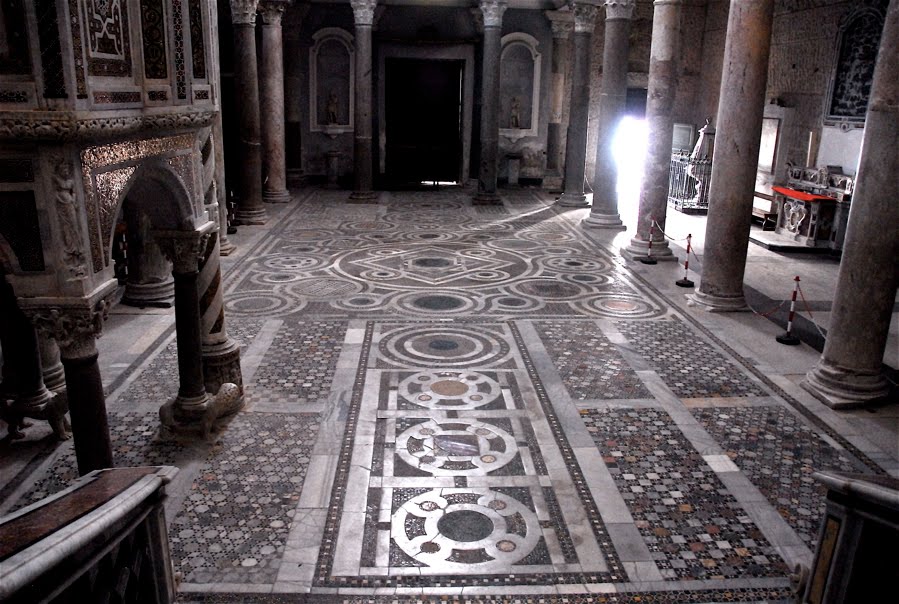
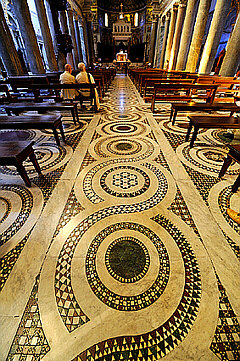
This course not only teaches the students an understanding of these principles. It teaches them how to apply them. The course is directed towards the creation of beauty as well the appreciation of it. We will chant the Liturgy of the Hours, relating not only the structure of the Office itself to the Mass and the Heavenly Liturgy, but the form of the music to the harmonious principles that are replicated in the visual arts as, for example, the abstract geometric art of the Cosmati pavements of the middle ages; and used as principles for compositional design in figurative art. They will construct geometric patterns that reflect this

The practical aspect is not an extra bit of light-hearted fun tacked on to the end of the course. It is considered a vital component. It is the practical creation of beauty that effects the transformation in the person. First, it develops the habit of conforming the whole person to divine order, which is impressed by degrees upon the soul. Second, it is exercising the creative aspect of the intellect in us. We are made by God to be with Him in heaven, partaking of the divine nature. God’s intellect is purely creative intellect – if He thinks something it is. The creation of beauty is therefore a temporal step into our heavenly destiny and so directs us on to the path to heaven. Third, when beauty is created it is a gift for God and directs the hearts of others who behold it to God, bringing glory to Him. Therefore it is an act of love. This is the most powerful transforming principle of all.

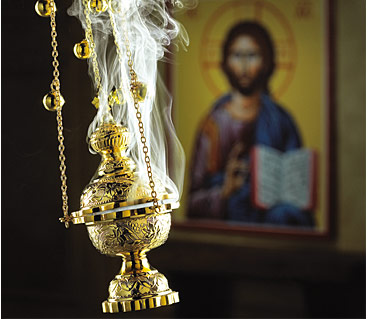
The benefits to the person are present most powerfully in the Liturgy, but it is important that there is an experience also of the creation of art other than the praying of the liturgy also. This demonstrates to the students how these liturgical principles are made present in the wider culture. Even the form of the Liturgy of the Hours we are learning is developed to emphasise this link between the culture and the Liturgy. It was first developed at the Maryvale Institute, in Birmingham, England, as part of their art theory course, Art Inspiration and Beauty from a Catholic Perspective, where I taught before moving to the US. The students learn to involve the whole person in the prayer, body and soul, so that it is a greater gift to God and they are fully open to inspiration and God’s grace. This means that we engage the senses directly with sacred imagery, chant, incense and consider bodily posture. This is a simple and beautiful form that draws on the tradition of the Church.

And what about the art school? It was felt that to make all students learn to paint icons was not a good thing, as some would be intimidated by this. There will be elective classes in icon painting and drawing throughout the year so that those who are interested can develop their interest. We will be offering a summer school next year open to people outside the college as well and that offers a condensed form of the Way of Beauty in a week (which like the undergraduate class, is for artists and non-artists).  Artists would wish to take in addition a two-week course in iconography and a two-week course in academic drawing, as taught in the ateliers of Florence.

I arrived at Thomas More College in January this year and I have been surprised (and very pleased) by the interest that the appointment of an Artist-in-Residence has created. There have been numerous newspaper features and even a TV appearance (I was invited to talk about the TMC programme on EWTN in late spring). This demonstrates to me that the is a great desire in the Catholic world to see once again a distinctly Catholic culture of beauty united to the liturgy. In fact as a result of this I have had several enquiries from people looking to study art full time who are well grounded in the Faith and committed to the wider vision, so much earlier in the development process than I had originally planned, I am even expecting our first full time art student to begin this Fall.


How to Make and Icon Corner And Create a Domestic Church

Beauty calls us to itself and then beyond, to the source of all beauty, God. God's creation is beautiful, and God made us to apprehend it so that we might see Him through it. The choice of images for our prayer, therefore, is important. Beautiful sacred imagery not only aids the process of prayer, but what we pray with influences profoundly our taste: praying with beautiful sacred art is the most powerful education in beauty that there is. In the end this is how we shape our culture, especially so when this is rooted in family prayer. The icon corner will help us to do that. I am using icon here in the broadest sense of the term, referring to a sacred image that depicts the likeness of the person portrayed. So one could as easily choose Byzantine, gothic or even baroque styles. The contemplation of sacred imagery is rooted in man’s nature. This was made clear by the 7th Ecumenical Council, at Nicea. Through the veneration icons, our imagination takes us tothe person depicted. The veneration of icons, therefore, serves to stimulation and purify the imagination as a means of imaging God’s inspiration. This is discussed in the writings of Theodore the Studite (759-826AD), who was one of the main theologians who contributed to the resolution of the iconoclastic controversy.

In emphasising the importance of praying with sacred images Theodore said: “Imprint Christ…onto your heart, where he [already] dwells; whether you read a book about him, or behold him in an image, may he inspire your thoughts, as you come to know him twofold through the twofold experience of your senses. Thus you will see with your eyes what you have learned through the words you have heard. He who in this way hears and sees will fill his entire being with the praise of God.” [quoted by Cardinal Schonborn, p232, God’s Human Face, pub. Ignatius.]

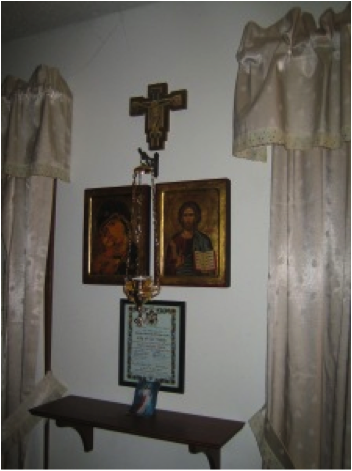
It is good, therefore for us to develop the habit of praying with visual imagery and this can start at home. The tradition is to have a corner in which images are placed. This image or icon corner is the place to which we turn, when we pray. When this is done at home it will help bind the family in common prayer.


Art, Grace, Education and the Beautiful Business

As an artist, I am aware of the need for inspiration and creativity in my work. Traditionally, artistic training was one that was designed not only to teach artists the skills of their craft, but to develop in them the disposition to be open to God’s grace.

In fact all students, not just artists, can benefit from being open to God’s grace in their work. By examination of the structures of the colleges of Oxford University one can see that traditionally Catholic educational institutions were structured so that they facilitated the flow of grace, by ordering all their activities liturgically. That is, they lived by the rhythms and patterns of the liturgy, so that their activities both ushered in grace and were open to guidance from it, for the good of all. Even the design of the buildings was done so as to assist in the liturgical life.

By extension this leads us to consider the possibility of ordering any social institution liturgically, so that it can flourish as God intends. This article considers particularly business. Even a business can be ordered liturgically, joining all of creation in praising the Father and becoming a portal of grace. Such a business would support the human person fully – materially and spiritually – and be a beacon of truth and beauty that assists man in his mission of worship of God, charity to mankind and the perfecting of creation.

Part of my study as an artist was in Florence, in Italy, where I was trained in the academic method of drawing and painting.

The academic method is named after the art academies of the seventeenth century. The most famous early Academy was opened by the Carracci brothers, Annibali, Agostino, and Ludivico, in Bologna in 1600.  Their method became the standard for art education and nearly every great Western artist for the next 300 years received, in essence, an academic training. Under the influence of the Impressionists the method fell out of favour so that by 1900 nearly every school teaching the academic method had closed down (the US academies in, for example, Boston, lasted a bit longer).

Within the last 30 years there has been a small but growing re-establishment of the academic method in both Europe and America. The founder of my school was trained by an octogenarian in the 1970s who had studied in Boston about the time of the First World War. By the time of my attendance there in 2005, there were four schools in existence in Florence, each teaching a similar form of “classical naturalism.”

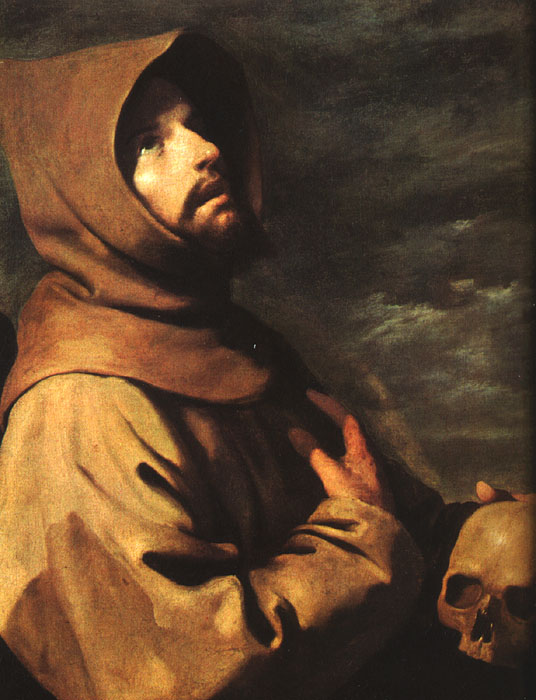
Along with all of the students who attended, I am immensely grateful for the excellent education in technique and the stylistic elements of seventeenth-century Baroque naturalism. Despite this, pretty much everyone at this atelier agreed on one thing: although there were some good contemporary artists, no one in the modern era was producing work of anything like the quality of the old masters (Velazquez was the standard we aspired to). This realization cast a cloud of pessimism over the ateliers of Florence. Something seemed to be limiting the standard of the students. If classical naturalism was to become a mainstream art form again, the students would have to be getting steadily better and surpassing the work of their teachers, but it didn’t seem to be happening.

The pessimism was exacerbated when one looked at the work of the students once they had left these schools. Some were happy doing precisely what they had been taught. They could make a good living as portrait painters, or paint traditional still lives of high enough quality to sell in the alternative “realist” art market of the US. There is a valid place for this sort of art today, in my opinion, but it would never be the basis of the required “new epiphany of beauty” called for by John Paul II.  Others who left felt the need to use what they had learnt and develop it. The mark of any truly living tradition is an evolution of style that nevertheless remains faithful to the timeless principles that define it. The problem was that no one seemed to know how to change anything without eroding what we had learned.

I saw a number of people struggling with this. They might introduce some exaggerated and expressive brushwork, or some heightened colour. Guided only by their own gut feeling of what was right they travelled on their own little personal journey through the artistic styles of the later centuries – Romanticism, Neo-classicism, Impressionism, Fauvism, and Expressionism. Some settled for a style somewhere along the way, perhaps with an expressionist or a fauvist influence dominating. Others, sometimes the most talented, knew this was a path that was leading them to the place that they had sought to escape, and after a struggle gave up painting altogether in disillusionment.  It seemed that whatever was being given to us contained the same fatal flaw, whatever that might be, that caused the tradition gradually to decline and then finally to collapse when challenged by Monet et al. 100 years before.

How could students break out of this downward spiral?

It seemed to me that there were two things missing in our education. The first was a lack of full acknowledgement and hence limited understanding of the fact that the style we were learning was the product of a Catholic worldview.  With a few notable exceptions, the old masters, even if not conventionally Christian, accepted the worldview that the stylistic elements of Baroque art were developed to communicate.


The second reason is one that was apparently ignored completely, and yet it is something that is important in all education: the necessity of grace, without which wisdom and virtue cannot be developed.  If Velazquez was the standard we were aiming for, then something must have allowed him to be greater than his own teacher.  Perhaps the answer lay not just in Velazquez himself, but in the education he received.

Velazquez’s teacher was his father-in-law, a Spaniard called Francisco Pacheco.  He published an instruction manual for painters called El art de la pintura in 1649.  This articulated what an accepted authority on the Baroque, John Rupert Martin, called “the clearest definition of the transcendental significance of Baroque naturalism.”  Pacheco clearly sees the role of the artist as being to imitate nature in order to bring glory to God.  In doing so, he asserts, he will be practising a virtue.  Therefore the act of painting will serve to lead both artist and those who see the painting to “contemplation of eternal glory, and as it keeps men from vice, so it leads them to the true devotion of God our Lord.” In doing this the artist will achieve his principal goal, which is “to achieve a state of grace through the study and practice of his profession.”

Velasquez’s training was as much an education in humility and apprehension of beauty as an education in skill. It was designed to open him up to any inspiration that God might choose to give him. He was taught to study nature and the work of recognised masters with self-discipline and under the careful eye of his teacher, who corrected him along the way. But if the process of education were limited to passing the knowledge of the teacher on to the student, then because no teacher can hope to pass on everything he knows to his pupil, it would necessarily involve a diminution of knowledge. Clearly in the case of Velasquez something had enabled the pupil to surpass his teacher. The obvious answer is sheer talent – the genius that enables one person to excel another. We live in an individualistic age, and the post-Renaissance obsession with artistic genius makes it hard to conceive of any other factor.  But talent is a gift from God, and not necessarily the most important in producing truly great work. Artistic inspiration itself is a gift, as any artist will tell you.  The beauty of nature is a gift, when we recognize that all things come from God.  The deeper answer, therefore, is grace.  Velasquez surpassed Pacheco partly because of how he responded to the grace of God.

Of course, not every great artist is a Christian, or even a virtuous person. God inspires whomsoever he pleases. But when it comes to opening ourselves to the grace of God, participation in the sacramental life of the Church is likely to help dramatically. “All true human art is assimilation to the artist, to Christ, to the mind of the Creator…. When a man conforms to the measure of the universe, his freedom is not diminished but expanded to a new horizon.” ((Joseph Ratzinger, The Spirit of the Liturgy (Ignatius Press, 2000), 153.)) I do not know if Velasquez was as fervent a believer as his teacher, but as part of the court of seventeenth-century Spain, he will at least outwardly have been a Catholic conforming to the liturgy of the Church. Through that liturgy we can become attuned to the deepest of all sources of inspiration.

How the consideration of grace can affect the organisation and physical structure of an educational institution

The example of Velasquez and his education in beauty could provide an important lesson to anyone seeking to develop a method of education – and not just the education of artists.  An education in the perception and making of beauty is inevitably an education in opening up to inspiration, an education of the intuitive faculty that gives us insight into reality. It is hard to see that there is any academic discipline (or for that matter any human activity) that cannot be improved by a development of the intuitive faculty. The scientist tests his hypothesis in a step-by-step application of reason by the experimental method, but the hypothesis itself is more often than not the result of intuition.

Once one accepts the importance of grace it can affect the design of the institution right from the curriculum through to the layout of the buildings and the living arrangements, as well as, most obviously, the sacramental life. As the liturgy is the source and summit of human activity and all aspects of human life can be ordered to it.

The college system at Oxford University can be used to illustrate this. From the thirteenth century, residential educational institutions were founded by the new orders of friars, the Dominicans, the Franciscans and the Carmelites as well as the older monastic orders such as Benedictines and Cistercians and the bishops. The community was infused with the rhythm of the heavenly liturgy through participation in the Mass and the Divine Office. The full Office was sung each day, if not by the whole community each time, then by some of its members on behalf of everybody within it.

The liturgy is a source of grace for those who pray it, and by participation in the liturgy, the person becomes a portal of grace that benefits those around him too. In these colleges the whole community would have benefited from living in accordance with a divine rhythm, making the whole greater than the sum of the parts. The sense of a community was reinforced by the practice of communal eating. Eating in community is a quasi-liturgical event echoing the Last Supper, which binds together a family as much as a college. It is interesting to note when looking at the colleges of Oxford how much energy was devoted to making the whole college a beautiful place and how nearly as much energy went into making the Dining Hall beautiful as was used for the Chapel. The library was also created as a room of beauty in order to create a room of inspired learning. When designing the buildings, it was not left arbitrarily to each architect to come up with something original. The proportions of the building followed traditional ideas of sacred geometry that created a physical manifestation of liturgical principles. ((The Way of Beauty; Let the Form Conform; The Cosmic Liturgy and the Mind of God; Number; Harmony and Proportion))

As the University expanded it did so mainly by the establishment of new colleges, rather than by the growth of existing ones. This meant that it remained a series of communities so limited in size that each was able to pray and eat together regularly. Even after the Reformation in England, the liturgical rhythm continued in Oxford in form (if not fully in substance) through adherence to daily Anglican offices and services. Even today Mattins and Choral Evensong are sung daily in some colleges during term time (even though many students never attend); and students are required to attend formal meals in hall.

During my four years as a student at Oxford, which was long before my conversion to Catholicism, I did not even once go into the college chapel. Nevertheless I can now see how profoundly I benefited from the fact that others sang the Liturgy of the Hours on my behalf. In this sense I was a freeloader, enjoying the benefits derived by the work of others. It was after I left Oxford that I suffered. Without the spiritual support of the community (although I wasn’t aware initially that this was the primary reason) I was lonely. Although I had people around me, at work and where I lived, I had not developed the good habits that enable me to be the leaven that could create fellowship around me. It was not until I became a Catholic that I understood that fellowship comes first from the Holy Spirit and that I can receive that fellowship through participation in the sacramental life and especially the liturgical rhythm of the day, even if no one else around me is doing so. It ushers in the Spirit that binds people together. It turns a group of people into a community (liturgy is worship of the Father, through the Son, in the Spirit and is what the other sacramentals and sacraments are supporting).

Things have changed since the England of the Middle Ages. There could hardly be greater contrast between the founding of Christ Church College in Oxford by Cardinal Wolsey in 1524, with all the wealth of the sixteenth-century Church at his disposal, and the establishment of the Catholic colleges in the last 30 years or so. For all the differences, though, the success of each institution may be attributed to some basic structural considerations.  Essentially, an educational community that succeeds in delivering a good education will be one that facilitates – or at least does its best not to block – the flow of divine grace. We tend to think of education as a process that connects teachers and students.  But unless God is somehow present as well, as the third factor, the community will ultimately fail to deliver an education in the fullest sense of the word. This in no way replaces the usual consideration of what might constitute the optimal combination of lectures, seminars, tutorials, exams, and coursework. These are vital matters too, off course. Rather, they enhance them further, for without changing them materially they make God present within them.

In my personal experience, I have seen these ideas implemented to great effect at the Maryvale Institute, in Birmingham, England and now at Thomas More College of Liberal Arts in Merrimack, New Hampshire. At Thomas More College, through the Way of Beauty programme we explain how the daily Mass, the Liturgy of the Hours, and college devotions ordered to the liturgy, such as the rosary, weekly exposition and the nine, monthly First Fridays of the devotion to the Sacred Heart are there for sound educational as well as religious reasons.

Institutions other than college – the beautiful business

If we accept the idea that we can order educational institutions in such a way that they encourage the flow of grace, then it should be possible to extend the principles to other institutions too. If recent events are anything to go by, commerce is an area which could benefit from grace. So can a business be ordered liturgically? Is it worth doing so even if we can? I believe that the answer to both questions is yes. The following are my first personal thoughts on the subject.

The Fathers of Vatican II said that ‘for well disposed members of the faithful, the liturgy of the sacraments and sacramentals sanctifies almost every event in their lives; they give access to the stream of divine grace which flows from the paschal mystery of the passion, death, the resurrection of Christ, the font from which all sacraments and sacramentals draw their power. There is hardly any proper use of material things which cannot thus be directed toward the sanctification of men and the praise of God’. ((Sacrosanctum Concilium 61))  This says to me that anything that is intrinsically good can be ordered liturgically to give praise to God. We should therefore be aiming to make all our activities and anything we produce consistent with this liturgical principle of worship of God the Father. We can look at those aspects of our daily lives that might seem, at first sight, to be most mundane and removed from church worship and order them liturgically, and this can include gainful employment. If we do this then our work will, through grace, become exactly what God intends it to be, a profitable flourishing company.

Some will instinctively react against a proposal that seems to say, ‘God is good for business.’ This is understandable. It conjures up images of the sparkly-toothed business guru selling us the idea that the introduction of spiritual values into the daily transaction of business will increase profits. Go to any bookstore and you will find shelves of books claiming to show how (inverting the natural hierarchy) we can harness the power of God to generate riches. I cannot attest to whether or not this pray-and-grow-rich message generates money for anyone other than the authors of the books who claim it. However, at some level, God must be good for business if business is good at all.  Any institution ordered properly, will be open to God’s grace and will, with the cooperation of individuals within it, become what God intends it to be and so will benefit it. Business is no exception, once it is ordered liturgically, it can be directed towards the sanctification of men, just as the Fathers of Vatican II describe. This in itself is an end worth striving for. The Canticle of Daniel, sung in Lauds of Sunday Week I in the Liturgy of the Hours, and on all feasts, lists all aspects of creation and beautifully defines them as liturgically ordered by describing them as ‘giving praise to the Lord’. Our aim should be to order business in the same way, so that we could add, ‘Oh all you businesses of the Lord, give praise to the Lord. To Him be highest glory and praise forever”!

The Catechism tells us directly that just as the natural world is ordered to worship of God the Father, so should all man’s activities be similarly ordered: “Creation was fashioned with a view to the Sabbath and therefore for the worship and adoration of God. Worship is inscribed in the order of creation. As the rule of St Benedict says, nothing should take precedence over the ‘work of God’, that is solemn worship. This indicates the right order of human concerns.” ((CCC, 347))

Does this mean that ordering the business so that it will be open to God’s grace will generate more profit also? The answer is yes, possibly, and certainly over the long term because the generation of profit is part of what a business ought to do. (The exceptions are when the core business is contrary to moral law and the common good – those aspects other than profit to which a business ought to be ordered.) But the point here is that it should create other things as well. The Catechism of the Catholic Church tells us that the ‘Economic life is not meant solely to multiply goods produced and increased profit or power; it is ordered first of all to the service of persons, of the whole man, and of the entire human community...Human work proceeds directly from persons created in the image of God and called to prolong the work of creation by subduing the earth, both with and for one another...Everyone should be able to draw from work the means of providing for his life and that of his family, and of serving the human community.  Profits are necessary, however, they make possible investments that the future of a business and they guarantee employment.’ ((CCC, 2426, 2427, 2428, 2432.))

If the economic life ought to be ‘ordered first of all to the service of persons, of the whole man, and of the entire human community’, or as Pope Benedict XVI refers to it in his encyclical Caritas in Veritate, ‘the common good’ this makes things complicated for the faithful businessman. How can he possibly deal with the practicalities of generating profit, without which the business cannot exist at all, and consider its impact in the world through the network of seemingly infinite direct and indirect relationships with which it is in contact?

Experience tells us that many employers are aware of such obligations and genuinely try to fulfil them. They make attempts to modify the nature of their business in order to be more family – or environment – friendly. However, very often such attempts create a competition for resources because the profit making activity is not the same as that which supports the family or the environment. So as the focus on reducing harm to family or environment goes up, profits go down. The test of the truth of this is that when times get tough economically, employers cut (albeit usually with regret) the benefits to their employees or abandon any ‘green’ policies they are not legally obliged to keep.

If this is what happens, it is a consequence of the fact that the attempts consciously to conform to the common good are in conflict with its core profit making activity. Therefore the more eco or family friendly the company tries to be, the less business it does. Government attempts to force companies to do such a thing tend to create the same tension. Reducing productivity either by regulation (which effectively forces the company to bear the cost of social or environmental measures) or by taxation (to enable the government to pay for such measures).

An alternative, I suggest, is to order it liturgically first and then to strive for generation of maximum profit. Profit is an end to which a good business is ordered. It is the most necessary condition for its continued existence and the easiest guiding principle to apply. This therefore should be the primary motivation. The application of morality tempers this aim however: we should not, for example, take actions that are dishonest. If morality is completely contrary to the profit motive, then we are in an intrinsically bad business (such as drug dealing) and we should close it down.

Similarly, considerations of the common good, as an aspect of morality, should also be seen as potential modifiers to the primary motive of profit, rather than a primary guiding principle. Being ‘ordered to the common good’ does not mean that all mankind should benefit materially directly from what a business does. It simply means that it acts in accord with the small part laid out for it in God’s overall plan. It is God’s overall plan which is directed to the common good and affects all. It is usually very difficult to predict the impact of our actions beyond those directly affected and so it is better for the most part, not to try. Attempts to do so, aside from reducing profits, will just as likely lead to unforeseen and detrimental secondary effects. Rather, we should aim to order it liturgically, and trust that grace will direct us in following our intuitive judgement in following the profit motive, to do what is best. This is not to say that there should be no consideration of the common good at all. Just as with consideration of morality, it is possible that sometimes it will temper behaviour that would otherwise be driven by the pure profit motive. If we can see that the profit is generated to the benefit of a narrow group of people, but it is obvious that the secondary or general consequences of this are contrary to the common good (for example causing damaging levels of uncontainable pollution) then we should modify our actions. It is this intuitive aspect that will lead us to make the more creative and productive ideas, quite naturally, in the environment that encourages it.

The good business, one that is ordered to the supernatural, generates profit to pay its employees and gives return to its investors; it also supports spiritually those it impacts upon. It is a social institution in itself and one that helps to bind the families together, rather than undermine them by, for example, making excessive demands of time. It is one that works in harmony with the natural world. Its activities and products are directed towards the sanctification of men and, through their beauty, give praise to God. To the degree that a business is ordered liturgically, because it is in harmony with the divine order, it is impossible for the generation of these goods to be anything but in harmony with each other. Therefore, all these other benefits can be accrued through the core, profit-making activities of the business. Pope Benedict, again in Caritas in Veritate, said that the rule of a business ordered to the common good is one of ‘superabundance’. He is not therefore describing a principle that reduces profit, but one that, potentially, adds to it. The good business will last as long as God intends and grow to the degree the He intends. If it is meant to exist at all, given the full range of goods that derive from a good business, there is no reason to believe that sustainable profit will not be one of the results.

There is an assumption by some that the motive for a business transaction is a selfish one. To my mind, while we might describe the motivation as one of self-interest, in the sense that each party is seeking to benefit from it, this self-interest is not necessarily selfish, in the sinful sense. A profit motive, for example, can be either selfishly driven or unselfishly driven – it depends on what you want to do with the profits. Profit is neutral, just as with all money or wealth. Certainly, it can corrupt or give those already corrupted greater power to fulfil sinful intentions, but not necessarily so. The converse can be true. It has the potential also to empower people to do greater good. An action is sinful, and therefore bad, when measured against the objective standard of God’s will. If God wishes us to earn money to support ourselves or our families, then it might be construed narrowly as selfish, but it is certainly not sinful to strive to do so by directing our actions towards greater pay or profit, or purchasing a product at a cheaper price. The greater good, at the individual level and beyond, therefore, is always achieved to the degree that individual motives (most likely mixed in practice) are ordered to what is good and individuals are free to choose to make such decisions; and to the degree that they work within institutions that are structured in harmony with the divine order, so as to encourage and harness the good individual decisions to the common good. The natural extension of this argument is that the business environment, ie the market, beyond the institution should also be one that is ordered to common good so that which will encourage such individual choices, and direct it to what is good for society as a whole. The perfect market environment is a debate for the economists, but it seems to me that it is the free market, prudently regulated according to the principles of justice.

The Catechism directed us to the example of the rule of St. Benedict in describing an ordering principle for work and we look to the Benedictine monasteries for inspiration and confirmation of this. Through right ordering in accordance with liturgical principles, the benefits generated by monasteries have been both material and spiritual. Furthermore, the material wealth generated has at times been so great that it was viewed with envy by the state and secular rulers, such as Henry VIII of England. The Benedictine Rule could be viewed as the most successful and long-standing business franchise in history! ((It should be pointed out, in fairness, that the picture is not one of complete purity. The various reforms to the order over the centuries point to the fact that some Benedictines were as unable to resist the corrupting power of money as the rest of us.))

The Beautiful Business

Any work that is in harmony with the divine order is perceived by us as beautiful. A business so ordered will work beautifully and the product of its work will be beautiful. It cannot be otherwise because beauty, truth and goodness cannot be in opposition. Beauty attracts people to itself and then beyond to God. Through grace, the work of man can potentially surpass even natural beauty. The beauty of the Oxford colleges continues to be a factor in the attraction of students from around the globe, increasing competition for places and so raising standards. Similarly, when the goods and services offered by the company are beautiful or presented beautifully, their value is increased because they are deemed more desirable. The value of goods and services, and hence productivity have increased.

All these benefits will increase in the liturgically ordered business as people follow their intuition, guided by reason, in following the profit motive, modified whenever this contradicts morality or affects adversely the common good. We are talking as much about how people act as what they do. Usually consideration of pure profit motive generates answers to what is done. How those ends are achieved will be the product of the attitudes of those who take them to their fellow man. It will demonstrate whether he values those people or views them simply as a means to an end. Ultimately it is the how which is a much, perhaps more so, the creative principle in all that we do and which generates wealth.

Why harmonious relationships create material and spiritual benefits

A harmonious relationship is one that is ordered to the divine order. Such a relationship creates something out of nothing, by allowing the supernatural to work through it. This is the source of that superabundance. All decisions made within the working day can benefit from this. Whether they are managerial decisions that affect overall strategy or simple choices made at an almost instinctive level that affect our manner in dealing with others as we go about our daily duties, all can be open to the grace that flows through harmonious relationships. Projects, products, new services and intellectual property are all created and implemented by this process of harmonious relationship which acts as the driver of corporate growth, revenues and profitability, plus, vitally, meaningful work, jobs and well-being for employees and their families. Very often this is manifested in apparently quite straightforward ways, although they are masking a supernatural process. If the relationship with the customer is built on the right principles, they will be your unpaid travelling salesman, drawing others to you through enthusiastic recommendation because they enjoy the service you provide. Even those who are unfortunate to be laid off can be our advocates in the future if they are treated in a way that respects their human dignity. Going back to our Benedictines again, it is worth noting that their monastic vows included one of stability, which kept activity outside the perimeter of the monastery to a minimum. Despite this, even during the so-called dark ages of the centuries after the collapse of the Western Roman Empire, monastic trade and communication extended from Ireland to Byzantium.

What is a harmonious productive relationship?

Consider two musical notes. These can exist in isolation but when they played simultaneously something new is created, a chord. If each note is in a harmonious relationship with the other, we will recognize it as something beautiful. What is interesting about the chord is that is created out of nothing. Without destroying the integrity of each individual note, a new third entity has been created.

When we talk of harmonious human relationships, we are referring to a cooperative, harmonious alignment of wills. In fact the most harmonious relationships are those that we would call loving relationships. When we have loving relationships we talk of two hearts beating as one. In considering what this means for us, we can look at the type for all loving relationships, that which exists between the persons of the Trinity. In fact all harmonious, loving relationships are an unfolding of the perfectly harmonious relationship of the Trinity. The love between two of the persons of the Trinity is crystallized as a third person. St Augustine in De Trinitate described the relationships between the persons of the Trinity as follows:

“Now love is of someone who loves and something is loved with love. So then there are three: the lover, the beloved, and the love (Bk 8 Ch 10). If then, any one of these three is to be specially called love, what more fitting than that this should be the Holy Spirit? In the sense, that is, that in that simple and highest nature, substance is not one thing and love another thing, but that substance itself is love and that love itself is substance whether in the Father or the Son or the Holy Spirit, yet that the Holy Spirit is especially to be called love” (Bk 15 Ch 17)…

This is a description of perfect love; mutual self-gift, in which each person gives him or herself to the other utterly and totally. St Augustine goes on to say (Bk 15, Ch19:36) that ‘there is no subordination of the Gift and no domination of the Givers, but the concord between the Gift and the Givers’.Just as in the chord: two notes combine to form something totally new, the chord, but neither is compromised or diminished by their interaction. The ‘chord’ of the harmony of wills in mutual self-gift is Love. It makes God, who is love, present.


It is this love that is the productive component in the relationship. It generates something out of nothing in a supernatural process. All of creation is made by this love. We know that the cosmos is made by God because its beauty directs our souls to the divine order. The word cosmos is derived from the Greek word that means simultaneously ‘order’ and ‘beauty’ (hence the word ‘cosmetic’).

No other relationships are as profound as that of the Trinity, but any relationship that is founded on the principle of love, that is one of mutual self-gift, entered into freely, will, by degrees resemble this Trinitarian model and will be productive in a manner that is in due proportion to the nature of the relationship. This is true for every human relationship from marriage right through to casually passing the time of day with the bus driver.

It is important to note that we are living in a fallen world, and so seeking to institute a covenantal model of operation does not preclude contracts. Contracts regulate the relationships in accordance with the principle of justice. Contracts are very often necessary, but they are never enough. Contracts alone cannot generate the trust and goodwill that oil the wheels of commerce. This is generated by individuals going beyond the demands of justice – and acting in accordance with the principle of love. Pope Benedict XVI calls this covenantal aspect in the context of business ‘gratuitousness’. This is just as it is in marriage. Marriage is defined within the legal system of society as much as the religious. However, a marriage that operates as though it were only a legal contract lacks love and will not last. The contract defines the minimum level of participation. For a marriage to operate at a covenantal level it requires each party to give to degree that goes way beyond legal minimums. It is the free expression of love – giving without demanding return – that makes God present, because God is love. It is what makes it an abundantly productive relationship.

Similarly, the free market is regulated by law in accordance with the principles of justice, and within this contractual agreements describe the participation of individuals and companies within it, again, if done properly, according to justice. But it is the covenantal behaviour that permeates this legalistic structure that generates wealth. Trust and goodwill are necessary components of commerce.

The corollary to this is that the lack of a covenantal approach to relationships in business can cause the downfall of a company when by all other measures it should succeed. Often, there is no economic rationale and the only explanation for such a downward-spiral is the human failings of egotism, vanity, greed.

How do we do order a company liturgically?

One approach is to teach CEOs and those who are in a position to shape a business, the ideas behind the traditional quadrivium (as the Way of Beauty and Thomas More College of Liberal Arts does) so that they can structure a business in accordance with it. Just as with a college, the environment can be created, through the ordering of time and space that encourages a liturgical mode of behaviour in its employees. An institution cannot love, but the individuals within it can. If even one person cooperates on behalf of the community, then it ushers in grace from which all within it can benefit.

In addition, those employees who are open to it can be taught the same principles so that through their free cooperation they and the company will benefit. There can be no compulsion or sense of obligation here for these undermine the principle of charity upon which it relies for its power.

Even if the company as a whole is not structured liturgically at all, it is possible for a single employee to introduce grace by praying for the company in accordance with the liturgical principles and by cooperating with grace, to treat better his fellows in accordance with the principles of caritas. This will introduce the transforming principle that benefits all and draws others to it so that by degrees the culture of the company transforms.

Enhanced Creativity in Business

When we apprehend beauty, we do so intuitively. Therefore, an education that improves our ability to apprehend beauty, as Thomas More College’s Way of Beauty does, develops also our intuition. All creativity is at source an intuitive process so this education develops their creativity. Furthermore, that creativity will stimulate in those employees who undergo such a course not just more ideas, but better ideas. Better because they are more in harmony with the divine order. The recognition of beauty moves us to love what we see. It is a transforming principle so such an education would tend to develop also, therefore, our capacity to love and leave us more inclined to serve God and our fellow man. The end result for such an individual is joy.

Beauty like morality, then is a principle of life that guides our freely chosen activities, so that we choose well. Morality tends to work on a negative basis – it cuts out options on the basis that they are immoral. Beauty on the other hand, is a principle that opens up new possibilities and so in contrast to morality works on a positive basis. It is a principle of creativity, which is vital in business. For those whose intuition is tune with the natural order and ultimately the divine order, seeking do what is most beautiful will guide our personal preferences to those choices that are going to be most productive and in harmony with the common good.

Another approach to tapping into the principle of superabundance is to develop further those covenantal relationships that already exist. No group of people is without any covenantal relationships. Within any company there is a natural network of them. These in fact represent, supernatural means, its most important wealth-creating assets. They develop out of the informal contact of employees, clients, customers and the friendly relations and friendships that ensue. They sit alongside and permeate through the formal managerial communication lines. There are many business people who will recognise this and see these relationships as assets. Fewer will recognise this as the supernatural basis for the creation of wealth. ((I am aware of one who does this consciously: John Carlson of System Change Inc (www.systemchange.com) has developed to great effect a method of transforming companies so that their generative covenantal relationships are identified and nurtured and their business strategies modified to encourage and benefit from them. He has been doing this with great success for many years. His work has shown that the effect of applying of these principles is to generate sustainable profit and to make employees feel valued and motivated to work more productively. It becomes, in short, happier more productive place.))

Conclusion

A liturgical ordering of business not only defines how a business can operate in harmony with the divine order; it is also a transforming principle that enables the business to move towards this ideal. If there is a conflict between the generation of wealth and these other goods then in the liturgically ordered business, grace will tend either to transform it into one in which the conflict is diminished and eventually eliminated; or, if the nature money-making activities of the company are intrinsically bad and unreformable it will tend to put it out of business. Racketeering, drug dealing and pimping would not flourish through the introduction of these principles!

The effect of this will be to maximise sustainable profit while benefitting the whole person and the common good. It is the best way to improve workers’ conditions, to improve their involvement with their families and to enhance the environment. In other words in such a company, the more core business that is done, the better it is for those involved, by any measure of good. By following the motive of maximising profits, modified only when it contradicts morality (and as part of the common good), it would tend to perfect and improve the natural environment (or, quoting the Catechism again, ‘prolong the work of creation by subduing the earth, both with and for one another)’. It will affect those with whom it comes in contact so that it works for their sanctification. And through its beauty it will praise God and bring joy to man.

The Pythagorean Prayer of the Cosmos

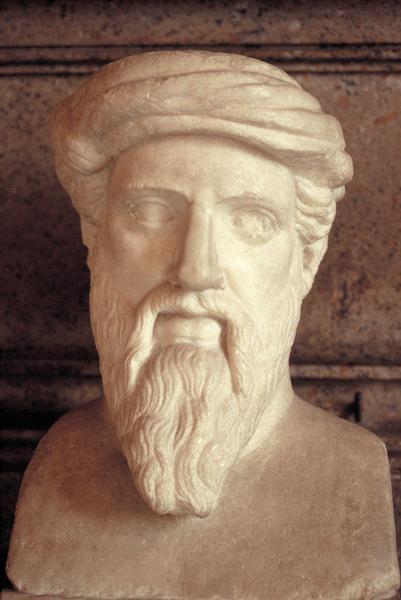
The powerful prayer for creativity and inspiration and joy, which is perfected in the Church (Others in series on Divine Office here) Since the ancient Greeks there has been the idea that the happy life is the result of a good life, and a good life is a beautiful life. In the 6th century BC the philosopher Pythagoras (the same one who has a geometric theorem named after him) gathered around him a religious group of ‘Pythagoreans’ who sought to order their lives according to this principle of beauty and order. They drew their inspiration from their observations of the beauty of the cosmos. When viewed in the way of the Pythagoreans, making our actions and work beautiful becomes a guiding principle in life, just like morality. Morality tends to guide by placing boundaries on our activity – it tells us what not to do. This is necessary. Beauty, however, complements this by providing a positive principle of choice. When looking at the broad open field of choices that do not contravene moral law, it opens up new paths and gives us a principle to choose between options which may all appear to be morally neutral. How do we know what the beautiful choice is? The Greeks noted that the cosmos is both ordered and is beautiful. (The word ‘cosmos’ means in Greek simultaneously order and beauty.) This connection points us to the idea that when we find something beautiful, it is the order within it that is appealing to us. They also noticed, long before the development of modern science, that the rhythms and patterns of the cosmos could be described numerically; and this numerical ordering could become, at least in part, a principle for ordering life. Time and space can be ordered numerically, whether it’s the hours in the day, or the dimensions of a building. Pythagoras is described by Plato as being the discoverer of the numerical order behind beautiful musical harmony and his influence in this area continues to this day.

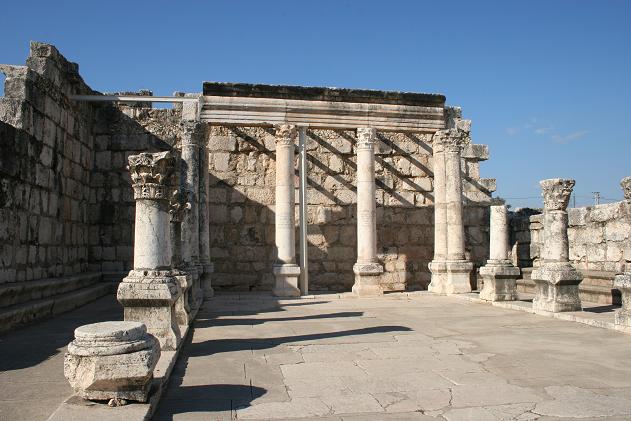
The Greeks were not the only ones. Long before Christ, the Jewish people ordered time in accordance with these principles: years, months, weeks, days and hours in conformity with the patterns of the cosmos, especially the sun and the moon. They were prompted to do by the revelation contained in Holy Scripture. For the Jewish people the cosmos was a heavenly signpost, created by God, to indicate also the rhythms and patterns and worship. The seven-day weekly cycle, the feast days and the seasonal cycles of their worship conformed to the phases of the moon and the rising and setting of sun. Within each day, there was a seven-fold prayer as well, with the addition of prayer during the night. This structure was the route to joy too. The Psalms especially stress that happiness is the result of following this path. ‘Blessed are the undefiled in the way, who walk in the law of the Lord.’ (Psalm 118:1)

Greek temple in Segesta, Sicily. Pythagoras lived in Sicily

This ancient pattern was adopted and accommodated into Christian worship (see The Path to Heaven is a Triple Helix). The Christian fathers, especially figures such as Augustine made this connection between the liturgy and the Pythagorean description of the cosmos (The Spirit of the Liturgy by Pope Benedict XVI describes this), to give a sense that that the cosmos was made beautiful to direct our praise to God and both this earthly liturgy and the cosmos are not only in harmony with each other, but each reflects the order of the invisible standard of the heavenly liturgy – the unending praise of God by the saints in heaven. The connection between heaven and earth was made substantial in the Church’s worship, through the Mass. The body and blood of Christ, present under the appearance of bread and wine at the centre of the Mass is the meeting point of all that exists, seen and unseen. In Him all the patterns of order and beauty are embodied, for He is Beauty itself. He is the Creator of the cosmos and it bears the thumbprint of the one who fashioned it. In the Mass we actually ingest Beauty.

Let us recall that image of the Mass as a jewel in the setting of the Liturgy of the Hours which is in turn a jewel set in the cosmos. Through this trail of beauty, the connection between the heavens and Heaven is made complete. The Pythagoreans inspired by beauty, prayed with the cosmos. The Jews, inspired by Scripture prayed the liturgy of the hours by praying the psalms at certain times of the day. Christianity is the deepest drawing together of these elements in the Eucharist, which is the source and summit of human life. Each leads us into the next, and each completes the former. This is the prayer that the Pythagoreans sought and, I’m guessing, would have loved to have known. It is the fullest source of beauty and joy.

Praying the Liturgy of the Hours and the Mass is the deepest education in beauty there is, it impresses upon our very souls the patterns of beauty – of the cosmos, of heaven, of Christ. It also opens us up to God’s inspiration just as He bestows it. We draw spiritual breath as He exhales, so to speak. This developed innate sense of the beautiful shapes and guides our imaginations. Because our prayer is engaging the whole person and engaging all the senses, it develops our ability to create beauty in our work, whatever we do, because we understand how it will appeal to others through their sensual perception.

Those who want to learn to do the Divine Office, you might approach a priest or religious (ie monk or nun) and ask them to show you. Alternatively, the Way of Beauty summer retreats at Thomas More College of Liberal Arts will teach you how to pray the Liturgy of the Hours and how you can realistically incorporated it into a busy working or family life

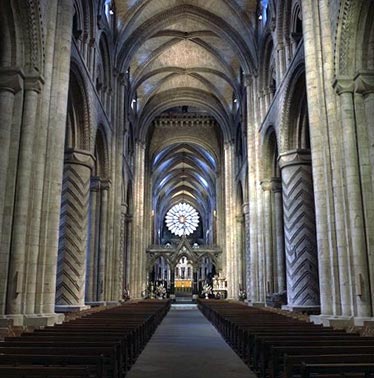
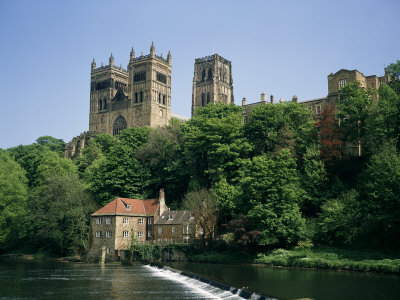
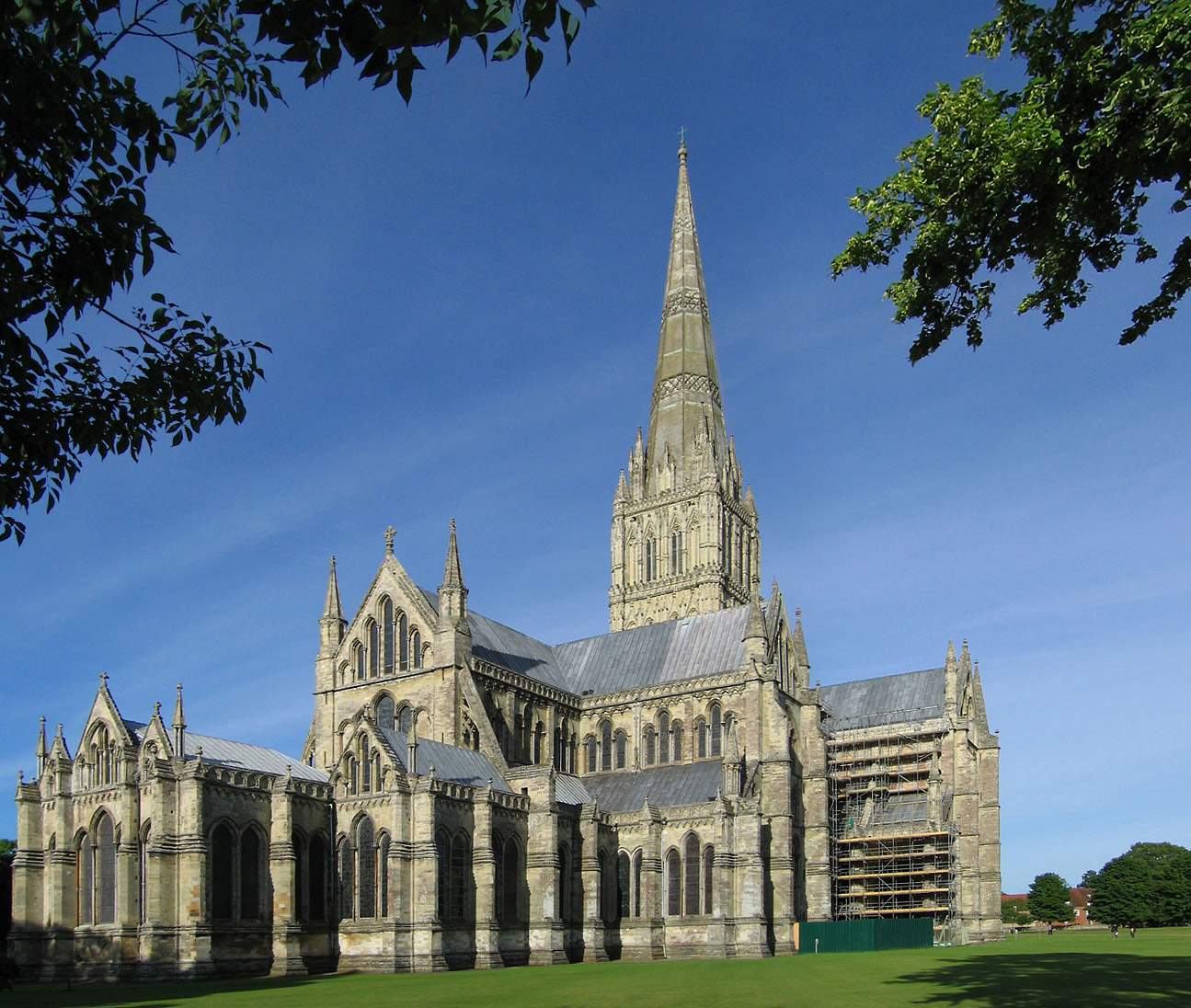
Images above: Pythagoras and an ancient synagogue in Capernaum. Below: the Romanesque Cathedral at Durham in the northeast of England.


The Unsurpassed Power and Effectiveness of the Prayer of Christ - Divine Office IV

The Liturgy is the most powerful and effective form of prayer. This is the fourth in a series on the Liturgy of the Hours. The others are here. The Liturgy (the Mass and Liturgy of the Hours) is not just powerful and effective. It is the most powerful and effective action of the Church on our behalf. Christ participated in it historically; and continues to do so eternally in heaven and on earth and we participate in His prayer through his mystical body, the Church. 
I have assumed that as a devout Jew, Christ participated in the Jewish liturgy, which followed a pattern of marking the hours, either three or seven times a day (and once at night) and praying the psalms (which is the basic form of the Liturgy of the Hours).  The bible speaks of this pre-Christian practice and its continuation in the Church that He founded (see here) ; and we know from historical records that this tradition has continued to the present day. A lovely example that illustrates this continuation of the thread of tradition is the psalm tune or 'tone' called the Tonus Perigrinus. This came from the ancient tradition of the synagogue, was passed on to the Christian liturgy and became one of the standard chants of Gregorian chant. It has become one of the standard chants of Anglican chant too (listen here).

When we pray with the Church, we pray as part of the mystical body of Christ who is our priestly advocate to the Father. Liturgy (the Mass and the Liturgy of the Hours) is the worship of the Father, through the Son, in the Spirit. It is the means by which we enter into a profound relationship with God and enter directly into the dynamic mystery of love of the three persons of the Trinity. In doing so we become divine, yes divine. This is the source of power and effectiveness, and joy. This union with God is why God created us, and God became man to allow this to happen:

'The Word became flesh to make us "partakers of the divine nature": "For this is why the Word became man, and the Son of God became the Son of man: so that man, by entering into communion with the Word and thus receiving divine sonship, might become a son of God." "For the Son of God became man so that we might become God." "The only-begotten Son of God, wanting to make us sharers in his divinity, assumed our nature, so that he, made man, might make men gods."81 (Catechism of the Catholic Church, 460, quoting 2 Pt 1:4; St. Irenaeus in the second century AD; and St Athanasius in the 4th century AD; and Jn 1:14)

‘Christ Jesus, high priest of the new and eternal covenant, taking human nature, introduced into this earthly exile that hymn which is sung throughout all ages in the halls of heaven. He joins the entire community of mankind to Himself, associating it with His own singing of this canticle of divine praise. For he continues His priestly work through the agency of His Church, which is ceaselessly engaged in praising the Lord and interceding for the salvation of the whole world. She does this, not only by celebrating the eucharist, but also in other ways, especially by praying the divine office.’ (Sacrosanctum Consilium, 83; written in 1963)

If we are participating in the divine nature (albeit at this stage only temporarily and by degrees for us as individuals) it is no wonder that this prayer is powerful.

'Accordingly, every liturgical celebration, as an activity of Christ the priest and of his body, which is the Church, is a sacred action of a pre-eminent kind. No other action of the Church equals its title to power or its degree of effectiveness.' (Sacrosanctum Consilium, 7, [my emphasis])

Those who want to learn to do the Divine Office, you might approach a priest or religious (ie monk or nun) and ask them to show you. Alternatively, the Way of Beauty summer retreats at Thomas More College of Liberal Arts will teach you how to pray the Liturgy of the Hours and how you can realistically incorporated it into a busy working or family life

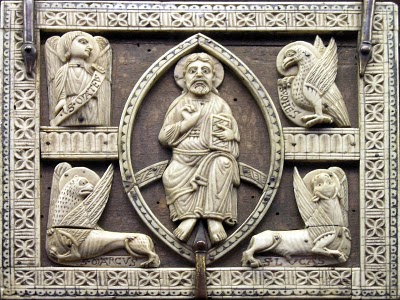
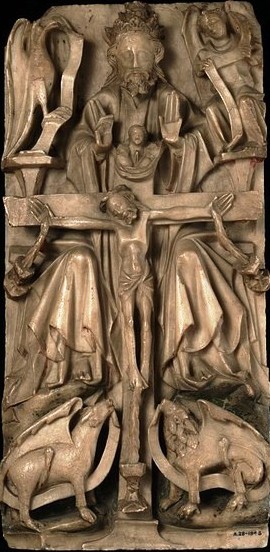
Images from top: anonymous, Christ Pantocrator, Monreale, Sicily, 12th century; anonymous, 'Mercy Seat' Trinity with four evangelists, English alabaster, early 15th century; Duccio, detail, showing the Agony in the Garden of the Maesta, 14th century;

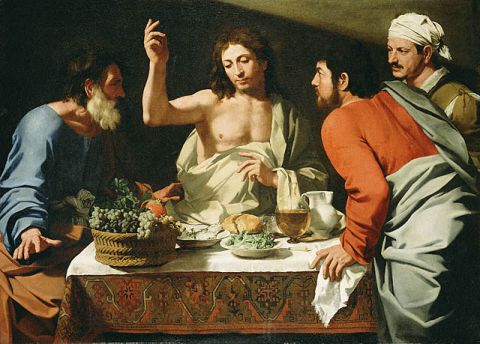
Images below text: Bartolomeo Cavarozzi (1590 - 1625), Supper at Emmaus. The artist was an Italian who lived in Spain; Rembrandt, Supper at Emmaus


The Quincunx - a Geometric Representation of Christ in Majesty

One of my hopes for the cultural renewal is the revival of a Christian form of geometric patterned art. With this in mind I have done my best to study past work, and try to discern the principles that underlie its creation. I wrote about resources that help in this respect in a previous article, here. If tasked with the design of an ornate sanctuary floor now, for example, how might one go about it? One approach, which was used by the Cosmati craftsmen of the middle ages was to have a large design for to fill the whole shape and then to infill with a variety of different geometric patterns. The Cosmatesque style is named after the Cosmati family which, over several generations, developed this distinctive style of work. If they were covering a large area, such as a whole church floor, they worked on three scales. For the grand form they tended to compartmentalize into rectilinear shapes. Then the sub-form would be a geometric design consisting of faceted polygons or interconnected circles. The final stage would be an infill of with very small repeated regular geometric shapes such as squares, triangles of hexagons (which are the three forms that can put together without creating gaps).

Cathedral of Sessa Aurunca, 13th century

One of the sub-forms is called the ‘quincunx’. This the generic name for the arrangement of five equivalent shapes that has four arranged symmetrically around the fifth which is centrally place (it is also a game-winning word in Scrabble so it'll pay to remember this, if for no other reason). The five dots on dice, for example, are in a quincunx shape. I understand the name comes from the Latin for five-twelfths, a coin of this fraction value of the currency had this name and often had this arrangement of dots on it.

In the context of geometric patterned art, it is the shape of four smaller circles spinning of larger secondary one was not limited to the Cosmati craftsmen. It is seen in both Eastern and Western Churches and across many centuries. I am going to setting my class at Thomas More College the task of designing and drawing a sanctuary floor based upon this design later this term.

In some respects the quincunx can be thought of as the geometrical equivalent of the traditional image of Christ in Majesty. Around the central image of the enthroned Christ we see four figures representing the four evangelists carrying the Word to the four corners of the world. One of the reasons that the Church settled on four gospels was to emphasis this symbolism (see St Irenaeus writing in the 2nd century AD in Against Heresies). The quincunx also symbolizes Creation, as the number four represents the cosmos. The symbolism is of, again the four corners of the world - Christ spoke of the 'four winds'; and the four ‘elements’ of the ancients from which all matter is comprised. These elements are fire, water, earth and air. In modern science the work element has come to mean something more specific than this. However, this does not invalidate this symbolism, to my mind, for they still symbolise very well, I feel the phases or states by which modern science categorises matter – solid, liquid, gas and energy (or alternatively plasma).

In his book on the Westminster pavement, which is the one example of Cosmati work in England, Richard Foster suggests that the inscriptions indicate that rather that signifying Creation, the quincunx signifies the final end. That is, rather than emanating from God, all is returning to God.

An 8th century German manuscript showing Christ in Majesty

A 13th century French  ivory carving, in the Musee de Cluny

A sub-form of interconnected circles other than a quincunx, at S Maria in Trastever, Rome

The Sacred Art of Manuel Farrugia

Manuel Farrugia, who painted these, is a young man just 22-years old from Gozo, Malta.
Most of the skilled naturalistic painters today have received the traditional academic training in a form that resembles that offered in the ateliers of the 19th century. This is an excellent training for portraiture and still lives particularly, but it sometimes causes problems when painting sacred art. Regular readers will be aware from past articles, for example here and here, of how I feel that a strong emphasis on individual facial expressions and characteristics, which is appropriate in portrait painting, creates overly sentimental sacred art. It is this recurring theme of the balance of the general and the particular, which is so difficult to get right in naturalistic styles of sacred art. I do not know anything about the training that Mr Farrugia is receiving (at the Malta School of Arts) but it does look to me as though he is aware of the need to strike a different balance when painting sacred art as compared with portraiture.
The painting above is, and repeated below, is St Paul. The one at the bottom is St Bonaventure.

Prayer of the Heart - How to Engage the Whole Person in Prayer. The Divine Office III

Engaging the Whole Person in Prayer  Opens us up Further to Inspiration and Creativity - The Divine Office III, part II here, part I here.

In the sight of angels I will sing praise to you (Ps 138:1). Let us rise in chanting that our hearts and voices harmonise.’ (Rule of St Benedict: Ch 19)

The heart is the human centre of gravity, our very core that incorporates both body and soul. It is the place that represents the whole person, the vector sum of all our actions and thoughts. If our hearts are to be in harmony with the prayers of the angels in heaven as St Benedict suggested, we need to consider not just our thoughts and voices, but our actions, our bodies and even how are senses are engaged in the action of prayer. The heart is also the place that is closest to God (considering both physical and spiritual human anatomy). It is closest in the sense of being that place that is most directly in contact with Him. So, if we seek the ideal stated, and harmonise our hearts with the prayer of the heavenly hosts, we will also be more sensitive to inspiration because the whole person is engaged. The Liturgy of the Hours is the means to continuous prayer, as discussed last week. If in the context of the Liturgy our continuous prayer simultaneously engages the whole person then can we are opening ourselves up to the greatest degree possible to God’s grace. To the degree that we cooperate with grace this will help us make all our life decisions and help us to move towards the fulfillment of our personal vocation in life. This will be perfectly ordered also to the model of charity, that is, love of God. To the degree that we match these standards there will be perfect harmony with the objective standard of God’s will. This is the supernatural path to inner peace, peace with our neighbour and a life in harmony with creation.

As I have said before, I don't claim to be an expert in these matters at all, but I can pass on the guidance that I was given when I asked about these things. Here are the things that were suggested to me a way of involving the whole person in prayer. I seek, as well as seeking to attune my thoughts to the prayer of the Liturgy, to engage all my senses and my physical being in the prayer too:

Chant: the use of voice (and hearing). Even if I do it on my own, I will sing the Office (quietly!). As an aside: ironically singing on my own regularly stopped me from being self conscious about singing in front of others. I was so used to hearing my own voice and not being unsettled by it, that in time the thought of others hearing it too didn’t worry me.

Posture: consider our posture at all times. In the Mass I try to follow the rubrics, and in the Liturgy of the Hours do my best to follow the traditional postures such as bowing, standing, sitting. Why is posture important? I see it like this: in the ideal every aspect of human nature is directed towards God, my actions and motives. At any time my motives for doing something are likely to be mixed and not perfectly pure. I have found that even if I don’t feel like praying or feel very peaceful, I can resolve to do it anyway and adopt a reverential posture. My body will tend to lead my heart in the right direction. And where my heart goes, my thoughts and feelings will follow suit. The following scheme was suggested to me and we try to follow this when we say the Office together at Thomas More College of Liberal Arts: we stand through opening words and hymn until the psalms are recited, when we sit, and we stand again for the gospel canticle until the close or if there is no gospel canticle we stand for the closing prayer ; we bow (and if sitting, say at the end of the psalm, we stand again) in honour of the Trinity for the last verse of each hymn and the glory be; we bow our heads at mention of the name Jesus.

Engaging our sense of sight: pray with visual imagery and use candles. I light candles to mark the time of prayer (it reminds me that Christ is the Light of the World) . If I pray to as named saint, for example, Our Lady, I turn and look at an image of her as I do so. At home I create and icon or image corner as a focus for prayer. This can be as simple as have a single icon, or become of more sophisticated combination of images changing according to season and day (see earlier article Praying with Visual Imagery). The ideal core imagery for and icon corner, in accordance with tradition, is to have a crucifixion in the centre, which portrays the suffering Christ; an image of Our Lady on the left; and an additional image of Our Lord glorified on the right. (See past article, How to Make an Icon Corner]

Incorporating the sense of smell –I was encouraged to use incense, for example when singing the gospel canticles. However, I was told, it should be used selectively in accordance with the hierarchy of the liturgy so everything together points to the Sunday Mass as it highpoint. So for example, in community incense can be used on Feast days and Solemnities at Vespers, Lauds and Compline (when gospel canticles are sung), but only if incense is also used at Sunday Mass.
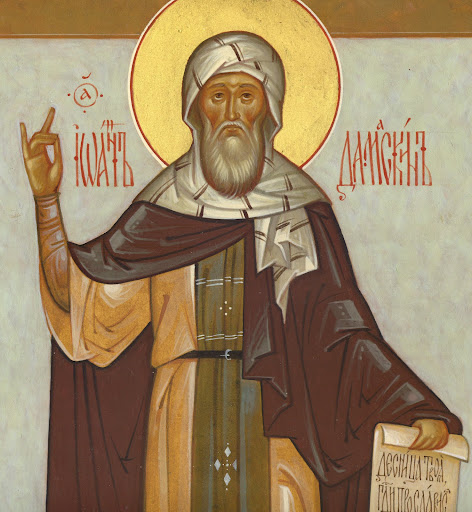
v) Incorporating taste and touch-the Eucharist. We do not take communion during the Liturgy of the Hours, but we should not forget the wider picture.  I was reminded that the liturgy as a whole is seen as an unfolding of a single event that incorporates both the Hours and Mass, but has the Mass at its centre. The quotation given to me mentioned in an earlier article comes to mind again here: the Mass is a jewel in its setting, which is the Liturgy of the Hours; and the Liturgy of the Hours also has its setting, which is the cosmos.

Further articles;

The Four Pillars of the New Liturgical Movement

Those who want to learn to do the Divine Office, you might approach a priest or religious (ie monk or nun) and ask them to show you. Alternatively, the Way of Beauty summer retreats at Thomas More College of Liberal Arts will teach you how to pray the Liturgy of the Hours and how you can realistically incorporated it into a busy working or family life

The Painting is of St Francis is by the 17th century Spanish artist Zurbaran

and, below, the Adoration of the Trinity by Albrecht Durer

The Brussels Academy of Icon Painting

As a postscript to the article about the work of Irina Gorbunova-Lomax, a reader has sent me information about two more websites with more up-to-date work of hers on display. You can see them here and here. I was also contacted by an old friend of mine from Oxford, a Catholic, who is studying with her. As ever, I am delighted to receive this additional information from readers and, in turn, happy to pass it on to you. Originally from the Ukraine, Irina studied in Russia. She is married to an Englishman and lives in Brussels (she is not based in France as I first thought). She runs a 4-year, part-time course in icon painting (38 three-hour lessons over this period). She is an excellent teacher by all accounts and, I was told, she is respectful of the Catholic Faith and many Catholics are already learning with her. Details about her school, can be found at the Brussels Academy of Icon Paintingsite. Based upon the recommendations I have received and the quality of her work, any wishing to learn icon painting who can get to Brussels should consider her classes. The photos below are of her classes and exhibitions of student studies. The final picture of work by Irina.

How all human work can be inspired - The Divine Office, II

How busy people can strive for the ideal of praying continuously. The Divine Office for lay people, part 2 (part 1 is here): St Paul exhorts us: ‘Always rejoice. Pray without ceasing.’ (1 Thessalonians 5:16-17).

How can we do this? One can imagine the heavenly host of angels and saints doing this as they participate in the heavenly liturgy. But how can we, while here in this earthly life, strive towards this ideal? The answer is the liturgy of the hours, also known as the Divine Office.

The Church’s General Instruction on the Liturgy of the Hours reads as follows:

"Consecration of Time

10. Christ taught us: "You must pray at all times and not lose heart" (Lk 18:1). The Church has been faithful in obeying this instruction; it never ceases to offer prayer and makes this exhortation its own: "Through him (Jesus) let us offer to God an unceasing sacrifice of praise" (Heb 15:15). The Church fulfills this precept not only by celebrating the Eucharist but in other ways also, especially through the liturgy of the hours. By ancient Christian tradition what distinguishes the liturgy of the hours from other liturgical services is that it consecrates to God the whole cycle of the day and the night. [56]

11. The purpose of the liturgy of the hours is to sanctify the day and the whole range of human activity.'' [My emphasis]

If all times in the day and all human activity (no matter how mundane) can be sanctified by praying the liturgy of the hours, as the Church tells us, then this is this is a wonderful gift by which we can open ourselves up to God’s inspiration and consolation in all we do, and the degree that we cooperate, all our activities will be good and beautiful; and will be infused with new ideas and creativity. And we will have joy.
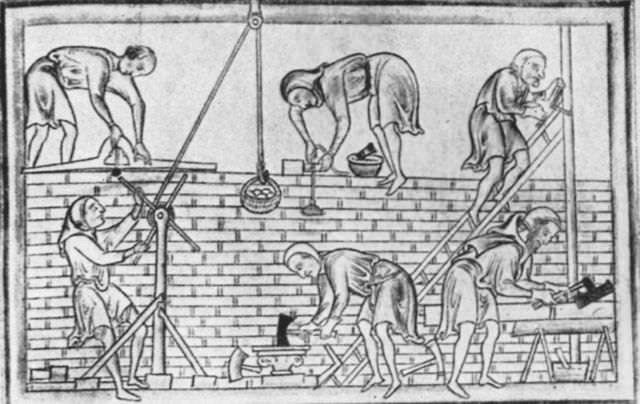
There are seven liturgical hours to be marked in the day and by tradition the process of doing something seven times symbolizes doing it perfectly or continuously. So for example, the psalmist (Ps 12:6) tells us that, ‘The words of the Lord are pure words: like silver tried by fire, purged from the earth refined seven times.’ This pattern of cycles of seven runs through the liturgy (see previous article, The Path to Heaven is a Triple Helix).

Even if we accept this and want to benefit from it, it is a huge problem for most lay people. If you get the full cycle of prayer of seven Offices in the day for seven days of every week in the year it adds up to a three or four volume set. Priests and religious who are obliged to pray it, devote a huge part of their lives to praying the liturgy of the hours. Benedictine monks can spend up to six hours a day singing the psalms in church. One might expect them to be able to cope as that is their special calling, but what about the rest of us?

This is how I approached the problem. First, as with all these things the help of a spiritual director is invaluable. He told me that I should take heart in the fact that through its priests and religious especially, the Church as a whole is praying the Hours on our behalf. As the globe turns, someone somewhere is praying for all of humanity (most of whom have no idea of the benefits they are getting as a result). So any additional contribution that I might make, no matter how small, to this prayer of Christ in the mystical body, the Church, will be good, but neither is everything going to collapse if I don't do it perfectly. Even one Hour (or ‘Office’) a week is worth it.

I was told to start modestly. If I found it beneficial, then I was told that I could increase what I did, but then it would be best to do so only gradually. There was a danger that if I took on too much too early that I would find it overwhelming and then give up altogether.

I started by aiming to read a maximum of two each day: Morning Prayer (‘Lauds’) when I got up and Night Prayer (‘Compline’) before I went to bed. I had a single volume version that just had Lauds, Evening Prayer (Vespers) and Compline for the year. If you want to try this but don’t even want to buy a book, you can see what each Office is for any day by going to www.universalis.com.

Mark the Hours

It took me a while to develop this habit, but once I had, I had to decide what to do next? I'd experienced enough to know that this was good and I knew I wanted to do more. But, like many busy people it seemed to me that trying to introduce even just Vespers on top of what I was already doing was going to be difficult. I was given an alternative. If at any time I could not recite a full Office, why not substitute it with a memorized prayer, and aim gradually to mark each Hour and aim for the ideal of sevenfold prayer each day?

I was helped by reading a book recommended to me by a fellow faculty member of Thomas More College of Liberal Arts called Earthen Vessels, the Practice of Personal Prayer According to the Patristic Tradition, by Fr Gabriel Bunge. Despite its daunting title it is in fact quite easy to read and very practical. Fr Bunge a Swiss Benedictine monk explains that the essence of the liturgy of the hours can be described as two things: first praying the psalms; and second, the marking of an hour. The official ‘off-the-shelf’ cycles of psalms, canticles, hymns and prayers are produced to allow people to sing in community, and this is why priests and religious must say a prescribed form. However, as lay people, we are free to devise any cycle of the psalms we like.

So this is what I did: for the most part I tried to keep to the standard form of each Office as in the Liturgy of the Hours book I had been given (which was according the Roman Rite, it said in the front) and from that to the schedule of Compline at night and Lauds in the morning. However, in between I marked the hour with a short memorised prayer, sometimes just the Our Father, Hail Mary and Glory Be. If I could remember any, I tried to have just a line from a psalm. The ideal would be to memorise one psalm (and some are short!). This habit of continual prayer is what opens the door to the possibility of continuous prayer.  The publication Magnificat is a cycle of the psalms, with some prayers and canticles, that one can subscribe to monthly, which has been designed with lay people in mind.

What are the Hours?

The hours are not set times according the clock, but to the traditional organisation of time in which, roughtly speaking, usual hours of daylight are broken up into twelve divisions. So it is roughly like this: Lauds at dawn or when you get up; Terce (the ‘third hour’)at 9am or mid-morning, Sext (the ‘sixth’ hour) at noon or the middle of the day, None (at the ‘ninth’ hour)at 3pm or mid afternoon  and Vespers at dusk. Then there is Compline at bed time and during the night Matins, which is also called the Office of Readings. Because busy people are not expected always to be able to rise at midnight to praise God, this can be said at any convenient time and is often run together with Lauds, first thing in the morning.

The experience of doing this has been so positive that I can't imagine not wanting to pray at least part of the Hours each day. As someone said to me recently, he found that the praying of the liturgy of the hours was like regular physical exercise: although it meant an investment of time, there was a sense that in doing so, time was created because work seemed more efficient and productive and things just seemed to go more smoothly during the day. We both felt the same. We couldn’t prove it, but once we had tried it, we were convinced of its value.

I started doing the liturgy of the hours about 15 years ago and gradually, I have found that my life circumstances have altered to give room for it. I don’t do it all perfectly, but I now do most Offices each day. It does not feel like a burden, but a source of sustenance.

Psalm 116

O praise the Lord, all ye nations: praise him, all ye people.                                         For his mercy is confirmed upon us: and the truth of the Lord remaineth for ever.

You can read a more detailed article about it by following the link: Achieving the Pauline Ideal - Praying Continuously Body and Soul.

Those who want to learn to do the Divine Office, you might approach a priest or religious (ie monk or nun) and ask them to show you. Alternatively, the Way of Beauty summer retreats at Thomas More College of Liberal Arts will teach you how to pray the Liturgy of the Hours and how you can realistically incorporated it into a busy working or family life

Excavation of 1,500 year-old Church in Israel

Here are some photos of a recently excavated church in Israel, close to Jerusalem, that is thought to have been active between the 5th and 7th centuries AD. it has appeared in the a number of news sites. The account by AP, here comments on the floor mosaics of a lamb, cockerels, lions, fish and peacocks. When I saw the photographs, the geometric patterns in the floor design caught me eye too.


Below is a floor mosaic from a Roman villa in Aldborough, North Yorkshire, England.

A decorative border from a mosaic in Pompeii


Praying with the Cosmos – the Ancient Treasury of the Divine Office I

An ancient beautiful prayer that leads us to joy, and opens us up to inspiration and creativity; part 1, part 2 here The Divine Office (also called the Liturgy of the Hours), is one of the four pillars of the spiritual life of the new liturgical movement. This is the first in a regular series that highlight the riches of the the liturgy of the Church and how it is at the root of Western culture.

'The Mass is a precious jewel and that jewel has its setting, which is the Divine Office. The Divine Office also has its setting, which is the cosmos.' This is how a priest who was visiting Thomas More College of Liberal Arts put it to me recently. In the picture of words he painted for us, the Divine Office mediates between the Mass and cosmos. Through its pattern of prayer, it highlights for us the rhythms and patterns of sacred time, which are reflected also in the cosmos. The cosmos points us not only to the Divine Office, through its order, but also through its beauty draws us in and lifts our souls to God in heaven. God's angels and His saints are praying the heavenly liturgy - this is the activity, so to speak, of the exchange of love with God in perfect and perpetual bliss. And through the Mass the heavenly and the earthly, the divine and the human meet and the otherwise impassable divide is bridged supernaturally. By it, can step supernaturally into the heavenly dimension.

The Divine Office is an often-forgotten ancient form prayer, which has its roots in the pre-Christian worship of the Jews. We can assume that as a devout Jew, Christ will have prayed it, and we know from the Acts of the Apostles that the tradition was continued by His Church. Priests and religious of the Church are obliged to pray it to this day and we would perhaps most commonly associated it with the chanting of monks and nuns. But it is not their preserve. In the past it was a widespread regular practice for most lay people also. The Church of today encourages lay people to pray this too placing it in value above all other prayers and devotions apart from the Mass.  I was first encouraged to pray it by my spiritual director, one of the Fathers at the London Oratory, when I was living in England. It has been a life transforming experience for me.

In essence the Divine Office is simple. We say, or ideally sing, the psalms at regular intervals during the day, marking significant times called ‘Hours’. It is part of the Liturgy, the formal and public worship of the Church (like the Mass) and for this reason also known as the Liturgy of the Hours. If you want to pray with the priests of the Church then you can see each Office set out each day at www.universalis.com.

If we pray in harmony with rhythms and patterns of the cosmos, especially the cycles of the the sun, the moon and the stars, then the whole person, body and soul, is conforming to the order of heaven. The daily repetitions, the weekly, monthly and season cycles of the liturgy allow us to do just that. In his book, the Spirit of the Liturgy, Pope Benedict XVI calls our apprehension of this order, when we see the beauty of Creation a glimpse into 'the mind of the Creator'. This conformity in prayer opens us up so that we are drawing in the breath of the Spirit, so to speak, as God chooses to exhale. It increases our receptivity to inspiration and God’s consoling grace and leads us more deeply into the mystery of the Mass.
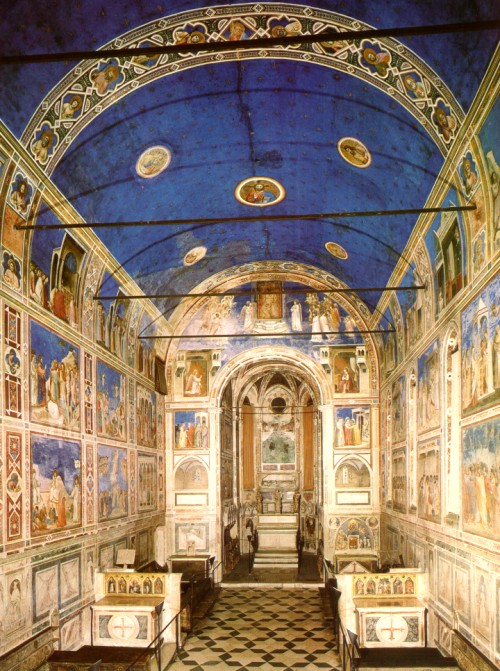
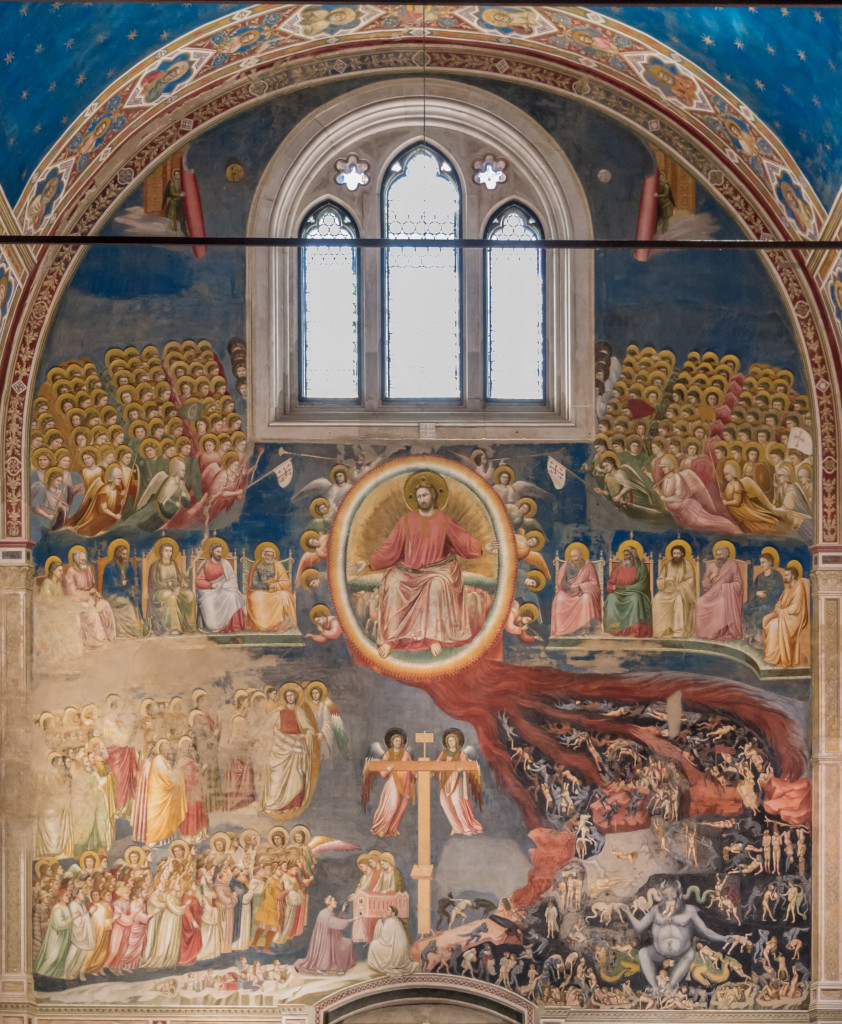
Also, participation in the Liturgy of the Hours is an education in beauty. It impresses upon our souls the order of the cosmos and so enhances our creativity. Whatever your discipline, ideas that are in harmony with the natural order are more likely to occur to you in your daily work. For example, I wrote about how awareness of the symmetry of the natural order has already aided scientific research, in the field of particle physics, in a previous article called Creativity in Science through Beauty.

Those who want to learn about this can approach any priest or religious (ie monk or nun) and ask them what they do. Alternatively, the Way of Beauty summer retreats at Thomas More College of Liberal Arts teach us how to pray the Liturgy of the Hours and how you can realistically incorporated it into a busy working or family life. It also teaches us just how the heavenly order that permeates traditional Western culture and can again in the future. Those who are interested in more information about this should go here.

For a longer essay on this read The Cosmic Liturgy and the Mind of the Creator.

The painting at the top is Fra Angelico and the frescoes below are by Giotto. Note the stars in the sky. This is not just a device by an interior designer to make the space seem bigger by creating the illusion that there is no roof. This is deliberately encouraging in us the sense that the cosmos is praying with us and that the heavens point us to Heaven.

Part II is here.


Below, Giotto's The Last Judgement.

Icons by Irina Gorbunova-Lomax

Here are some icons by a Belgium-based Russian icon painter. She has and exquisite touch in the graceful flow of the line that conforms to the prototype and describes form beautifully. Also, she skillfully handles the delicate overlay of washes of colour retaining a freshness and giving the sense that they were produced by a sure, well-guided hand. Her gallery,here, has examples of works done on paper or parchment, some having the appearance of studies for other works. These particularly highlight her drawing ability. I have shown a few examples below.

Over the years I have been to many icon painting classes where people signed up because they felt that because icons are so highly stylised that the need for skilled drawing is less than in naturalistic styles (just as I have seen people painting landscapes in an impressionistic, or even expressionistic, style for the same reason). In fact the opposite is true. In icon painting, just as with any traditional form of representational art, drawing is the core discipline necessary for the realisation of ideas well conceived. In my experience, all good icon painters are all skilled draughtsmen. Not that an inablitiy to draw should discourage people from signing up for an icon painting class, mind. Drawing is a skill that can taught, and a properly structured class (such as that offered at the Thomas More College Atelier summer program) will do just that.
Just in case anyone is after details of the saints depicted, I can't help and am as frustrated as you. I don't read Russian, so perhaps there are some Russian speakers out there who can help...

The Practice of Lectio Divina (3): Ephrem the Syrian on the Inexaustible Treasury of Scripture

Scripture, Part of the Foundation of Joy (part three; part one here; part two here) This is from the Office of Readings of Sunday Week 6 of Ordinary Time. It is from a Commentary on the Diatassaron by St Ephrem the Syrian. It certainly inspires me to keep on reading the bible and makes this point that God speaks to me at the level I am at, and so the same piece of scripture can say different things to me on the next reading. The sub-heading is: God's Word is an inexaustible spring of life.

'Lord, who can comprehend even one of your words? We lose more of it than we grasp, like those who drink from a living spring. For God’s word offers different facets according to the capacity of the listener, and the Lord has portrayed his message in many colours, so that whoever gazes upon it can see in it what suits him. Within it he has buried manifold treasures, so that each of us might grow rich in seeking them out.

The word of God is a tree of life that offers us blessed fruit from each of its branches. It is like that rock which was struck open in the wilderness, from which all were offered spiritual drink. As the Apostle says: They ate spiritual food and they drank spiritual drink.

And so whenever anyone discovers some part of the treasure, he should not think that he has exhausted God’s word. Instead he should feel that this is all that he was able to find of the wealth contained in it. Nor should he say that the word is weak and sterile or look down on it simply because this portion was all that he happened to find. But precisely because he could not capture it all he should give thanks for its riches.

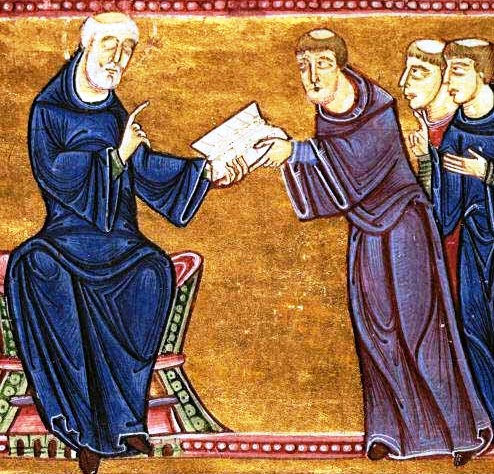
Be glad then that you are overwhelmed, and do not be saddened because he has overcome you. A thirsty man is happy when he is drinking, and he is not depressed because he cannot exhaust the spring. So let this spring quench your thirst, and not your thirst the spring. For if you can satisfy your thirst without exhausting the spring, then when you thirst again you can drink from it once more; but if when your thirst is sated the spring is also dried up, then your victory would turn to harm.

Be thankful then for what you have received, and do not be saddened at all that such an abundance still remains. What you have received and attained is your present share, while what is left will be your heritage. For what you could not take at one time because of your weakness, you will be able to grasp at another if you only persevere. So do not foolishly try to drain in one draught what cannot be consumed all at once, and do not cease out of faintheartedness from what you will be able to absorb as time goes on.'

I have just one comment on the icon of St Ephrem. Ephrem lived from the first part of the 4th century and in 1920 was proclaimed by Pope Benedict XV as a Doctor of the Church. Among his famous writing are his Hymns of Paradise. The sunken cheekbones in the icon are used to show asceticism. Ephrem was not a monk as monasticism as we know it was only beginning to take hold in Egypt during this period. However, he lived in a Christian community that had similar disciplines and he is venerated in the East as an example of monastic discipline. Hence the sunken cheeks.

Monastery in the Syrian desert (this is of St Moses the Ethiopian). I hope their spring is inexaustible, just looking at it makes me feel parched!

The Practice of Lectio Divina - a Source of Joy (2)

Scripture, Part of the Foundation of Joy (part two; read part one, here) I am not an expert in this at all, but I thought that my experiences of trying (and often failing) to learn the technique and practice it, might be a starting point for others who wish to make a beginning also. Also I would encourage any of you who have experience to offer any helpful thoughts for the benefit of the readership… Before I even began my investigation of lectio divina, the point was made to me that it is good to go to someone who can structure my spiritual life so that all of these things have a unity that allow them to nourish and support my ordinary daily activities. The danger is that I just tack one more devotion onto the daily list of personal obligations without proper understanding of how it relates to the other things that I do and the whole thing becomes a burden, in which I feel guilty if don’t tick all the boxes that day.

Now for lectio divina itself: the first part is lectio. This just means reading. The first thing I have to do is select a passage to read. I was told to start with the gospels. If I aim to do it regularly, it was suggested that I try to go through the bible systematically, even if this means that it will take years to go through it once. One person told me another systematic approach to begin with is to pick the readings, or just the gospel reading, for Mass that day. If you don’t have a Missal to hand, www.universalis.com has the readings each day.

So having selected the passage I say a short prayer, that I might be receptive to whatever God wants to say to me through the passage I read. And then I read away. As phrases catch my attention I re-read. If nothing catches my attention, I just re-read the whole allotted passage a number of times. One helpful piece of advice given to me was that God will speak to me at the level I am at. So I shouldn’t worry that I am not a scripture scholar who isn’t instantly aware, for example, of the parallels between Old and New Testaments or the allegory that it contains, and so on.

However, it is a good idea, I was told to support this lectio, if I have time, with reading of commentaries on scripture, that my understanding might increase in time. I was told to be careful with modern commentaries as many (including some by Catholic writers) do not adopt a starting postion of faith that this is the inspired Word, and so a skepticism creeps into their work. I play safe and go for the Church Fathers and even here I let the Church guide me through her liturgy. The Office of Readings has a passage every day by a Church Father and very often this is a commentary on scripture. So I let the Church educate me as I worship God the Father in the Liturgy. Here is this dynamic, described yesterday, of Liturgy illuminating Scripture and Scripture intensifying my participation in the Liturgy. Again, the Universalis website is a great source for the Office of Readings each day.

The second part is meditatio. This means ‘I think’. This was always a source of confusion for me. In this age of post-Beatles, Maharishi Yogi pop culture, I thought that meditating on a phrase meant repeating it like a mantra in Eastern meditation. And that the goal was one of the elimination of thought; or at the very least it was a passive process of just letting my mind drift in the ethereal breeze  and see what thoughts might crop up,  but without reacting to them. I couldn’t work out what I was supposed to be doing here – it seemed to be contradictory to the idea of trying to understand the passage, which involved the application of reason to what was being read.  My predicament wasn’t help by many of the books that I first read about Lectio Divina.  Some (perhaps influenced by pop culture too) read as though they had been written  by a beatnik writer who described it as an invitation for me to indulge in my emotions through undirected random or stream-of-consciousness style thought, on the assumption that because I had just read a bit of the bible, this was God at work in my mental processes. I was suspicious of this undirected approach.

The way out of this changed when I was told something about the distinction between Christian and Eastern, non Christian, ideas of meditation. Meditate, in the Christian tradition means more ‘meditate upon’, the same as ‘think’.  So while in meditatio I do pause and allow for the prompting of the Spirit in the form of occurring thoughts and ideas; when they do occur I react to them by mulling over them, perhaps asking myself: what does this mean? Is there something that applies to me directly? How can I act on this in the rest of the day? And so on.

This leads to the third stage, Oratio – prayer. So here I can ask God to show me how to act on something or help me in those areas that the meditation highlighted. The worry for me here was that sometimes I didn’t seem to have any profound lessons or thoughts to react to. This meant I didn’t know what to pray, except perhaps, ‘please give me some profound lessons or thoughts’. Here again I was given some helpful advice by someone with much greater experience than me. He said that quite often this happened to him and he didn’t think it was anything to worry about, he simply said some prayers in which he praised God for having this chance to hear his Word.
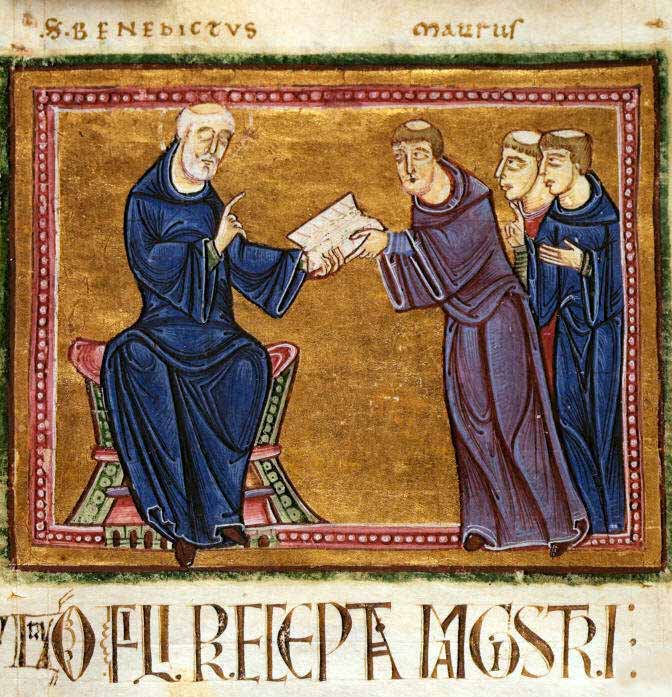
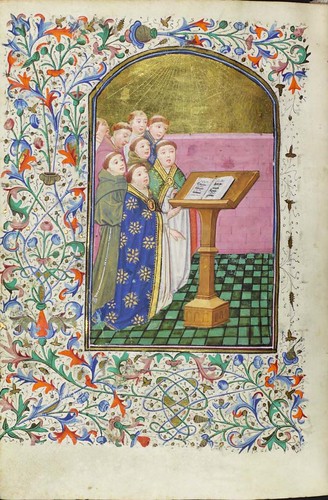
I find that once I start reading, I can move gently from one to the other, reading, thinking, saying a short prayer and then reading again.

The fourth part is contemplatio. This is contemplative prayer. As you can imagine, this originally caused me confusion too. I thought contemplation and meditation meant pretty much the same thing. And given the fact that I didn’t initially understand what meditation was, the inclusion of contemplation just compounded it even further. So I needed another explanation: in contrast to mediatio , this part is passive. It is passive in the sense that it is a state of mind that is given to us as a gift from God and actively pursuing it cannot guarantee its occurance. If I have understood the descriptions  properly, it is a state of stillness of mind; one of just being with God and it sounds something like the descriptions of the beatific vision when we are in full union with God in heaven. However, as it is a gift from God, I should be careful in interpreting anything from about it or concluding anything about my spiritual development, or about how well I have done the first three stages. God either gives it to me or he doesn’t. Contemplation, therefore, is not a reward or goal of the first three stages, in that sense, it is just something that might happen, or it might not over which we have very little control. For myself, all I can say is that if it happened to me, I didn’t notice (which I’m guessing probably means that is hasn’t happened!).

The reason I do this is the reason that I am driven to do any of these things. I believe that ultimately and generally, I will be the happier for doing so, rather than any immediate reward of a pleasant emotion or feeling during the process.

At this point, I was going to include another passage from the Office of Readings at the end of this, but given the length of this piece so far, so I’ve decide d to tack on a Part Three, which will appear tomorrow. It is by the 3rd century Father, Ephraim the Syrian.

The Practice of Lectio Divina - a Source of Joy (1)

Scripture, part of the foundation of joy (part one, part two tomorrow)
A group of Thomas More College students and myself have just made a trip to the Benedictine community, St Benedict Abbey, which is at Still River, Massachussetts for a mini-retreat. We arrived for sung Vespers in Latin at 6pm and then left after Compline, which finished about 9.15pm. In between the two Hours, we had dinner with our host, the guestmaster, a talk and period of quiet reflection.
The guestmaster's talk focussed on the contemplation of Scripture, one of the four 'pillars' of the new liturgical movement - Mass, the Liturgy of the Hours, Holy Scripture and Mystagogy (which I recently wrote about). The form of study of scripture discussed on this occasion was lectio divina. Lectio is required of all monks who follow the Rule of St Benedict, and so I had asked him focus on this aspect to help our students (and me) incorporate it into our daily lives. We were lucky to receive a wonderful, down to earth talk about this form of study of scripture, which gave us some great pointers on how to incorporate it into our own lives. 
What was so interesting for me was his description of how the the constant practice of both lectio and participation in the liturgy, Mass and the Liturgy of the Hours, each enriches and deepens participation in the other. So a quotations from the bible in an antiphon at Vespers, for example, might evoke the whole biblical context; and then conversely, how the reading of a phrase in lectio, would evoke the season or feast in the liturgy and place it in the context of our heavenly destiny - the worship of God the Father. Through this dynamic, each reinforces and deepens the experience of the other. As a monk, he told us, he spends more than an hour a day on lectio. As it is unlikely that lay people can regularly devote an hour to this, I asked if it was worth trying to incorporate it for perhaps 10 minutes in a day. Would that still be worthwhile. Oh, yes! I was told. What also struck me was how joyfully and generously it was offered to us. Tomorrow, I post a short summarise what I grasped from his talk and describe how I, and amateur at these things, have tried to put this into practice in my daily routine.
For those who wish to learn more about lectio divina you could always do what we did - go and listen to someone who practices it and will joyfully pass it on to those who ask. Failing that a book that I found very helpful and practical is "Praying Scripture for a Change" by Dr. Tim Gray.
I recently described, here, how in my opinion, these the pillars of the new liturgical movement  could be a basis of cultural renewal and as such, certainly, are the foundation of the Way of Beauty. But none of this is worth doing unless it is a source of joy, and our visit to the monastery yesterday reinforced the conviction that this is what the Church offers us.
Here is St Bonaventure (whose picture is shown) from the Office of Readings of Monday Week 5 of the year:
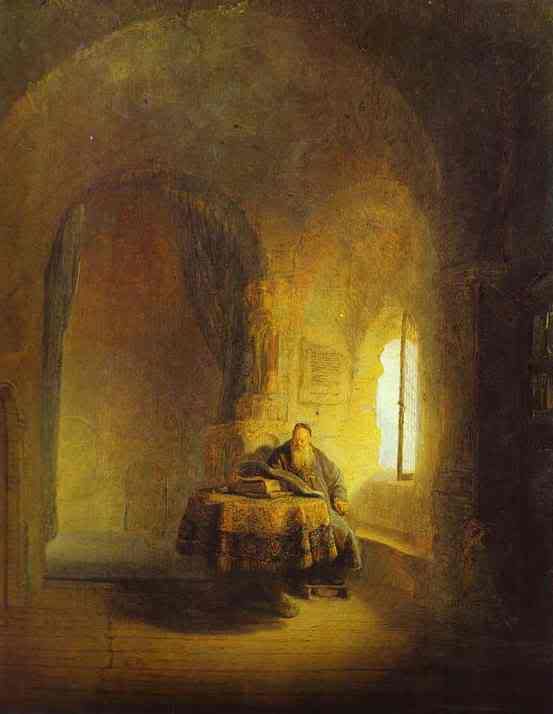
'The substance and fruit of holy Scripture is very specific: the fullness of eternal happiness. For this is what Scripture is – its words are words of eternal life, and it is written not just so that we should believe, but specially so that we should possess eternal life in which we may see, and love, and have all our desires fulfilled. When they are fulfilled, then we shall know the superabundant love that comes from knowledge, and so we shall be filled with all the fullness of God. God’s Scripture tries to lead us to this fullness, and to the truth of the preaching of the apostles. It is to this end, with this intention, that we should study holy Scripture, and teach it, and hear it.
If we are to follow the direct path of Scripture and come straight to the final destination, then right from the beginning – when simple faith starts to draw us towards the light of the Father – our hearts should kneel down and ask the Father to give us, through his Son and the Holy Spirit, true knowledge of Jesus and of his love. Once we know him and love him like this, we shall be made firm in faith and deeply rooted in love, and we can know the breadth, length, depth and height of holy Scripture. That news can then lead us to the full knowledge and overwhelming love of the most holy Trinity. The desires of the saints draw them towards the Trinity, in which all that is good and true is and finds its completion.'
Liturgy is the worship of the Father, through the Son, in the Spirit. By worshipping the through and with the Church, which is the mystical body of Christ, we approach the Father. This is what we will do in heaven and we can step supernaturally into this wonderful place and by degrees (not fully before we die) partake of divine nature in this life. Bonaventure is describing this in this little passage above. The liturgy  - the Mass and the Liturgy of the Hours - is how we can do it.
The liturgy is described by Church as the 'source and summit' of human existence. Worship of God the Father in heaven what we are made for, and the liturgy is the source of grace that guides us to it. I cannot imagine anything higher than the prize that contains full and eternal happiness, superabundant love and all our desires fulfilled: and this, according to Bonaventure is precisely what the Church offers us.
For more about Bonaventure, follow link here.
The painting below is of a monk reading scripture, by Rembrandt.

Pilgrimage to a Forgotten Ancient Church in Matera, Italy

Matera is in southern Italy (just inland from the arch in the boot-shaped country). In the later classical period and through to the Middle Ages it has been occupied by Romans, Lombards, Byzantines, Germans and Normans and the handover was usually less than peaceful. The area is known for its underground churches, rather like the catacombs but dating much later. My former teacher when I was studying the academic method in Florence, Matt Collins, now lives there. Matt is an American and one of the few people around that I know who has applied his academic training to painting in the baroque style (as distinct from the 19th century). As well as oils, he is an expert in the technique of fresco and runs regular classes in Italy teaching this ancient and very durable technique.  The underground churches of Matera contain many frescoes and they have survived the Romans and all the waves of conquerers, only to be damaged recently by modern-day vandals and graffiti artist. What a shame!  Matt describes them in his blog and it is his pilgrimage that the title refers to. The painting shown is Matt's landscape of the approach to the entrance of two underground churches. To read more about his, go to his article by following the link here. You can also see more of his work there too.


The photograph above is of the entrance to the ravine, and below, of the entrance to one of the churches in the hillside.

Inside with the apse with niche and altar

And finally, just if any are wondering what Matt's art is like here is a beautiful still life displaying the classic baroque stylistic element that readers of this blog will recognise - the variation in focus;  the depletion of colour and reduction of contrast away from the natural foci of the composition.

Creating an Icon of a Modern Saint

With the announcement of the beatification of John Paul II someone sent to me this icon of him in which Christ presents the world to him. Painting an icon of a well known figure raises a number of considerations for an artist. How should an icon painter represent a likeness, especially when the person is someone whose face is so commonly recognized from photography, which doesn’t conform to the iconographic form? When painting someone for whom there is already an established prototype in the tradition, such as Christ or the Apostles, the artist relies on that.

The two requirements for a holy image were set out by Theodore the Studite. He is the great Father of the East whose writing, perhaps even more than John of Damascus, closed the iconoclastic period in the 9th century. The first requirement is that the image bears the name of the person depicted; and the second is that it captures his or her ‘characteristics’. I have written in more detail about this here. When we talk about ‘characteristics’ in this context, we are referring  not so much to a photographic likeness, but rather to those key elements (which might include physical attributes) that characterize the person and contribute to his or her uniqueness as a person. So it would include, for example, the physical attribute of shaggy hair and beard of the prophet Isaias; but also the tongs and hot coal that touched his mouth before he prophesied for the first time.

When painting an icon of a modern figure for whom there no established iconographic prototype, the painter will have to judge what those characteristics are. Then he will have to decide how much of a ‘portrait’ it will be. I have seen some icons of figures such as St Therese of Lisieux in which a naturalistic photographic-portrait like face stares out from a painting in which everything is else iconographic. There is a clash of styles and is a blend of naturalism and iconography that doesn’t make sense to me.

In this example, the iconographer seems to have resisted this temptation and has created something that is consistent with his own iconographic style. In doing this he has sacrificed elements of a more conventional likeness. I think this is the better approach. Notice how similar the facial features of John Paul II are to those of Christ. I don’t know if this has been done consciously, or if it is just the iconographic style of the painter coming through naturally in both. Either way, to my mind the effect works. Christ is the Everyman, the model for all humanity, so it is right that all saints, especially, participate in his humanity. This is done without sacrificing the individuality of the John Paul II. We see….

I have a similar problem to grapple with as I continue to paint large scale works for the chapel at Thomas More College of Liberal Arts. In the next few months I will begin an image of St Thomas More himself. This issue here is not that his photographic image is well known, but that his naturalistic portrait is. The familiar painting by Hans Holbein the Younger, is the definitive face of Thomas More. As a portrait it is wonderful, but it is not right for an icon. At this stage, my intention, rather like the this artist, is to make sure that the name, the characteristics of man and the style are all preserved (in this case I will be attempting to work in a gothic style rather than iconographic). There is a line drawing study for a painting of the whole family that Holbein made. Given that iconography and the early gothic tends to describe form with line (in contrast, baroque and High Renaissance art describes form with tone) this maybe easier for me work from. We shall see!

Below I show a larger image of the icon above.

Concert of Music from the Sarum Rite

This is sacred music from pre-Reformation England. Sarum is old name for the town of Salisbury and it disappeared as a form of the Church's liturgy after the Council of Trent. However, it was retained in some form as it became the basis of Anglican church music and for the Book of Common Prayer.  The concert takes place in a New York Episcopalian church - Trinity Church. I heard about it because it was posted onto my Facebook page by a TMC student who is currently out in Rome - thanks Taylor! Access the video through the image of Salisbury Cathedral below.